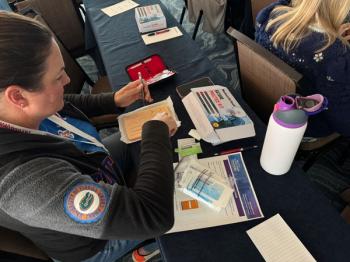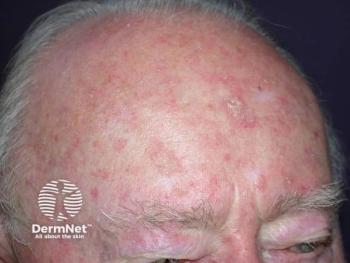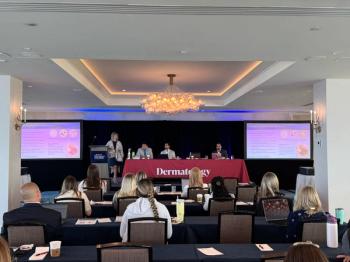
The inaugural workshop explored skin cancer care from prevention and diagnosis through systemic therapy, radiation, and multidisciplinary management.
Cosibelimab joins cemiplimab and pembrolizumab as a first-line option for advanced cSCC unsuitable for curative surgery or radiation.
When cutaneous squamous cell carcinoma (cSCC) advances beyond the reach of curative surgery or radiation, treatment stops being a single specialty's decision. That was the throughline of a recent Dermatology Times Evolving Paradigms discussion moderated by Gaurav Singh, MD, a Mohs surgeon at City of Hope in Chicago, Illinois, who convened a roomful of general dermatologists and medical oncologists to talk through systemic options, safety, and the logistics of shared care.
Most cSCC is cured surgically. Systemic therapy enters the conversation only when curative-intent surgery and radiation are off the table—a determination, Singh emphasized, that often begins with the clinician who diagnoses the tumor.1 Three PD-1/PD-L1 checkpoint inhibitors anchored the discussion: cemiplimab and pembrolizumab, both anti-PD-1 antibodies, and cosibelimab, a PD-L1 blocker that received FDA approval in December 2024 for metastatic or locally advanced cSCC in patients who are not candidates for curative surgery or radiation.2
Cemiplimab, the first agent approved in this space, carries the deepest clinical track record. Its pivotal EMPOWER-CSCC 1 program produced objective response rates in the range of roughly 46% to 50% across cohorts and dosing schedules, and the phase 3 C-POST trial (NEJM, 2025) recently extended its reach into the adjuvant setting, showing a significant disease-free survival benefit (HR, 0.32) in patients at high risk of recurrence after surgery and radiotherapy, though overall survival did not differ.3 Pembrolizumab, supported by the phase 2 KEYNOTE-629 study, showed an ORR of about 35% in recurrent/metastatic disease and 50% in the locally advanced cohort. Notably, its adjuvant counterpart, the phase 3 KEYNOTE-630 trial, was negative—failing to improve recurrence-free survival when reported at ASCO 2025.4 Several panelists said that result has tempered their enthusiasm for reaching reflexively for pembrolizumab as an off-the-shelf first-line choice.
Cosibelimab's data come from the phase 1 (
The room was disciplined about not over-reading these numbers. Because the trials enrolled different populations—cosibelimab's cohorts were largely treatment-naïve, while a meaningful share of cemiplimab and pembrolizumab patients had prior therapy—and were never compared head-to-head, cross-trial efficacy rankings are unreliable. The complete-response question drew the sharpest exchange. "If you've got metastatic disease, you want to get a CR, not a PR," argued Tim Kuzel, MD, a medical oncologist at Northwestern, who said a complete response is more meaningful than stable disease in the metastatic setting. Singh offered a dermatologist's counterpoint: "The partial response rate, however, that's what some of my patients want," describing patients whose goal is stable disease.
Safety generated more interest than efficacy in positioning cosibelimab. As presented, the agent's serious treatment-related adverse event and immune-related discontinuation rates trended lower than the comparators, and one medical oncologist called the figures "the lowest I've seen with any immune checkpoint inhibitor"—while immediately adding that he wanted to review the primary data before changing practice. The panel was openly skeptical of a cross-trial slide showing a 12% treatment-related death rate for pembrolizumab, with one oncologist countering that "contemporary checkpoint inhibitors all have about a 1 to 2% mortality rate." Whether PD-L1 blockade is inherently safer than PD-1 blockade remains unsettled; participants noted that other PD-L1 agents have underperformed in other tumor types, and that without direct comparison no firm conclusion is warranted. As one oncologist put it, "it's the clinical data that matters. The mechanism makes for a fancy drug."
Where cosibelimab may fit, then, is as an additional first-line option—particularly attractive for its apparent tolerability and for clinicians who value having alternatives—rather than as a displacement of established agents. Its limitations are equally clear: there are no neoadjuvant or adjuvant data, and no head-to-head trials. Most panelists described themselves as intrigued but inclined to gather their own experience before adopting it broadly.
If anything united the group more than any single drug, it was the operational reality of advanced cSCC. Clinicians described fragmented referral pathways, inconsistent pathology reporting of high-risk features, and the timing problem that a complete excision can foreclose a neoadjuvant approach. "I wish there was a clear pathway for this," said one dermatologist, recounting the coin-flip of which specialist a patient happens to see first. Social determinants, insurance step-therapy hurdles, and access to skin-focused tumor boards shaped decisions as much as response rates did. The consensus take-home was less about choosing an agent than about building the team—medical oncology to manage systemic therapy and toxicity, dermatology to flag who needs it and to catch the next malignancy—around each patient.
This event recap has been produced independently by Dermatology Times and supported through an educational grant by Sun Pharmaceuticals.
References