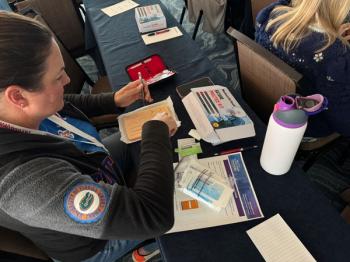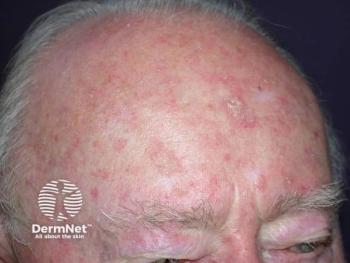
Faculty from the Cutaneous Oncology Workshop answer practical questions spanning skin cancer prevention, diagnosis, treatment, and follow-up.
Maui Derm NP+PA Fall 2026 brought APPs together for updates spanning inflammatory disease, oncology, emerging therapies, and diagnostic challenges.
From new drugs and noteworthy literature to inflammatory disease, cutaneous oncology, pediatric dermatology, rare diseases, and dermoscopy, the program emphasized both what is changing in dermatology and how clinicians can apply evolving evidence to patient care.
Interactive sessions were woven throughout the meeting, frequently asking attendees to work through challenging clinical scenarios and select diagnoses or therapies before faculty explained their own approaches.
The meeting opened with a look back at some of the most noteworthy dermatology literature published in 2026. Ted Rosen, MD; Vikash Oza, MD; Matthew Zirwas, MD; and
The emphasis on emerging therapies continued throughout the meeting as faculty discussed new drugs, data, and treatment strategies across inflammatory and immune-mediated conditions.
One particularly timely discussion examined
Skin cancer was another major focus, beginning with a 2-part interactive cutaneous oncology update.
Faculty including Rosen, Martin, Jennifer Lee, MD, and John Strasswimmer, MD, PhD, presented cases spanning
The meeting returned to pigmented lesions on its final day with an extended interactive clinic featuring cases across the spectrum from
The program concluded with a 2-part dermoscopy workshop led by “Vinny” Seiverling, MD. The workshop emphasized interpretation of dermoscopic features, algorithms and pattern analysis for skin cancer detection, and applications of dermoscopy beyond malignancy, including infections, rashes, and hair loss.
Inflammatory and immune-mediated skin diseases occupied a substantial portion of the program.
An inflammation and immunology workshop brought together Alisa Charrow, MD; Jerry Hawkes, MD; and Alisa Femia, MD, for discussion of connective tissue disorders,
Atopic dermatitis (AD) and itch received a dedicated interactive update featuring Oza, Hawkes, G. Michael Lewitt, MD, and Gil Yosipovitch, MD, PhD. The session paired discussion of new drugs, data, and treatment approaches with challenging patient cases.
Together, the sessions reflected a recurring theme across the meeting: treatment selection increasingly requires clinicians to consider not only skin disease severity but comorbidities, patient characteristics, and broader health considerations.
Maui Derm also emphasized conditions that can challenge clinicians before treatment even begins.
During “Eczematous & Contact Dermatitis: ‘Cases That Will Leave You Scratching Your Head,’” Zirwas; William Liszewski, MD; and Kachiu Lee Mudd, DMSc, MSPAS, PA-C, presented difficult eczematous conditions and guided attendees through their diagnostic and therapeutic approaches. Participants selected therapies through an audience-response system before faculty explained their reasoning.
Diagnostic reasoning continued during a 2-part Grand Rounds program featuring cases that had challenged faculty in establishing diagnoses and selecting treatment. According to the program, the cases required extensive differential diagnoses and, in some instances, diagnostic workups and consideration of a broad therapeutic armamentarium.
An “Outside the Box” session further addressed uncommon dermatoses for which diagnosis and treatment may be difficult and controlled therapeutic trials or approved treatments may be limited.
The meeting balanced complex and uncommon disease with updates on conditions clinicians routinely encounter.
Pediatric dermatology faculty reviewed current diagnostic and therapeutic approaches across clinical scenarios involving neonates and children.
Hilary Baldwin, MD, and Julie Harper, MD, then led an interactive acne and rosacea update. After reviewing their latest approaches to treatment, faculty presented challenging cases and asked attendees to select therapies before discussing their clinical reasoning.
The meeting also incorporated infectious disease and nail disorders. Rosen and Oza
The final day placed additional emphasis on diagnostic challenges and less common conditions.
Martin also led a session on disorders of pigmentation, including melasma and vitiligo, highlighting differential diagnoses and current management strategies.
These sessions reinforced the meeting's focus on building clinical confidence not only for common presentations, but also for diseases clinicians may encounter less frequently.
Not every discussion centered on selecting a drug.
During “Impractically Practical: Procedural Pearls,” David Oberlin, MD, provided high-yield strategies for clinicians already comfortable with core dermatologic surgery. The session focused on technical refinements and efficiency strategies intended to improve procedural technique and outcomes in everyday practice.
The meeting also incorporated repeated opportunities for attendees to test their knowledge, including interactive cases, audience-response questions, diagnostic photographs, and “Last Man Standing” trivia.
During Skin Lesions Potpourri, for example, attendees reviewed clinical photographs of difficult-to-diagnose lesions and voted on their diagnoses while a leaderboard tracked correct responses in real time.
Across 4 days, Maui Derm NP+PA Fall 2026 highlighted just how broad the knowledge base of today's dermatology APP has become.
New drugs and emerging evidence continue to expand therapeutic options, while increasingly complex treatment decisions require clinicians to account for comorbidities, diagnostic uncertainty, patient characteristics, and long-term disease management. At the same time, practical skills—from dermoscopy and procedural technique to recognizing uncommon disease—remain central to everyday care.
By pairing scientific updates with interactive cases and practical clinical pearls, Maui Derm NP+PA Fall 2026 gave attendees opportunities not only to hear what is changing across dermatology, but to work through how those changes may influence decisions in the clinic.
References