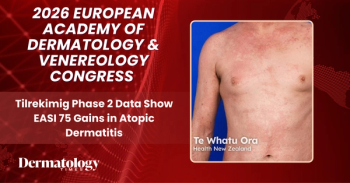
According to data presented at EADV, at week 16 of the phase 2 study, 47.8% to 62.5% of adults receiving tilrekimig achieved EASI 75 across doses, compared with 9.1% to 19.9% with placebo.
The pooled analyses from Arcutis’ INTEGUMENT-1 and INTEGUMENT-2 studies were presented at the 2024 Winter Clinical Hawaii Dermatology Conference.
According to the announcement, at week 4, a statistically significant greater percentage of patients achieved a 50% reduction in EASI scores (EASI-50), with 69.2% of patients treated with roflumilast cream compared to 44.4% of patients treated with vehicle (P<0.0001) based on observed data. At the same 4-week endpoint, a 75% reduction in EASI scores (EASI-75) was achieved in 44.5% of roflumilast-treated patients compared to 21.2% of vehicle-treated patients (P<0.0001). Most notably, a 90% reduction in EASI scores (EASI-90) was observed in 22.4% of patients treated with roflumilast cream compared to 8.6% of vehicle-treated patients (P<0.0001) and a 100% reduction (EASI-100) was observed in 9.8% of patients treated with roflumilast cream compared to 4.8% of vehicle-treated patients (P<0.002).
“These individual patient response data can give confidence to clinicians that roflumilast cream can provide predictable and effective improvement of atopic dermatitis, with 70% of adults and children achieving EASI-50 and nearly one in four achieving 90% or greater improvement in eczema area and severity. If approved, the consistent efficacy with daily application over a four week period combined with a tolerability and safety profile without limitations on body regions or duration treated will make this a great addition for management of pediatric and adult atopic dermatitis,” said Lawrence Eichenfield MD, the chief of pediatric and adolescent dermatology at Rady Children's Hospital-San Diego, professor of dermatology and pediatrics and vice-chair of the department of dermatology at UC San Diego School of Medicine, and study investigator, in the news release.
In
The safety and tolerability data of roflumilast cream 0.15% were comparable with vehicle, with low rates of application site adverse events (AEs), treatment-related AEs, and discontinuations due to AEs. The most common adverse reactions included headache (2.9%), nausea (1.9%), application site pain (1.5%), diarrhea (1.5%), and vomiting (1.5%).1
“These data demonstrate the rapid and reliable efficacy of roflumilast cream in atopic dermatitis with the majority of individuals achieving measurable improvement in EASI in as little as one week. We are pleased to be able to share these individual response data with the wider dermatology community, and develop a better understanding about the broad range of clinical response for roflumilast cream in this condition,” said Patrick Burnett, MD, PhD, FAAD, chief medical officer of Arcutis, in the news release.
References