


News|Articles|April 22, 2026
Journal Digest: April 22, 2026
Author(s)Marie Bosslett, Assistant Editor
Listen
0:00 / 0:00
Key Takeaways
- Audit data show 47.5% of pediatric atopic dermatitis referrals were potentially avoidable, commonly due to undocumented regimens, inadequate topical corticosteroid potency, or failure to initiate topical steroids.
- Referral behavior concentrated among one-off referrers suggests point-of-care decision support and standardized documentation may outperform episodic education in improving first-line dermatitis management.
This review of the latest dermatological studies includes insights on minoxidil in onychodystrophy, teleheath outcomes in HS patients, pediatric AD referrals, and more.
Advertisement
Pediatric Dermatology | Improving Primary Care of Pediatric Atopic Dermatitis: An Analysis of Referrals and Educational Need
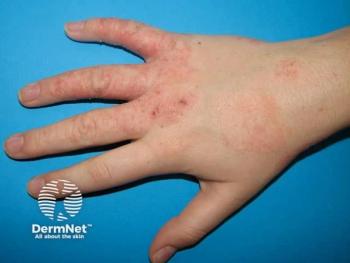
This quality improvement study evaluated 909 referrals for pediatric atopic dermatitis to a tertiary dermatology center, highlighting gaps in primary care management. Nearly half of referrals (47.5%) did not meet pathway criteria for specialist evaluation, indicating that many cases could have been managed in primary care. The most common issues included lack of documented treatment (49.5%), use of inadequate topical corticosteroid potency (34.0%), and failure to initiate topical corticosteroids (11.7%). These findings suggest underutilization or suboptimal use of first-line therapies prior to referral. Notably, more than 70% of providers submitted only a single referral, supporting the need for accessible, point-of-care educational tools rather than traditional training models. The study underscores the importance of optimizing topical therapy, documenting treatment response, and adhering to referral guidelines to improve care efficiency and reduce unnecessary specialist burden.1
Clinical, Cosmetic, and Investigational Dermatology | IL-36 Receptor Antagonist Spesolimab for Generalized Pustular Psoriasis Combined with Palmoplantar Pustulosis: A Case Report
This case report highlights the use of spesolimab in a patient with generalized pustular psoriasis (GPP) complicated by palmoplantar pustulosis (PPP), a challenging and rare clinical scenario. The patient had severe, treatment-refractory disease despite multiple systemic therapies, including cyclosporine, retinoids, and small-molecule agents. Following 2 intravenous doses of spesolimab, rapid and marked improvement was observed, with near resolution of pustules, reduced pain, and decreased inflammation within 24 hours of the second infusion. No significant adverse effects were reported. However, residual erythema and scaling persisted, and maintenance therapy with an IL-17 inhibitor was required. The presence of PPP may have contributed to slower or incomplete clearance compared with typical GPP responses. This case underscores the role of IL-36 inhibition in severe pustular psoriasis, the importance of screening prior to biologic use, and the potential need for combination or maintenance therapy in complex cases.2
Dermatology | Primary Care Teleconsultations in Hidradenitis Suppurativa: Characteristics and Clinical Decision-Making
Investigators in this cross-sectional study evaluated how effectively hidradenitis suppurativa (HS) is recognized and managed through teleconsultation (TC) between primary care and dermatology. Among 100 referred patients, HS was explicitly identified in only 57% of TC notes, with omissions more common in milder disease (Hurley I), inflammatory nodules, or atypical presentations. Compared with in-person assessment using Hurley staging system and International HS Severity Score System, TC consistently underestimated disease severity. Over half of patients diagnosed as Hurley II in clinic were classified as Hurley I via TC, and mean severity scores were significantly lower. Treatment concordance between TC and in-person visits was 50%, with both under- and overtreatment observed. These findings highlight key gaps in early HS recognition and severity assessment in telehealth. Improving primary care education and incorporating in-person evaluation and ultrasound when needed may enhance diagnostic accuracy and optimize treatment decisions.3
Journal of Dermatological Treatment | Efficacy of topical tacrolimus for oral lichen planus: a retrospective cohort study stratified by cutaneous involvement
This retrospective cohort study evaluated the effectiveness of topical tacrolimus 0.1% gel in patients with oral lichen planus (OLP), with a focus on differences based on cutaneous involvement. Among 120 biopsy-confirmed cases, tacrolimus demonstrated significantly greater improvements in pain (VAS) and lesion size (total atrophic area) at 8 weeks compared with topical corticosteroids. Overall response rates were higher with tacrolimus (70% vs 43%), and benefits persisted through 12 weeks. Notably, patients with concomitant cutaneous lichen planus showed a stronger response, suggesting greater benefit in more systemic disease. Adverse events were mild, with transient burning sensation most commonly reported, and no serious safety concerns. These findings support topical tacrolimus as an effective second-line or steroid-sparing option for symptomatic OLP, particularly in patients with mucocutaneous involvement or inadequate response to high-potency topical steroids.4
Journal of Cosmetic Dermatology | Topical Minoxidil and Low-Dose Oral Minoxidil in Onychodystrophy: A Proposed Treatment Algorithm
This review evaluated the role of minoxidil as an adjunctive therapy for onychodystrophy, a group of nail disorders often associated with slow growth and delayed recovery. Evidence from small studies and healthy volunteer trials suggests that topical minoxidil (2%–5% applied to the proximal nail fold) and low-dose oral minoxidil may accelerate nail growth through vasodilation and activation of growth pathways such as Wnt/β-catenin. The proposed treatment algorithm emphasizes first addressing the underlying cause (eg, inflammatory disease, infection, or trauma), then considering minoxidil as supportive therapy. Topical formulations were generally well tolerated, with mild local irritation as the most common adverse event, while oral therapy carries risks such as tachycardia and edema and requires monitoring. Overall, minoxidil shows promise as a nail growth adjunct, but disease-specific evidence remains limited, and controlled trials are needed to guide clinical use in dermatology practice.5
References
1. B Te, S Kalia, A Gregory, W Rehmus, Improving Primary Care of Pediatric Atopic Dermatitis: An Analysis of Referrals and Educational Need. Pediatric Dermatology (2026): 1–4, https://doi.org/10.1111/pde.70216.
2. Tan H, Zhang Y, Zhang B, et al. IL-36 Receptor Antagonist Spesolimab for Generalized Pustular Psoriasis Combined with Palmoplantar Pustulosis: A Case Report. Clinical, Cosmetic and Investigational Dermatology, 19. 2026. https://doi.org/10.2147/CCID.S568455
3. Castro Martín J, Rodríguez-Sanna AI, Ureña-Paniego C, et al. Primary Care Teleconsultations in Hidradenitis Suppurativa: Characteristics and Clinical Decision-Making. Dermatology. Published online April 18, 2026. doi:10.1159/000551423
4. Weng S, Li S. Efficacy of topical tacrolimus for oral lichen planus: a retrospective cohort study stratified by cutaneous involvement. J Dermatolog Treat. 2026;37(1):2647209. doi:10.1080/09546634.2026.2647209
5. AK Gupta, M Talukder, SR Lipner. Topical Minoxidil and Low-Dose Oral Minoxidil in Onychodystrophy: A Proposed Treatment Algorithm. Journal of Cosmetic Dermatology, 25, no. 4 (2026): e70863, https://doi.org/10.1111/jocd.70863.
Advertisement
Related Content
Advertisement




Advertisement
Advertisement
Trending on Dermatology Times
1
FDA Grants Priority Review to Zasocitinib for Moderate-to-Severe Plaque Psoriasis
2
FDA Accepts Bezuclastinib NDA for Advanced Systemic Mastocytosis
3
Genetic Study Links Higher BMI to Perceived Facial Aging, but Causality Remains Unproven
4
Defining AD Disease Flares vs Drug Effects: A Comparative Analysis of Phase 3 Systemic Therapy Trials
5