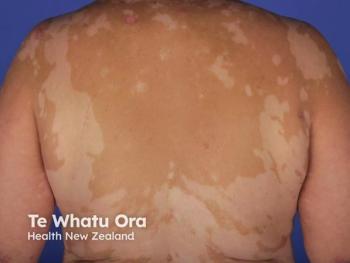
The FDA clearance allows Edesa to expand an ongoing placebo-controlled study of the CXCL10 antibody EB06 to US sites, with topline data expected in the fourth quarter of 2027.
Advances in stem cells, exosomes, biomaterials, and RNA technologies are expanding therapeutic options beyond traditional wound-based remodeling.
At the
“Regenerative medicine is taking what we have and making either younger or better,” he said, tracing the conceptual roots back to stem cell discoveries in the 1960s. Although stem cell biology laid the groundwork, today’s regenerative tool kit is far broader. “In the end, it is promoting regeneration vs repair.” That distinction was central to the session.
Dermatologists are deeply familiar with wound-based remodeling. From ablative lasers and radiofrequency microneedling to chemical peels and fractional devices, the model is consistent: create controlled injury, induce inflammation, stimulate fibroblasts, and remodel collagen. As Goldberg framed it, “You think about all the devices we've used during [these] 40 years already. We also create a wound, then there's a microplastic response, and then [we] get new collagen formation. It's a controlled scar. That's not what regenerative medicine is all about.”
Repair, in this paradigm, restores integrity but not necessarily architecture. It is often associated with fibrosis, altered collagen ratios, and variable functional recovery. In contrast, regeneration seeks restoration of normal structure and function, ideally with less inflammation and fibrosis. Rather than leveraging inflammatory cascades as the primary driver, regenerative strategies aim to recalibrate the underlying biology.
Goldberg outlined several major pillars: cell therapy (including stem and progenitor cells), tissue engineering with scaffolds and biomaterials, biologics such as growth factors and cytokines, exosomes, and gene-based approaches. RNA technologies, in particular, are gaining attention for their ability to influence gene expression without altering DNA.
The global expansion of regenerative medicine reflects demographic and clinical realities: aging populations, rising numbers of chronic wounds, increasing prevalence of degenerative skin conditions, and growing demand for natural-looking rejuvenation. Dermatology, with its accessible organ system and high patient demand, is uniquely positioned to lead.
Skin itself is biologically suited for regenerative approaches. Its high cellular turnover, resident stem cell niches (notably in the hair follicle bulge), and modifiable extracellular matrix create a responsive environment. Regenerative strategies target fibroblast plasticity rather than scar formation, support angiogenesis, modulate inflammation, and attempt to rebalance collagen composition toward a healthier profile.
Among emerging modalities, exosomes drew particular attention. These extracellular vesicles, derived from stem or progenitor cells, are being studied for their anti-inflammatory signaling, proangiogenic effects, and ability to modulate gene expression. In clinical contexts, they are already being incorporated into postprocedure recovery protocols, hair restoration strategies, chronic wound management, and aesthetic rejuvenation.
Goldberg predicted broader integration into mainstream products and procedures, particularly given their compatibility with existing interventions. Used adjunctively with microneedling or energy-based devices, they may reduce downtime and improve quality of healing—not by intensifying inflammation but by shaping the regenerative response.
Autologous fibroblast therapies and cell-enriched fat grafting represent additional avenues. Rather than stimulating endogenous fibroblasts through injury, these approaches expand or supplement cell populations directly, aiming to increase collagen types I and III and restore extracellular matrix integrity over time.
Biomaterial scaffolds—collagen- and hyaluronic acid–based matrices—are also evolving. Beyond simple volume replacement, next-generation scaffolds may guide cellular infiltration, stabilize the microenvironment, and support organized matrix deposition. In parallel, 3D bioprinting technologies are progressing from burn repair models toward more customized grafting solutions.
Goldberg reviewed applications across hair loss, acne scarring, chronic wounds, burns, photoaging, melasma, rosacea, and postprocedural recovery. In androgenetic alopecia, regenerative approaches aim to prolong anagen, reduce perifollicular inflammation, and enhance vascular support. In acne scarring, the goal is not merely to disrupt fibrotic tethers but to reconstitute dermal architecture. For inflammatory disorders such as rosacea or melasma, modulation of inflammation—rather than its induction—may be critical.
In chronic wounds and burns, where inflammation and impaired angiogenesis dominate, regenerative biologics and scaffolds offer a biologically rational adjunct to conventional care.
Despite enthusiasm, Goldberg acknowledged variability in product quality and evidence. The field is expanding rapidly, with increasing commercial presence and scientific investigation. The likely future includes combination strategies, personalized biologic profiling, and more refined RNA-based modulation.
For dermatologists, the shift is conceptual as much as technical. Rather than relying solely on controlled injury to stimulate repair, regenerative medicine seeks to restore biology closer to its original state. If repair has defined much of procedural dermatology’s past, regeneration may shape its next chapter—less about controlled scarring, more about recalibrating tissue behavior itself.
Reference