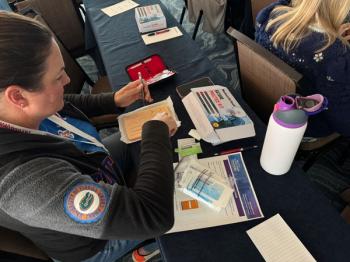
Faculty from the Cutaneous Oncology Workshop answer practical questions spanning skin cancer prevention, diagnosis, treatment, and follow-up.
At Fall Clinical 2025, Mona Shahriari, MD, presented highlights on the role of IL-13 inhibitors, such as dupilumab, tralokinumab, and lebrikizumab, in managing atopic dermatitis across severities.
At the
“IL-13 is not just another proinflammatory cytokine. It actually does a lot in our body,” Shahriari explained. It is expressed in both lesional and nonlesional skin and contributes to multiple features of AD, including chronic inflammation, skin barrier dysfunction, and pruritus. Importantly, IL-13 is found in patients across diverse skin tones and throughout the lifespan, from infancy to adulthood.
Given its role in disease persistence and itch, Shahriari noted that direct IL-13 inhibition represents an important therapeutic strategy. Three biologics have become central to this discussion: dupilumab, which blocks the IL-4 receptor alpha (thereby inhibiting both IL-4 and IL-13 signaling), and tralokinumab and lebrikizumab, which specifically target IL-13 itself.
Although tralokinumab and lebrikizumab share a similar mechanism of cytokine blockade, their molecular binding profiles differ. “Lebrikizumab latches onto the IL-13 molecule more intensely with a higher affinity and lower dissociation rate—it doesn’t want to let go,” she said, highlighting subtle pharmacologic distinctions that may translate to clinical nuance.
Shahriari presented case-based examples to illustrate how IL-13–targeted agents are applied in real-world settings. In one case, an adolescent with head and neck–predominant AD achieved meaningful improvement after 12 weeks of lebrikizumab, particularly appreciating its every 4-week dosing schedule. She noted that for patients with head and neck involvement, where dupilumab-associated flares are a concern, IL-13–specific inhibition may offer an alternative with favorable tolerability.
She also emphasized that disease burden should not be measured solely by body surface area (BSA). “Just because the AD is not taking up a huge BSA, such as on the face, hands, or feet, it can still be very troubling to patients,” she said. According to Shahriari, data from IL-13 inhibitor studies demonstrate significant efficacy in these high-impact areas, regardless of overall BSA, offering clinicians flexibility in tailoring therapy to patient needs.
Therapy selection and sequencing remain critical considerations. “If somebody is doing well on a drug and they wake up one day and now they're not, or maybe they're having an adverse event, what does that conversation look like? What is the nuance of changing therapy?” Shahriari explained. For patients with inadequate response or adverse events on dupilumab, such as conjunctivitis or facial erythema, transitioning to an IL-13–specific inhibitor or a JAK inhibitor can be effective.
Findings from the ADAPT trial (
References