You’re busy. Between patients, prior authorizations, inbox messages, and everything else on your plate, keeping up with the literature is the first thing that slips. Dermatology Times NP/PA Connect is here to make sure it doesn’t. Each week, we pull the most clinically relevant news from across dermatology and bring it straight to your inbox — what’s new, what it means, and what’s worth watching. This week: 3 new mechanisms reshaping the androgenetic alopecia pipeline, a practical framework for earlier biologic use and deroofing in hidradenitis suppurativa, a phase 2a IL-23 inhibitor still deepening its response through week 28 in plaque psoriasis, and a phase 2b proof-of-concept trial in cutaneous lupus that missed its primary end point.
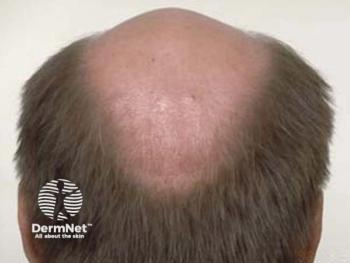
Cosmo Pharmaceuticals’ clascoterone 5% topical solution, a locally acting androgen receptor inhibitor, met its primary end point in phase 3 trials SCALP-1 and SCALP-2, enrolling 1,465 men across 51 sites in the US and Europe. The company reported a 539% relative improvement in target-area hair count versus vehicle in SCALP-1 and 168% in SCALP-2, with a safety profile comparable to vehicle through 12 months and no signal of systemic hormonal effects. An FDA filing is planned for early 2027; if cleared, clascoterone would be the first new pharmacologic mechanism for male androgenetic alopecia in more than 30 years.1
Two more mechanisms are advancing behind it. Pelage Pharmaceuticals’ PP405, a follicular stem-cell reactivator, met its primary safety end point in a phase 2a trial of 78 men and women, with 31% of men with more advanced hair loss gaining more than 20% hair density at week 8 versus 0% on placebo; phase 3 is planned for 2026. Veradermics’ VDPHL01, an extended-release oral minoxidil developed specifically for pattern hair loss rather than repurposed from a hypertension drug, produced mean increases in non-vellus hair count of 30.3 hairs/cm² (once daily) and 33.0 hairs/cm² (twice daily) versus 7.3 hairs/cm² for placebo at month 6 in a 519-patient trial in men, meeting all primary and secondary end points with adverse event rates similar to placebo. A registration-directed trial in women is expected to report topline data in the first half of 2027.1
▶ Why it matters: For the first time since finasteride, you may soon have 3 genuinely different mechanisms, an androgen receptor inhibitor, a stem-cell reactivator, and a purpose-built oral minoxidil, to offer patients who have plateaued on or can’t tolerate current options.
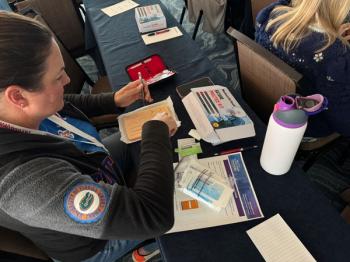
Speaking at Maui Derm NP+PA Fall 2026, Alexandra P. Charrow, MD, FAAD, argued that moderate to severe hidradenitis suppurativa should be assessed by cumulative inflammatory burden, inflammatory nodules, abscesses, and draining tunnels together, rather than by waiting out serial trials of antibiotics and spironolactone before moving to a biologic. She noted that no validated predictors yet exist to identify which therapy will work best for a given patient, so the decision still rests on clinical judgment rather than a biomarker.2
Charrow also made the case that deroofing, unroofing chronic tunnels rather than excising them outright, belongs in the toolkit of clinicians who already perform excisions. She pointed to ongoing research into patient endotypes and biomarkers, along with nonsurgical procedural options such as intralesional hypertonic saline and antimicrobial injections into HS tunnels, as the next tools for patients without easy surgical access.2
I hope people are slightly more empowered to do deroofing.— Alexandra P. Charrow, MD, FAAD
▶ Why it matters: If you’re managing HS and stopping at oral therapy because deroofing feels like a surgical referral, Charrow’s framework suggests it may already be within your skill set.
ORKA-001, a half-life extended interleukin-23p19 monoclonal antibody, kept deepening its response through week 28 of the phase 2a EVERLAST-A trial. In the primary active-treatment cohort of 63 patients with plaque psoriasis dosed only at weeks 0 and 4, PASI 100 rose from 63.5% (40/63) at week 16 to 71.4% (45/63) at week 28, while PASI 90 reached 87.3% (55/63) and IGA 0/1 responses reached 84.1% (53/63). A placebo-crossover cohort of 20 patients reached 40.0% PASI 100 at 12 weeks post-initiation, a trajectory comparable to the 42.9% seen in the original cohort at the same relative timepoint.3
The most common treatment-emergent adverse event was upper respiratory tract infection (8%), and 2 serious adverse events, a tibial fracture and a prostate adenocarcinoma, were both judged unrelated to treatment. No injection-site reactions or antidrug antibody effects on safety or efficacy were reported. The 84-patient, randomized, double-blind, placebo-controlled trial spans 26 US and Canadian sites and continues through week 52.3
The depth of clearance seen at Week 28, achieved without any dosing beyond Week 4, is remarkable. To see PASI 100 rates continue to climb over time speaks to the potential of this molecule.— Bruce Strober, MD, PhD, clinical professor of dermatology, Yale University School of Medicine, and lead investigator for EVERLAST-A
▶ Why it matters: A biologic whose complete-clearance rate is still rising 3 months after the primary end point, on a twice-only induction dose, is worth tracking as this molecule heads toward phase 3.
IMVT-1402 Misses in Cutaneous Lupus, But the FcRn Story Isn’t Over
Immunovant’s IMVT-1402 (imeroprubart), a fully human monoclonal antibody targeting the neonatal Fc receptor to lower pathogenic IgG, did not reach statistical significance on its primary end point, percent change from baseline in Cutaneous Lupus Erythematosus Disease Area and Severity Index Activity (CLASI-A) score at week 12, in a phase 2b proof-of-concept trial. The company said the result fell short of its internal threshold for continued development in this indication, even as numerical trends favored IMVT-1402 across multiple secondary end points and patients with deeper IgG reductions tended to show better clinical responses.4
Safety was consistent with prior studies of the molecule, with no new tolerability signals reported.4
Their contributions advance our understanding of FcRn inhibition in autoimmune disease.— Eric Venker, MD, PharmD, CEO of Immunovant
▶ Why it matters: A negative proof-of-concept study doesn’t necessarily sink anti-FcRn therapy elsewhere, but it’s a reminder that IgG lowering alone may not be sufficient in every autoimmune skin disease, and patient selection remains an open question.
Get Involved With Dermatology Times
For APPs across all stages of their dermatology careers, opportunities to connect, learn, and share experiences can be an important part of professional growth. Dermatology Times invites nurse practitioners and physician assistants to share their perspectives through NP/PA Connect. APPs can contribute clinical insights, career experiences, advocacy efforts, lessons learned, and perspectives on emerging treatments while connecting with colleagues across the dermatology community.
Interested in getting involved? Contact editor Shannon Heaning at [email protected] to contribute.
References
- Bader K. FAQ: everything clinicians and their patients want to know about the hair loss pipeline. Dermatology Times. September 24, 2026. Accessed September 24, 2026. https://www.dermatologytimes.com/view/faq-everything-clinicians-and-their-patients-want-to-know-about-the-hair-loss-pipeline
- Charrow AP, Heaning S. Dr Charrow highlights earlier biologic use and deroofing in hidradenitis suppurativa. Dermatology Times. September 24, 2026. Accessed September 24, 2026. https://www.dermatologytimes.com/view/dr-charrow-highlights-earlier-biologic-use-and-deroofing-in-hidradenitis-suppurativa
- Heaning S. ORKA-001 achieves deepening skin clearance through week 28 in plaque psoriasis. Dermatology Times. September 23, 2026. Accessed September 24, 2026. https://www.dermatologytimes.com/view/orka-001-achieves-deepening-skin-clearance-through-week-28-in-plaque-psoriasis
- Heaning S. IMVT-1402 misses primary endpoint in cutaneous lupus proof-of-concept trial. Dermatology Times. September 23, 2026. Accessed September 24, 2026. https://www.dermatologytimes.com/view/imvt-1402-misses-primary-endpoint-in-cutaneous-lupus-proof-of-concept-trial
Dermatology Times NP/PA Connect | The Breakout Bulletin