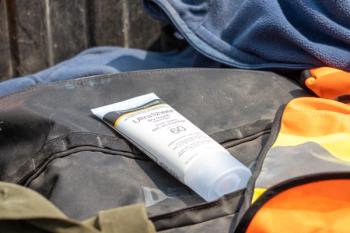
Two new Neutrogena facial sunscreens incorporate bemotrizinol, the first new sunscreen active ingredient added to the US OTC monograph in decades.
Jorge Garcia-Zuazaga, MD, MBA, FAAD, FACMS, shares how Apex Skin’s multi-site model advances clinical trial access, diversity, and execution.
“For us, it’s really about aligning the visits with our providers. We teach our providers a lot about clinical trials so they’re putting that into the conversation as part of the patient journey,” said Jorge Garcia-Zuazaga, MD, MBA, FAAD, FACMS, in an interview with Dermatology Times.
Garcia-Zuazaga, a board-certified dermatologist, Mohs surgeon, and founder and CEO of
Since its establishment in 2011, Apex Skin has expanded to cover a broad territory across northeast Ohio, offering general medical dermatology, surgical services, aesthetics, pathology, and more recently, clinical research. The practice launched its dedicated clinical trials in recent years, which has since grown into a central part of its operations.
According to Garcia-Zuazaga, one of the major gaps in dermatology research is the fragmentation between large academic centers and individual practices. Apex Skin aims to fill this gap by integrating research directly into routine dermatology care. By embedding clinical trials into the patient journey, Apex Skin ensures greater representation and access for populations who might not otherwise encounter research opportunities. This integration allows patients from diverse backgrounds, skin types, and socioeconomic groups to participate in studies, improving real-world applicability of trial data while expanding access to innovative therapies.
Apex Skin’ multi-site model provides further advantages for sponsors and patients. Garcia-Zuazaga explained that centralized operations, staffed by full-time coordinators, regulatory professionals, and budget managers, offer consistency in protocol adherence, high-quality data collection, and streamlined communication. Sponsors benefit from cleaner data, faster enrollment, and the ability to work with a single point of contact across multiple sites, reducing administrative burden. For patients, the model translates into timely access to novel therapeutics and an enhanced standard of care.
With a patient base of more than 20,000 across its network, Apex Skin balances clinical care and trial recruitment through a seamless, integrated approach. Providers are trained to incorporate research options naturally into treatment discussions, reframing trials not as a separate endeavor but as part of the continuum of care. Garcia-Zuazaga emphasized that this approach resonates with patients, particularly when standard therapies are limited or not covered by insurance, as clinical trials can provide additional therapeutic options.
By uniting clinical care and research under one umbrella, Apex Skin is demonstrating how community-based dermatology practices can play a vital role in addressing representation gaps, accelerating trial execution, and enhancing access to emerging therapies outside of academic institutions.