
Joshua Arbesman, MD, explains how tailored sun-safety advice balances melanoma risk, aging goals, and quality of life in all types of patients.
Joshua Arbesman, MD, explains how tailored sun-safety advice balances melanoma risk, aging goals, and quality of life in all types of patients.
Joshua Arbesman, MD, explains how to promote smarter sun habits, educate on melanoma-risk timelines, ease guilt, and answer sunscreen fears fueled by social media.

Based on the diagnosis and treatment challenges of CSU, it’s crucial for allergists and dermatologists to work together toward an effective approach based on the latest evidence.

Jacob Scott, MD, president and chairman of DaRT, shares highlights of the guidelines and what he hopes clinicians can glean from them.
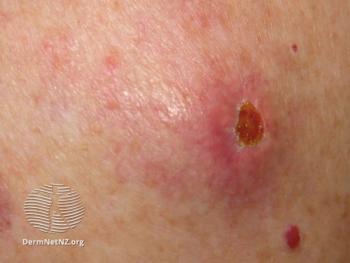
Nivolumab plus talazoparib did not produce RECIST-based tumor responses in heavily pretreated patients with unresectable or metastatic melanoma.

Kenneth J. Tomecki, MD, discussed the clinical relevance of sexually transmitted diseases (STDs) to dermatology and outlined what to look for and how to treat various conditions at the 2022 Fall Clinical Dermatology Conference for PAs & NPs.

Dr. Deborah L. Benzil discusses her keynote address at AACS’s upcoming second annual Women in Cosmetic Surgery event, and uplifting women in medicine.

Efforts to diversify medical specialties, including aesthetics and dermatology, are gaining momentum on both a local and national level, but more work is needed.

Dr. Anna Chacon describes her learning experience using telemedicine to make everyday patient interactions possible.

With a scientific understanding of the skin microbiome taking the potential for modulation into new territories, now is the time for understanding, applying and developing products that influence the skin’s health through the microbiome.

Topical probiotics could promote a positive bacterial balance in the skin – similar to how oral probiotics increase diversity of flora in the gut – and may improve skin conditions, such as acne, say authors of a recent review.

Traditional treatments remain important parts of the dermatologist's armamentarium for acne management, but other drugs have begun to play a role, too. Meanwhile, research is offering new insight into the causes of acne. Stay up to date on the latest insight into acne's pathogenesis, evaluation and treatment. Participate in this forum.

Researchers at The Cleveland Clinic Lerner College of Medicine recently explored the development of a psoriasiform rash in patients with inflammatory bowel disease or rheumatoid arthritis who were treated with TNF-ɑ inhibitors. Learn what they discovered in this article.

As the list of treatments for plaque psoriasis grows, so does the list of adverse events associated with biologic treatment. In this article, we summarize adverse events associated with common treatments for plaque psoriasis.
A recent study explored varying statistical approaches to a metastatic risk model for identifying SCC tumors at high risk of metastasis. Researchers identified six risk factors.
Lymph-node dissection is not associated with increased melanoma survival. Surgery may be best option to decrease risk for recurrence. A positive sentinel node does not automatically lead to complete dissection
Dermatology experts offer insight into differentiating factors among TNF-alpha inhibitors, the IL 12/23 antagonist, IL 17 inhibitors and an oral option that carry considerations for managing certain patients.
Long-term follow-up studies and drug registries continue to deliver reassuring data regarding the safety and efficacy of TNF inhibitors, an expert says.
With a long history in dermatology and rheumatology, TNF inhibitors can not only improve psoriasis and psoriatic arthritis, but they also may reduce comorbid cardiovascular risks and work better combined with methotrexate. Low doses of cyclosporine may be effective at treating the psoriasis reaction when topicals have proven ineffective. Aggressively managing TNF-induced reactions can help patients stay on drugs that are working for other challenging diseases.
Melanoma’s burden is increasing and the rising rates cannot simply be attributed to increased disease detection, according to a research letter published last month in JAMA Dermatology.
New information could eventually help identify a high-risk population before they get cancer - even prevent skin cancer’s onset.
Study finds women diagnosed with malignant melanoma during their pregnancy or within one year of giving birth were more than five times more likely to die than women who weren't pregnant. Routine skin examinations may need to be included as part of postpartum appointments.
People who have autoimmune diseases, including psoriasis, who get incident herpes zoster have a 50 percent increased stroke risk within a month of developing shingles, according to a new study.
Dermatologists are using an evolving collection of combination therapies designed to address different aspects of disease, monotherapy limitations and failures, as well as enhance treatment.
Whatever the medical indication, patients with a clinical history of jewelry or metal allergy who are scheduled to receive metal implants could benefit from patch testing prior to prosthetic device implantation, as the screening test can help identify a patient’s potential hypersensitivity to the implant chosen by the surgeon, says James Taylor, M.D.
In the quest for new vaccines, developers must balance clinical promise with practical concerns, said Kenneth Tomecki, M.D., at the 70th annual meeting of the American Academy of Dermatology. "The future for vaccines is very encouraging," says Dr. Tomecki, vice chairman, department of dermatology, Cleveland Clinic.
Newer drugs are available to combat potentially serious infections including methicillin-resistant Staphylococcus aureus (MRSA), says Kenneth J. Tomecki, M.D., vice-chairman, department of dermatology, Cleveland Clinic. Colonization, mainly of the anterior nares, remains a major risk factor for MRSA.
Hair disorders such as alopecia areata and trichotillomania often involve a complex mind-body connection that dermatologists must untangle, according to Wilma Bergfeld, M.D., in practice at the Cleveland Clinic. "Management of these types of conditions often requires consultation and support of a psychologist or psychiatrist," she says.
There are very few therapies approved to treat hair loss in women, compelling clinicians to turn to off-label therapies to address this condition, according to the president of the North American Hair Research Society. "Limited drugs are available," says Wilma F. Bergfeld, M.D., senior dermatologist, department of dermatology, Cleveland Clinic, Cleveland.
Results of a new study suggest that the recovery of sensation after facial transplantation is as good as - and in some cases better than - that achieved by conventional surgery to repair nerve injuries, PRWeb.com reports.