

In this month's Innovation column, Steve Xu, M.D. and Morgan Nguyen discuss how to incorporate innovation into medical societies.
In this month's Innovation column, Steve Xu, M.D. and Morgan Nguyen discuss how to incorporate innovation into medical societies.

The U.S. Food and Drug Administration has approved clearance for a new acne treatment that selectively targets sebaceous glands, according to a news release.

Proscia Inc., a digital technology company specializing in the development of artificial intelligence applications and software for digital pathology, recently secured $8.3 million in an initial round of financing.

Halobetasol propionate once a week for eight weeks in plaque psoriasis patients was effective, with no adverse events.

It can take weeks to achieve results after restarting biologic treatments that were stopped, study shows.

When it comes to opioids, neither patient nor provider is equal. This article explores recent research that highlights the differences in who will receive and who will write a prescription for opioids.

Winter blues and seasonal depression are common. Here are some helpful tips to keep the season merry and bright.
Long lauded for its ability to reduce the appearance of wrinkles, botulinum toxin is now being considered for reducing scarring.

Low-dose bleomycin injections used to treat venous and venous lymphatic malformations might have an unanticipated side effect, according to recent research.

Investigators from the Health Hazard Evaluation Program of the Centers for Disease Control and Prevention recently issued these safety recommendations for tattoo removal.

Older skin might heal more slowly, but it heals with less scarring than younger skin, according to new research.

Image IQ: A 52-year-old man undergoing chemotherapy experiences erythematous lesions on his palms and soles five days after treatment. What’s your diagnosis?

Rather than being fueled by a singular desire to be more physically attractive, patients seeking cosmetic procedures are driven by emotional, physical, social and professional reasons, a JAMA Dermatology study shows.

Adding oral tranexamic acid as adjuvant therapy is effective for treating refractory melasma, according to recently published research.

Topical sirolimus may provide a less-invasive treatment option for patients with angiofibroma, according to recent studies.

Wound healing is impaired in both psoriasis and multiple sclerosis. Understanding the pathophysiology of these two chronic conditions is vital to generating and improving treatment targets.

Dermatologists must be able to distinguish between infected and noninfected diabetic foot ulcers because whether or not a DFU is infected can help determine treatment protocol, says Warrent S. Joseph, D.P.M, FIDSA.

Protease modulating therapies are used to assist in venous leg ulcer closure, but a recent review suggests that physicians should reexamine the biomarker's role in targeted chronic wound healing therapies.
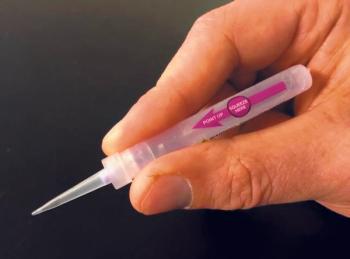
Dr. Matt Davidson, Ph.D., wanted to find an effective and affortable treatment for the recurring common warts on his hands, which has lead him to become one of the youngest, if not youngest, pharmaceutical company pioneers in the country.

The Food and Drug Administration (FDA) approved sarecycline (Seysara, Almirall, S.A.) in October for the treatment of non-nodular moderate-to-severe acne vulgaris in patients 9 years of age and older, according to a company news release.

Victor Desmond Mandel, M.D. and colleagues describe a reconstruction strategy for chronic infected neoplastic ulcers of the lower extremities using a dermal matrix and a unique postoperative dressing protocol.

Image IQ: A 55-year-old woman with a history of inflammatory bowel disease reported a very painful, deep pustule on her leg that may rupture. What’s your diagnosis?

In this month's Innovation Column, Drs. Steve Xu and William Ju discuss the need for entrepreneurship education in medical school and residency training.

Identifying the presence of bacterial and fungal species improves antimicrobial therapy, according to a recent review published in the July issue of Advances in Wound Care.
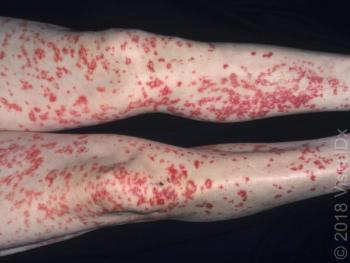
Image IQ: A 43-year-old man with a symmetrical palpable purpura rash on his legs. What’s your diagnosis?
Women in treatment for skin diseases, including psoriasis, experience higher levels of non-psychotic psychiatric disorders, including anxiety and depression, than men.