

Topicals aimed at reviving estrogen-deficient skin and warding off damage from UV rays hours after exposure, while repairing DNA, are among the new cosmeceutical innovations backed by science.
Topicals aimed at reviving estrogen-deficient skin and warding off damage from UV rays hours after exposure, while repairing DNA, are among the new cosmeceutical innovations backed by science.

Although most skincare innovations happen in the medically dispensed lines before mass market availability, Dr. Vivian Bucay points out that there are lower priced options backed by science that dermatologists can confidently recommend to patients looking for effective skincare products.

Psoriasis and atopic dermatitis patients want more nonsteroidal topical options. This expert breaks down newly available treatments and those to come.
Are there effective hyperhidrosis treatments that patients can better afford and tolerate? Dr. Jisun Cha discusses practical points of diagnosis and treatment.
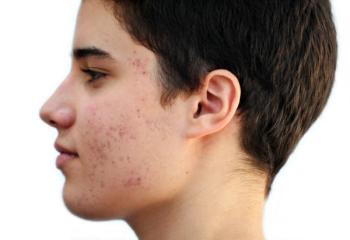
Are your patients happy with their current acne treatment? These five new therapeutic options could offer better results, according to several studies.

Recognizing the role of stress in skin disease can allow dermatologists to empower their patients to pursue any and all avenues for managing their disease.

In recognition of the first anniversary of our Innovation column, Drs. Steve Xu and William Ju reflect on the range of topics covered throughout the year and highlight what's to come.

Dean Celia, our original managing editor, reflects the beginning of Dermatology Times and the medical editors, Dr. Ronald Wheeland and Dr. Norman Levine, who ensured the publication focused on the key industry developments that mattered most to practicing dermatologists.

A recent study discovered that body mass index (BMI) and age of disease onset may play a part in the development of hypertension in psoriatic arthritis and psoriasis. Read what researchers found in this article.

Because nobody wants unhappy patients. Learn how to help yours avoid procedure regret from a few of these RealSelf patient stories.
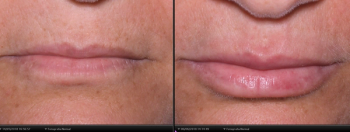
Can the lips be augmented without dermal filler injections? According to Carlos Wambier, M.D., Ph.D, the answer is a resounding “yes.” (And we’re not talking about Kylie’s infamous glass challenge...)

Researchers in Taiwan investigated whether behavioral modifications such as weight reduction, alcohol abstinence, smoking cessation and exercise could impact psoriasis severity. Read what they discovered in this article.

Novel treatments for rosacea such as intradermal botulinum toxin-A and light therapies show promise, but more data is needed to prove their efficacy and safety in this patient population, says a recent paper.
Acoustic waves help to improve wound healing by increasing the release of systemic growth factors, but can they be used to effectively minimize post-cosmetic surgery scars?
Our Dermatology Times reporter gleans takeaways from several experts who spoke at the summer meeting of the American Academy of Dermatology.

LEO Pharma has submitted an Investigational New Drug Application (IND) to the U.S. Food and Drug Administration (FDA) for the study of an oral atopic dermatitis treatment, JW1601/LP0190, according to a company announcement.

Researchers examine a microdermal grafting technique for hard-to-treat hypopigmented scars.
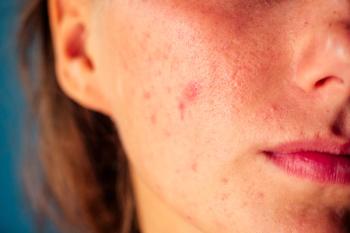
The U.S. Food and Drug Administration (FDA) accepted a new drug application (NDA) for Ortho Dermatologics’ novel tazarotene O.045% lotion (IDP-123) with a PDUFA action date of Dec. 22, 2019, according a recent announcement from the company.

How many patients who seek cosmetic procedures believe they are discriminated against because of their older age? A recent study reports findings.

Research suggests iris width may determine aspects of ideal facial anatomy and be used to determine ideal facial structure.

In this on-going article, we plan to highlight new skincare products as they are released. Bookmark this page to stay up-to-date as we will update it every month.

In this table, we highlight how psoriasis treatments have evolved over the past four decades.

To meet the skin's changing needs over various life stages, experts at the Generational Dermatology Symposium held earlier this year suggest being proactive about barrier problems and that moisturization is key to maintaining skin health.

Researchers examine T. purpurea benefits for “well-aging” in mature population.

Adding PRP to a base serum designed to maintain the viability of platelet cells personalizes topical cosmetic products.
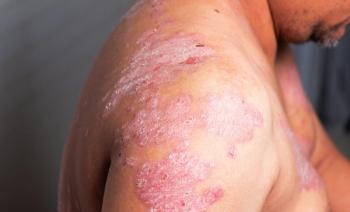
Psoriasis patients face a long list of comorbidities, increased medical costs and increased mortality. Experts agree that the burden of psoriasis is heavy - what can dermatologists do to offer relief?
Gillette announced in July that a 12-week study shows its SkinGuard razor reduced incidence of pseudofolliculitis barbae papules in men by more than 61% at three months.