


The drug used to treat several dermatological disorders has immunosuppressive effects and has been linked with photosensitizing properties.
The drug used to treat several dermatological disorders has immunosuppressive effects and has been linked with photosensitizing properties.

Biosimilars have been a trending topic in 2023 with 8 adalimumab biosimilars expected to hit the market this year.
Will Kirby, DO, FAOCD, talks with Blossom Hashemi, MSN, BS, FNP-C, about the best aesthetic career advice, available resources, and the role of allied health care professionals in aesthetics.

Clinicians should strive to address the unique medical and aesthetic challenges seen in vitiligo.

Adolescents and adults with seborrheic dermatitis may have a new topical treatment soon.

Recent research highlighted the important role of the skin’s microbiota in maintaining the homeostasis of the skin and the potential role the human microbiota may play in the development of skin cancer.
It’s crucial for patients and health care providers to consider their personal wellbeing in their daily lives.

Research published in JAMA Dermatology finds dupilumab works quickly and safely for patients with erythrodermic atopic dermatitis.

From topical antibiotics like clindamycin to biologic injectables like adalimumab to surgical options like deroofing, treatment for HS can come in many forms.

Emmy Graber, MD, MBA, covered it all in her Winter Clinical Miami talk, offering take-home pearls via patient case studies.
With now more than 6 months of real-world use for baricitinib available, what challenges still remain for the alopecia areata treatment and what other agents are on the horizon?

Treatment is not mandatory and, in fact, clinicians are still without an FDA-approved treatment option, but parents often insist on some sort of action.

Topicals, orals, biologics—Armstrong’s Winter Clinical Miami presentation focused on new treatment options for patients with psoriasis with an emphasis on real-world observations.
Alexandra Golant, MD, and Seemal Desai, MD, weigh the pros and cons of each treatment option for atopic dermatitis, considering mechanism of action, efficacy, and safety. Which will emerge victorious?
“So much new in the world of pediatric dermatology—new and novel treatments for atopic dermatitis, hemangiomas, childhood blistering diseases, warts. We are practicing during the Golden Age of dermatology,” Swanson says.

The proportion of patients who achieved a SALT score < 10 jumped from 24.9% at 36 weeks to 28.9% at 52 weeks in the BARI 4-mg arm and 11.8% to 15.3% in the BARI 2-mg arm.
When evaluating treatment options for patients with psoriasis, rosacea, or eczema, clinicians should employ a top-down approach and remember to consider topical therapies.

Five days of treatment with the topical therapy measurably improved symptoms and emotional/functional impact for patients with actinic keratosis at week 8.

“We're going to talk about medical hair loss in terms of diagnosis and treatment and really try to make it very easy,” Leavitt says.

From deucravacitinib to roflumilast to tralokinumab and everything in between, James Del Rosso, DO, previews his upcoming Winter Clinical Miami session on new therapies.

“It's always a fun, vibrant educational session. We learn tips and advice, and it really is for any injector, both novice [and] advanced. You learn a lot of information,” Ablon says.
“A lot of our colleagues are just getting used to the new biologics for atopic dermatitis like tralokinumab and dupilumab, which have really been breakthroughs in the treatment of atopic dermatitis,” Lebwohl, one of the co-founders of the Fall and Winter Clinical meetings, says.

With an emphasis on real-world applicability and actionable pearls, clinicians gather in Miami to kick off the newest addition to the Fall and Winter Clinical meeting lineup.
This week's edition of the Mainstream Patient features stories about quality skin care products under $20, how to address skin picking, trending mushroom skin care, and more.

Mark Nestor, MD, PhD, a co-director of the Winter Clinical Miami meeting, promises attendees a hands-on learning experience with real-world applicability.

Uncombable hair syndrome (UHS) can cause distress for families, but dermatologists can help with the rare genetic disease diagnosis and management.

PDT has an advantage in that it can combine easily with other therapies, thereby increasing its effectiveness rates.
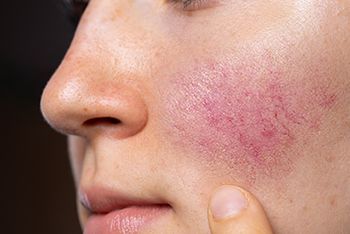
A recent study published in Clinical and Experimental Dermatology observed a link between menopause and rosacea and found that menopausal flushing can exacerbate and precipitate rosacea.

Several dietary approaches have been proposed to play a role in the pathogenesis, management, and/or therapy of diseases such as vitiligo.
In this week’s Pointers with Dr Portela, the 208SkinDoc talks to Jennifer Krejci, MD, FAAD, about preserving the hairline.