

News|Articles|June 9, 2025
Top 5 Articles of the Week: June 1-6
Listen
0:00 / 0:00
Key Takeaways
- COVID-19 and vaccination show high seroconversion rates in DIMID patients, with rare severe outcomes and increased disease activity in some cases.
- Advances in chronic spontaneous urticaria treatments include rilzabrutinib and dupilumab, with significant clinical implications for dermatologists and allergists.
Explore the top headlines of the week including insights on the latest clinical trials, therapeutic updates, and more.
Advertisement
To stay up-to-date with the latest dermatology news, sign up to receive our
1. Patients with DIMIDs and Pandemic Risks
Research from the T2B! substudy evaluated how COVID-19 and vaccination affected patients with immune-mediated inflammatory diseases (DIMIDs), including atopic dermatitis (AD), psoriasis, and vitiligo. Patients with vitiligo had the highest reported COVID-19 incidence (51.1%), though severe outcomes were rare. Vaccination resulted in high seroconversion rates across all groups, reaching 100% in vitiligo patients after the second dose. Immunosuppressant therapy did not increase infection risk. While most patients tolerated infection and vaccination well, a minority—particularly those with progressive disease at baseline—reported increased DIMID activity afterward. The study underscores the importance of continued monitoring of DIMID progression following COVID-19 and vaccination.
2. Q&A: Jonathan Bernstein, MD, FAAAAI, Discusses Advances in Chronic Spontaneous Urticaria Treatments and AAAAI Data
At the recent
In addition, Bernstein authored an abstract outlining findings from the LIBERTY-CSU CUPID Study A and Study C phase 3 trials evaluating dupilumab (Dupixent; Regeneron and Sanofi) in patients with CSU who remain symptomatic despite H1-antihistamine treatment.
In a Q&A with Dermatology Times, Bernstein, a physician practicing in Cincinnati, Ohio, explored the studies and their key insights, their clinical impact on dermatologists and allergists, and the implications for the future of CSU treatment.
3. GLP-1s Emerging as Adjunct Tools in Psoriasis
At the
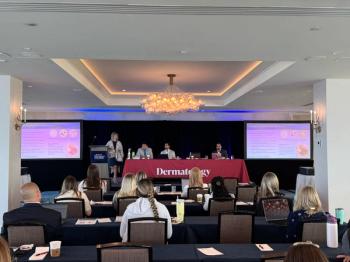
4. Heather Gates, PA-C, Leads Inaugural Aesthetics Workshop at Fall Clinical PA/NP
“Lots of fascinating things going on,” Heather Gates, PA-C, told Dermatology Times. “We're trying to stay on the cusp of aesthetics because it is a field that's in its infancy and is ever changing.”
To shape the workshop, Gates invited 2 standout physician assistants in the aesthetic space, Gary Rubin, PA-C, and Tanya Patron, PA-C. Rubin, known for his precise understanding of facial anatomy, demonstrated facial balancing techniques and live injectable procedures on Gates. Patron, a specialist in non-surgical rhinoplasty using dermal fillers, shared insights into this cutting-edge technique.
5. Cracking the Code on Chronic Hand Eczema
In thier presentation at FCPANP25, Andrea Murina, MD, and Linda Stein Gold, MD, discussed chronic hand eczema (CHE), a multifactorial condition marked by persistent or recurrent flares, varied morphology, and significant impact on quality of life. Diagnostic complexity arises from overlapping etiologies—such as irritant or allergic contact dermatitis and atopic dermatitis—with involvement of Th1, Th2, Th17, and Th22 pathways. Traditional treatments like topical corticosteroids pose risks with long-term use, prompting interest in emerging topical JAK inhibitors. Delgocitinib, a pan-JAK inhibitor, showed 40% of patients achieving “clear” or “almost clear” status in trials, with minimal systemic absorption or irritation. Ruxolitinib, a JAK1/2 inhibitor approved for atopic dermatitis, also demonstrated benefit in CHE with favorable safety. These new therapies may offer steroid-sparing options for moderate to severe CHE and represent a potential shift in future management.
Advertisement
Related Content
Advertisement
Latest CME


Advertisement
Advertisement
Trending on Dermatology Times
1
How Emerging Androgenetic Alopecia Therapies Target DHT at the Scalp Level
2
25 Years Later: Remembering September 11 Through the Lens of Dermatologic and Burn Care
3
Dermatology Times Inaugural NP/PA Connect Cutaneous Oncology Workshop Kicks Off in Tampa
4
Social Media Mythbusters: Beef Tallow
5