Banner - NPPA Connect
News|Articles|May 28, 2026

Top 5 Articles of the Month: May 2026

Key Takeaways

  • Mechanism-based hair restoration with PP405 aims to move beyond anti-shedding approaches by driving dormant follicles back into anagen, supported by early efficacy signals and favorable topical safety.
  • Extended-interval biologic dosing with zumilokibart maintained response to week 52, achieved notable complete clearance rates, and could recalibrate adherence and treatment-burden expectations in moderate-to-severe AD.
SHOW MORE

Explore the top headlines of the month, including insights on the latest clinical trials, therapeutic updates, and more.

To stay up to date with the latest dermatology news, sign up to receive our e-newsletters.

1. Reactivating the Follicle: PP405 Moves Toward Late-Stage Trials for Alopecia

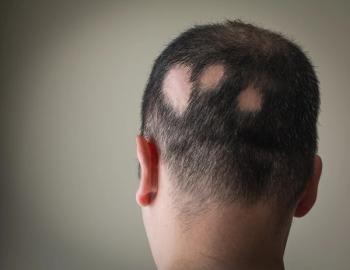
In an interview with Dermatology Times, Christina Weng, MD, and Daniel Gil, PhD, discussed PP405, a novel topical therapy for alopecia that aims to regenerate hair by reactivating dormant hair follicle stem cells. Unlike existing treatments that mainly slow hair loss or improve hair thickness, PP405 targets the underlying biology of hair growth by stimulating inactive follicles to re-enter the growth phase. Early phase 2a data showed increased follicular unit activation and terminal hair growth with a favorable safety profile and no systemic absorption. With further trials planned, PP405 could represent a shift toward regenerative, mechanism-based treatment for hair loss in both men and women.

MORE ON ALOPECIA

2. Extended-Interval Dosing With Zumilokibart May Redefine AD Management

Emerging data presented at the 2026 American Academy of Dermatology Annual Meeting suggest that zumilokibart (APG777; Apogee Therapeutics) may offer a new approach to long-term management of moderate to severe atopic dermatitis by combining durable efficacy with dramatically reduced dosing frequency. According to Emma Guttman-Yassky, MD, PhD, patients maintained—and in some cases deepened—clinical responses through 52 weeks while receiving as few as 2 to 4 doses per year. The therapy also demonstrated notable rates of complete skin clearance (EASI 100), rapid onset of improvement, and a safety profile consistent with existing biologics. The findings highlight a potential shift in AD treatment goals toward therapies that not only control disease effectively, but also reduce treatment burden and better align with patient preferences and long-term adherence.

MORE FROM AAD

3. Social Media Mythbusters: At-Home Red Light and LED Therapy Devices

Social media has turned at-home red light therapy devices into one of the most talked-about trends in skin care, with claims ranging from wrinkle reduction to acne clearance and hair regrowth. But how much of the hype is actually supported by science? In this edition of Social Media Mythbusters, we break down the biology behind photobiomodulation, review the latest evidence on consumer LED devices, and explore what dermatology clinicians should tell patients about safety, efficacy, and realistic expectations.

4. The Summer I Turned Still: A Dermatology PA's Reflection on a Year Away

In this reflective personal essay, Lauren Miller, PA-C, shares how stepping away from clinical practice after years of nonstop professional and personal demands became less about rest and more about recovery from burnout. Framed through the lens of physician and clinician wellness, the piece explores the emotional and physical toll of chronic overextension, the rediscovery of family and personal identity during a sabbatical, and the long-term importance of setting sustainable boundaries in medicine. Ultimately, it offers a candid perspective on ambition, balance, and redefining success in a healthcare culture that often rewards constant output.

MORE FROM DERMATOLOGY TIMES NP/PA CONNECT

5. New Acne Study Shows 40% Reduction in Sebum Using Transdermal Botulinum Toxin Application

A new study suggests that needle-free transdermal delivery of botulinum toxin may offer a promising alternative to injectable treatments for oily and acne-prone skin. Using oxygen-assisted TDA technology via the DERMADROP MED device, investigators reported meaningful reductions in sebum production, improved patient-reported skin quality, and high satisfaction without pain, downtime, or injection-related adverse effects. Although the study was small and observational, the findings highlight growing interest in noninvasive aesthetic therapies that combine efficacy with improved tolerability and patient comfort.