


Opinion|Videos|September 4, 2025
Practicing Topical Steroid Stewardship and Timely Follow-Up
Author(s)Mona Shahriari, MD, FAAD, James Song, MD, FAAD
Panelists discuss how evolving concerns about long-term topical corticosteroid use are prompting a shift toward safer, nonsteroidal alternatives such as roflumilast, emphasizing structured treatment plans, early patient education, and improved office workflows to support individualized, steroid-sparing psoriasis care that enhances both outcomes and trust.
Advertisement
Episodes in this series
The conversation turns toward a more critical view of topical corticosteroid (TCS) stewardship in psoriasis care. With increasing evidence of long-term risks—not only cutaneous (eg, skin atrophy) but also systemic effects such as insulin resistance, hypothalamic-pituitary-adrenal axis suppression, and even bone health concerns—clinicians are being urged to reconsider prolonged or indiscriminate TCS use. Although steroids still play a valuable role, the consensus is that patients should be transitioned off them sooner, especially now that nonsteroidal options with comparable efficacy are more accessible.
The speakers also stress the importance of choosing what’s right for the patient, not just what’s easy. Historically, TCSs have been the go-to because of convenience and formulary access. But with improved access programs for newer agents such as roflumilast, physicians can now build office workflows that make prescribing safer alternatives more feasible. By prioritizing long-term patient outcomes over short-term prescribing ease, clinicians can reduce treatment-related risks and improve care quality. Transparent communication also plays a central role, as patients are told up front that the first-line option may or may not work but that second-line therapies are available and likely more effective if needed.
This proactive, expectation-setting strategy also enhances follow-up adherence and trust. Patients are more likely to return and stick with therapy if they feel supported and informed. Clinicians typically schedule follow-ups within 4 to 6 weeks, adjusting based on disease severity and patient anxiety. These check-ins are often short, especially if the clinician has documented a backup plan at the initial visit. The message is clear: Early, honest conversations and a structured treatment pathway—paired with a reduced reliance on long-term TCSs—create better experiences for both patients and providers while ultimately improving disease management outcomes.
Advertisement
Related to this article

A retrospective claims analysis of 2897 matched pairs found hazard ratios of 0.48 to 0.67 for new atopic disease with dupilumab vs systemic corticosteroids in children.
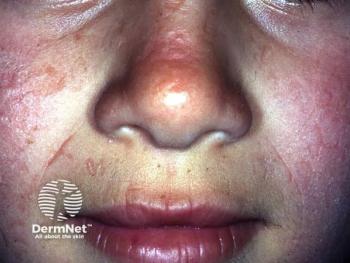
Disc Medicine reports the phase 3 APOLLO trial met all primary and secondary end points, with whole-blood PPIX reduced 41.4% vs placebo and an NDA resubmission planned by end of 2026.

Castor oil has become a popular social media remedy for thicker, longer hair, but evidence supporting its ability to stimulate hair growth remains limited.
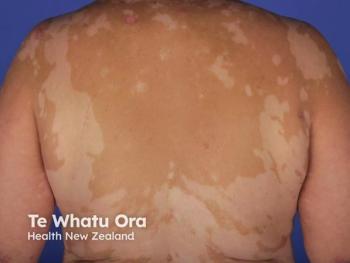
The FDA clearance allows Edesa to expand an ongoing placebo-controlled study of the CXCL10 antibody EB06 to US sites, with topline data expected in the fourth quarter of 2027.

The novel oral helicase-primase inhibitor demonstrated significantly higher rates of complete lesion healing compared with investigator’s choice treatment in the phase 3 PRIOH-1 trial.
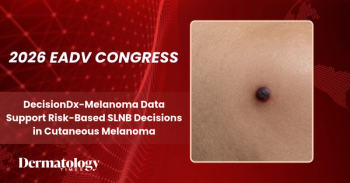
Prospective data suggest DecisionDx-Melanoma may help refine SLNB decisions and identify recurrence risk beyond conventional staging.

Falk G. Bechara, MD, discusses long-term tunnel control, structural damage, and the evolving role of biologics and surgery in HS care.
Galderma has agreed to acquire ZO Skin Health for $1.5 billion, adding the physician-dispensed skincare brand to a portfolio that already includes Cetaphil and Alastin.
Advertisement
Advertisement
Trending on Dermatology Times
1
Social Media Mythbusters: Can Castor Oil Really Grow Hair?
2
Bitopertin Meets All End Points in Phase 3 APOLLO Trial for EPP
3
EADV 2026 Atopic Dermatitis Highlights: Tilrekimig, RAC2 Inhibition, and Level Up Data
4
FDA Approves Pritelivir for Refractory Mucocutaneous HSV in Immunocompromised Adults
5