


Opinion|Videos|August 28, 2025
Navigating Topical Treatment Access and Escalating to Systemic Therapy
Author(s)Mona Shahriari, MD, FAAD, James Song, MD, FAAD
Panelists discuss how the availability of both roflumilast foam and cream allows for personalized, preference-driven treatment plans that enhance adherence while streamlined access strategies and improved topical efficacy are reshaping the role of nonsteroidal agents in psoriasis care, extending their use beyond mild disease to special sites and even as systemic-sparing options.
Advertisement
Episodes in this series
When choosing between roflumilast foam and cream, clinicians emphasize simplicity and patient preference. Both formulations are effective, but the foam is often favored—even for non–hair-bearing areas—because of its light texture, nongreasy feel, and elegant vehicle. In practice, physicians often let patients try both in the office (where samples are available), allowing them to choose based on personal comfort. This “choose-your-own-adventure” approach increases patient buy-in, enhances adherence, and accounts for individual needs such as using cream in intertriginous areas and foam on the scalp.
Navigating insurance approvals remains a key hurdle, and clinicians share best practices to streamline access. Thorough documentation is critical, detailing prior treatment failures (topical corticosteroids, calcineurin inhibitors, vitamin D analogs) and setting up the case for systemic consideration if needed. Specialty pharmacies play a vital role by managing prior authorizations, applying coupons, and reducing out-of-pocket costs and logistical burden. Correct International Classification of Diseases, Tenth Revision coding is also essential, as vague or incorrect codes can trigger denials. With the right systems in place, some patients report seamless experiences, including direct shipment and minimal wait times.
More broadly, the discussion reflects a paradigm shift in topical psoriasis treatment. With well-tolerated, nonsteroidal options such as roflumilast, topicals are no longer limited to just mild disease; they’re now seen as viable for special sites (eg, scalp, hands) and for patients who may not be ready for systemics. Improved adherence from simpler regimens (eg, 1 product once daily) reduces treatment burden and may even delay or eliminate the need for escalation. Although topical corticosteroids are still useful—particularly for short-term flares—these newer agents could take a more prominent, first-line role, pending coverage and cost considerations. This evolving landscape is empowering clinicians and patients alike with more flexibility and individualized care.
Advertisement
Related to this article

A retrospective claims analysis of 2897 matched pairs found hazard ratios of 0.48 to 0.67 for new atopic disease with dupilumab vs systemic corticosteroids in children.
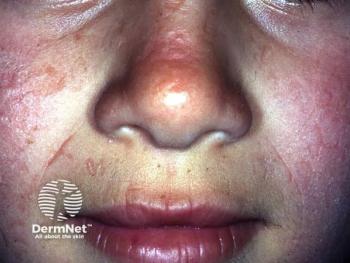
Disc Medicine reports the phase 3 APOLLO trial met all primary and secondary end points, with whole-blood PPIX reduced 41.4% vs placebo and an NDA resubmission planned by end of 2026.

Castor oil has become a popular social media remedy for thicker, longer hair, but evidence supporting its ability to stimulate hair growth remains limited.
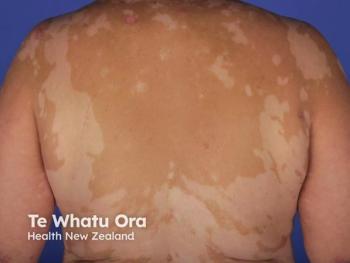
The FDA clearance allows Edesa to expand an ongoing placebo-controlled study of the CXCL10 antibody EB06 to US sites, with topline data expected in the fourth quarter of 2027.

The novel oral helicase-primase inhibitor demonstrated significantly higher rates of complete lesion healing compared with investigator’s choice treatment in the phase 3 PRIOH-1 trial.
Prospective data suggest DecisionDx-Melanoma may help refine SLNB decisions and identify recurrence risk beyond conventional staging.

Falk G. Bechara, MD, discusses long-term tunnel control, structural damage, and the evolving role of biologics and surgery in HS care.
Galderma has agreed to acquire ZO Skin Health for $1.5 billion, adding the physician-dispensed skincare brand to a portfolio that already includes Cetaphil and Alastin.
Advertisement
Advertisement
Trending on Dermatology Times
1
Social Media Mythbusters: Can Castor Oil Really Grow Hair?
2
Bitopertin Meets All End Points in Phase 3 APOLLO Trial for EPP
3
EADV 2026 Atopic Dermatitis Highlights: Tilrekimig, RAC2 Inhibition, and Level Up Data
4
FDA Approves Pritelivir for Refractory Mucocutaneous HSV in Immunocompromised Adults
5