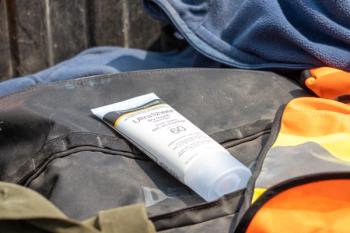
Two new Neutrogena facial sunscreens incorporate bemotrizinol, the first new sunscreen active ingredient added to the US OTC monograph in decades.
This review of the latest dermatologic studies includes insights on dupilumab-associated rosacea, the prevalence of young adult acne, psoriasis patients with acute coronary syndrome, and more.
This single-center retrospective cross-sectional study evaluated coronary artery calcification (CAC) and acute coronary syndrome (ACS) risk among 89 Japanese patients with psoriasis using chest computed tomography (CT) and coronary CT angiography–derived fractional flow reserve (FFRCT). CAC was identified in 31 patients, who were older and more likely to have psoriasis vulgaris, reduced renal function, and higher hemoglobin A1c levels than those without CAC. Among 22 patients undergoing coronary CT angiography, coronary artery calcium scores correlated positively with psoriasis severity (PASI), systemic inflammation (C-reactive protein), and glycemic control. FFRCT assessment in 10 patients with significant coronary stenosis revealed that six had functionally significant ischemia, indicating elevated ACS risk. Multivariable analysis identified age as the only independent predictor of ACS risk.1
An in vitro study investigated formulation-specific pro-inflammatory effects of botulinum toxin type A (BoNT-A) on human dermal fibroblasts, focusing on interleukin-6 (IL-6) expression. Cultured adult dermal fibroblasts were exposed to three commercially available BoNT-A formulations—Bocouture, Vistabex, and Azzalure—across multiple concentrations and time points (24, 48, and 72 hours). IL-6 levels were quantified by ELISA, and cell viability was assessed using MTT assays to exclude cytotoxic effects. Vistabex consistently induced a significant increase in IL-6 expression, with the most pronounced effect observed at 0.5 U/mL after 24 hours, while Bocouture and Azzalure did not significantly alter IL-6 levels under any tested conditions. None of the formulations reduced cell viability below 80%. The results may have clinical relevance for patients predisposed to inflammatory skin reactions undergoing BoNT-A treatment.2
This retrospective case series evaluated the effectiveness of foam sclerotherapy for dermatologic symptoms of lipodermatosclerosis (LDS), a severe complication of chronic venous disease. Twenty-eight patients with LDS who had failed or could not tolerate conservative therapy underwent ultrasound-guided foam sclerotherapy and were followed for clinical outcomes. Significant improvements were observed in overall disease severity, pain, skin pigmentation, and inflammation. The median Venous Clinical Severity Score decreased markedly at 1 month and continued to improve at final follow-up. Pain relief was rapid, with significant reductions noted as early as 1 week after treatment. Foam sclerotherapy was well tolerated, with no major complications reported. The approach may be particularly valuable for patients with delayed diagnosis or those unable to tolerate compression therapy or systemic treatments.3
This pharmacovigilance and clinical review study evaluated the association between dupilumab therapy and rosacea using FDA Adverse Event Reporting System (FAERS) data and published case reports. A disproportionality analysis of FAERS reports from 2017–2024 identified a robust signal linking dupilumab with rosacea across four statistical methods, suggesting a consistent reporting association. Reports predominantly involved adult and female patients. To contextualize these findings, the authors reviewed 10 published cases of dupilumab-associated rosacea (DAR), which revealed a characteristic clinical phenotype of papulopustules on persistent centrofacial erythema, often with burning or stinging sensations and frequent Demodex overgrowth. Onset varied widely, from weeks after treatment initiation to post-discontinuation. Most patients improved with rosacea-directed therapies, though some required dupilumab dose modification or switching biologics. The authors emphasize that DAR is distinct from dupilumab-associated head and neck dermatitis and highlight the importance of accurate phenotyping to guide management.4
A new cross-sectional study evaluated the prevalence of acne vulgaris and its psychosocial impact among 1,067 university students in northern Bangladesh. Acne was reported by 47.6% of participants, with most cases classified as mild or moderate severity. Increasing acne severity was significantly associated with poorer quality of life, as measured by the Dermatology Life Quality Index, and higher social appearance anxiety, although generalized anxiety and depression were not independently linked. Multivariable analysis identified female sex, urban residence, middle-income status, smoking, alcohol consumption, perceived dietary influence, and a positive family history as significant predictors of acne. Despite the substantial burden, only one-third of affected students consulted a dermatologist, while many relied on self-medication, home remedies, or no treatment.5
References
1. Watabe H, Ishibashi Y, Go K, et al. Clinical Profiles of Psoriasis Patients With Coronary Artery Calcification and Assessment of Acute Coronary Syndrome Risk Factors Using Coronary Computed Tomography Angiography-Estimated Fractional Flow Reserve. J Dermatol. Published online January 5, 2026. doi:10.1111/1346-8138.70133
2. Sommatis S, Mocchi R, Di Francesco S, et al. Pro-Inflammatory Signaling in Dermal Fibroblasts: A Possible Role of Different Botulinum Toxin Formulations on IL-6 Expression. J Cosmet Dermatol. 2026;25(1):e70646. doi:10.1111/jocd.70646
3. Tsai, Yu-Ting, Lin, Shang-Hung, Foam Sclerotherapy Alleviates Dermatological Symptoms of Lipodermatosclerosis of the Lower Extremities, Dermatologic Therapy, 2026, 6699374, 7 pages, 2026. https://doi.org/10.1155/dth/6699374
4. Li S, Lin J, Yang X, et al. From signal to strategy: a disproportionality analysis of dupilumab-associated rosacea in FAERS with a summary of reported clinical cases. J Dermatolog Treat. 2026;37(1):2605426. doi:10.1080/09546634.2025.2605426
5. Jisa TA, Rahat MTI, Sumi MSA, et al. Prevalence of Acne and Its Impact on Quality of Life, Social Appearance Anxiety and Treatment Practices Among Young Adults. J Cosmet Dermatol. 2026;25(1):e70654. doi:10.1111/jocd.70654