

News|Articles|April 8, 2026
Journal Digest: April 8, 2026
Author(s)Marie Bosslett, Assistant Editor
Listen
0:00 / 0:00
Key Takeaways
- Acne scars correlate with modifiable care factors—especially delayed initiation and lower prior treatment exposure—alongside severity, duration, oily phenotype, and Fitzpatrick III–IV, with increased pruritus and postinflammatory hyperpigmentation.
- Psychological burden is amplified in scarred patients, with higher impulsivity, depression, stress, and global distress, and worse quality of life; scar severity tracks positively with psychosocial impairment.
This review of the latest dermatological studies includes insights on acne in women with hyperandrogenism, fractional CO2 laser and gold microneedling for scarring, oxygen plasma acne treatment, and more.
Advertisement
Journal of Cosmetic Dermatology | Impulsivity, Psychological Distress, and Quality of Life Among the Patients With Acne Vulgaris: Factors Related to Acne Scars
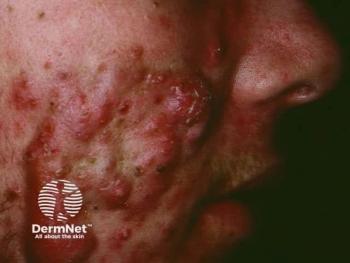
This cross-sectional study of 403 adults with acne vulgaris investigated clinical, behavioral, and psychological factors associated with acne scarring. Scars were present in 56% of patients and were significantly associated with male sex, earlier acne onset, longer disease duration, greater acne severity, delayed treatment initiation, oily skin type, and Fitzpatrick skin types III to IV. Clinical features such as pruritus and postinflammatory hyperpigmentation were also more common in patients with scars. Notably, patients with acne scars reported lower rates of prior systemic and topical treatment use, suggesting a potential protective effect of early and consistent therapy. Psychologically, patients with scars demonstrated significantly higher impulsivity, depression, stress, and overall psychological distress, along with poorer quality of life scores. Scar severity correlated positively with impulsivity and psychological burden, and negatively with age of acne onset.1
Dermatologic Therapy | Efficacy and Safety of Low-Dose Isotretinoin, Spironolactone, and Diammonium Glycyrrhizinate for Acne in Women With Hyperandrogenism: A Randomized Controlled Trial
A randomized, open-label, assessor-blinded trial evaluated the efficacy and safety of low-dose isotretinoin alone and in combination with spironolactone, diammonium glycyrrhizinate, or both in 112 women with moderate to severe acne and hyperandrogenism. Over 8 weeks, all treatment groups demonstrated significant clinical improvement in lesion counts, Global Acne Grading System (GAGS) scores, and facial erythema, along with improved quality of life and psychological outcomes. The triple therapy regimen achieved the greatest efficacy, with a mean lesion clearance rate of 90.6%, compared with 73.9% for isotretinoin monotherapy. Combination regimens also showed favorable hormonal trends, including reductions in androgen levels. All treatments were generally well tolerated, with mucocutaneous dryness as the most common adverse event and no serious safety concerns observed.2
Skin Research & Technology | Comparative Efficacy and Safety of Fractional CO2 Laser and Gold Microneedling Radiofrequency for Atrophic Acne Scars: A Systematic Review
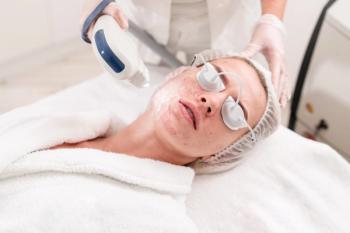
In this systematic review, investigators evaluated the comparative efficacy and safety of fractional CO₂ laser and gold microneedling radiofrequency (MNRF) for the treatment of atrophic acne scars. Across 21 heterogeneous clinical studies, both modalities demonstrated significant improvements in scar appearance, including reductions in severity scores such as ECCA and high patient satisfaction rates. Overall efficacy between the 2 treatments was generally comparable, though outcomes varied by scar subtype. Fractional CO₂ laser showed particular benefit in deeper, well-defined scars (e.g., ice-pick), while MNRF was more effective for superficial or rolling scars due to its dermal remodeling with epidermal preservation. Safety profiles differed notably: CO₂ laser was associated with longer downtime and higher risk of post-inflammatory hyperpigmentation, whereas MNRF offered shorter recovery and fewer pigmentary complications, making it favorable for darker skin types. Combination therapy showed promising synergistic effects, improving outcomes without increasing adverse events.3
Dermatologic Therapy | Assessing the Role of Baseline Creatine Kinase Measurement Before Initiating Oral Isotretinoin in Acne Vulgaris Patients: Insights From a Retrospective Cohort of 1256 Individuals
This large retrospective cohort study (n = 1256) evaluated changes in creatine kinase (CK) levels during oral isotretinoin therapy for acne vulgaris to clarify the need for routine monitoring. Overall, isotretinoin did not significantly increase CK levels over 6 months, with median values remaining stable from baseline to treatment completion. Although 6.5% of patients had elevated baseline CK and a small subset experienced transient increases—including rare ≥5-fold elevations—these changes were not sustained and were often linked to external factors such as physical activity. Only a few patients reported muscle-related symptoms, and no serious complications occurred. CK levels showed moderate correlations with AST and ALT, suggesting some transaminase elevations may reflect muscle rather than liver effects. Importantly, baseline CK strongly predicted subsequent values, highlighting interindividual variability.4
Small | Cellulose Acetate Fibers With Infiltrated ZnO Nanocrystals: Activation of Antibacterial Properties Against Acne Vulgaris by Oxygen Plasma Treatment
This experimental study describes the development of biodegradable cellulose acetate (CA) fibers infiltrated with zinc oxide (ZnO) nanocrystals as a novel therapeutic platform for acne. Fibers (~2 µm diameter) were fabricated via centrifugal spinning and subsequently loaded with ZnO using vapor phase infiltration (VPI), achieving up to 8 wt% zinc content. Because native CA is hydrophobic, oxygen plasma treatment was applied to enhance surface hydrophilicity and activate antibacterial function. Comprehensive structural and chemical analyses confirmed uniform ZnO infiltration without compromising fiber integrity. Plasma treatment introduced oxygen-containing functional groups, increased wettability, and partially modified ZnO distribution without altering its crystalline structure. Importantly, untreated fibers showed no antibacterial activity, whereas plasma-treated fibers demonstrated significant inhibition of Cutibacterium acnes and Staphylococcus epidermidis, with inhibition zones up to 5 mm.5
References
1. Yanik Hİ, Acer E, Karaman İGY, et al. Impulsivity, Psychological Distress, and Quality of Life Among the Patients With Acne Vulgaris: Factors Related to Acne Scars. J Cosmet Dermatol. 2026;25(4):e70838. doi:10.1111/jocd.70838
2. Jing X, Yang J, He S, Ren J. Efficacy and Safety of Low-Dose Isotretinoin, Spironolactone, and Diammonium Glycyrrhizinate for Acne in Women With Hyperandrogenism: A Randomized Controlled Trial, Dermatologic Therapy, 2026, 4066937, 12 pages, 2026. https://doi.org/10.1155/dth/4066937
3. Xiang X, Shuai W, Mu Y. Comparative Efficacy and Safety of Fractional CO2 Laser and Gold Microneedling Radiofrequency for Atrophic Acne Scars: A Systematic Review. Skin Res Technol. 2026;32(4):e70345. doi:10.1111/srt.70345
4. Demirel Ö, Neslihan A, Gökyayla Ece, et al. Assessing the Role of Baseline Creatine Kinase Measurement Before Initiating Oral Isotretinoin in Acne Vulgaris Patients: Insights From a Retrospective Cohort of 1256 Individuals, Dermatologic Therapy, 2026, 2680904, 8 pages, 2026. https://doi.org/10.1155/dth/2680904
5. Rihova M, Fenclova D, Chennam PK, et al. Cellulose Acetate Fibers With Infiltrated ZnO Nanocrystals: Activation of Antibacterial Properties Against Acne Vulgaris by Oxygen Plasma Treatment. Small. Published online March 25, 2026. doi:10.1002/smll.202513286
Advertisement
Related Content
Advertisement




Advertisement
Advertisement
Trending on Dermatology Times
1
Biologic Therapy Linked to Lower 10-Year MACE Risk Across Racial Groups in Psoriasis
2
Former CDC Director Robert Redfield Joins Turn Therapeutics as Chief Scientific Officer
3
Body Weight, Not BMI, Associated With Brodalumab Response Trajectory in Plaque Psoriasis
4
FDA Grants QRX003 Rare Pediatric Disease Designation in Peeling Skin Syndrome
5