Dermatology clinicians have the opportunity to identify connective tissue disease (CTD) before rheumatologists, and the stakes for getting that recognition correct are higher than ever, said Julio Gonzalez Paoli, MD, at the 2025 Elevate-Derm Fall Conference. Gonzalez Paoli emphasized that advances in immunology and new targeted therapies are transforming how clinicians manage these conditions, both in dermatology and rheumatology. “As we get better with immunology, the [treatments] get better,” he told attendees. “And that is what's happening now.”
The session walked through real patient cases, diagnostic pitfalls, and practical screening steps for dermatology clinicians, with a strong message: dermatology NPs, PAs, and physicians play a central role in early detection and treatment.
When a Rash Isn’t “Just a Rash”: Recognizing Systemic Clues
Gonzalez Paoli, who is a board-certified rheumatologist at Florida Medical Clinic i Florida, opened the session with a case involving a 33-year-old woman sent from a dermatology clinic with a diffuse rash. After looking at her chart, the red flags become evident: Fever, flu-like symptoms, joint pain, chest pain with pleural effusion, pancytopenia, and low-grade proteinuria. Her serologies reveal an antinuclear antibody (ANA) 1:1280, positive SSA/SSB, elevated dsDNA) were classic for systemic involvement.
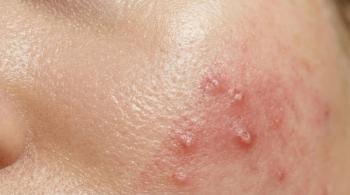
“I like this case, because multiple manifestations are happening at the same time. Obviously, you see some diffuse alopecia, some hair loss, you see some lesions,” he said. “You can see some facial eruption. Very important: the classic butterfly rush, malar rash. It looks a little bit different when it's skin of color, so please pay attention to that.” The biopsy showed classic lupus changes.
Dermatology clinicians should instead focus on specific systemic predictors, including cytopenias, low complements, dsDNA elevation, and acute cutaneous lupus patterns.
Key Factors in Cutaneous Lupus
There are 3 types of cutaneous lupus, each with distinct clinical, histological, and serological presentations, Gonzalez Paoli explained.
Acute cutaneous lupus is associated with the malar “butterfly” rash, with erythema across the cheeks and the bridge of the nose. It almost always results in conversion to systemic lupus erythematosus (SLE).
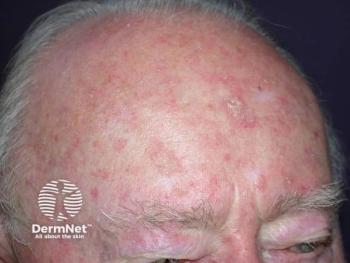
Subacute cutaneous lupus presents with red, raised, scaly nonscarring rashes on sun-exposed areas and is psoriasis-like in appearance. This has a moderate risk (about 50%) of developing into SLE.
Chronic cutaneous lupus, also known as discoid lupus, presents with a red to purple rash resulting in discoloration and scarring. It can also present with scarring on the scalp and related alopecia and can typically be found in the bowl of the ear. This has a very low conversion to SLE (about 5%).
Importantly, Gonzalez Paoli discussed drug-induced lupus, noting that more than 100 drugs from more than 10 drugs categories have been implicated in this presentation. If a middle aged or older man comes into his office, this is the first thing he is going to suspect, as PPIs are the number 1 medication cause. The other most common agents are:
- Hydralazine (high risk)
- Procainamide (high risk)
- Isoniazid (moderate risk)
- Minocycline (very low risk)
- Tumor necrosis factor-α (TNF-α) inhibitors (very low risk)
Takeaway Tips for Dermatology Clinicians
- Evaluate systemic red flags in every lupus-suspected rash.
- Counsel patients about ANA limitations before ordering.
- Review medication lists in atypical presentations.
- Prepare for expanding interferon-targeted options in cutaneous disease.
Hydrochlorothiazide, calcium channel blockers and angiotensin-converting enzyme inhibitors, proton-pump inhibitors (PPIs), terbinafine, and immunomodulators (leflunomide) TNF-α inhibitors are likely to trigger subacute cutaneous lupus.
Avoiding ANA Traps: Counseling Patients Early
ANA is “a real problem in rheumatology,” Gonzalez Paoli told attendees, adding that it is not a diagnostic tool nor is it considered to be a valid marker of disease activity (as opposed to DS DNA or C3/4 in SLE).
Dermatology clinicians can still refer those patients, but Gonzalez Paoli recommends counseling them before the referral, as it is a major source of unnecessary patient anxiety.
“I'm not saying don't order ANAs,” he explained. “What I'm saying is that when we order ANA and it comes back positive, let's tell the patient, ‘Up to 30% of population have a positive ANA. There's many things that can cause this, including previous infections.’”
There is no “best practice” for ordering ANAs, but he shared a few useful tips:
- Be mindful of demographics like race and age
- Give more weight to symptoms, family history, and objective findings
- Do not repeat testing solely because the patient has additional complaints of fatigue or generalized aches
Managing Cutaneous Lupus
Gonzalez Paoli shared a list of dos and don’ts for patients with cutaneous lupus. Above all, he tells patients to avoid the sun. “Wear some protection. You guys are so much better at this than I am and for my patients,” he told attendees. “This is especially true for woman of color.”
Next on his list to avoid smoking tobacco. “You lose response to the treatments when you smoke, and you are increased risk of flares, so tobacco needs to be avoided,” he said.
Protect and nurture your sleep and aim to reduce stress, he added.
“And lastly, what I tell my patients: ‘Take your vitamins,’" he said. "And what are your vitamins in lupus? Black, green, hydroxychloroquine, we love, love, love our hydroxychloroquine for our patients."
Second line systemic treatment is methotrexate/mycophenolate, he said.
Third line treatment is evolving quickly, Gonzalez Paili, with a lot of research and excitement for the TYK2 (like deucravacitinib), JAK, and interferon pathways (like anifrolumab).2,3,4
The Bottom Line for Dermatology Practices
As immunology advances, dermatology practices will increasingly identify and manage more of the cutaneous disease before rheumatology consults become available, Gonzalez Paoli told attendees. He encouraged collaboration, noting, “I like to get to know you… anything that I can help you with. This is a passion of mine.”
References
- Gonzalez Paoli J. Beyond the Rash: Diagnosing Connective Tissue Diseases Bottom of Form. Presented at the 2025 Elevate-Derm Fall Conference; November 12-16, 2025; Tampa, Florida.
- Wasserer S, Seiringer P, Kurzen N, Jargosch M, Eigemann J, Aydin G, Raunegger T, Schmidt-Weber CB, Eyerich S, Biedermann T, Eyerich K, Lauffer F. TYK2 inhibition improves clinical and molecular hallmarks in various subtypes of cutaneous lupus. Br J Dermatol. 2025 Aug 8:ljaf293. doi: 10.1093/bjd/ljaf293. Epub ahead of print. PMID: 40795287.
- Dinkins J, Slavinsky V, Carney B, Frey C. The Role of JAK Inhibitors in the Treatment of Cutaneous Lupus Erythematosus: A Review. J Drugs Dermatol. 2024 Dec 1;23(12):1100-1107. doi: 10.36849/jdd.8045. PMID: 39630679.
- Blum FR, Sampath AJ, Foulke GT. Anifrolumab for treatment of refractory cutaneous lupus erythematosus. Clin Exp Dermatol. 2022 Nov;47(11):1998-2001. doi: 10.1111/ced.15335. Epub 2022 Aug 26. PMID: 35844070.