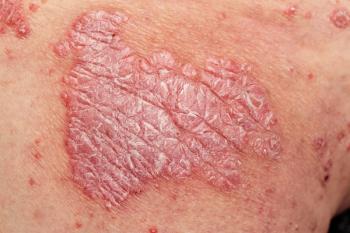
Tina Bhutani-Jacques, MD, explored how disease location, prior treatment response, and patient preference shape topical treatment decisions across 3 plaque psoriasis cases.
Post hoc RESOLVE analysis shows that patients weighing at least 100 kg experience slower clinical response rates to brodalumab than those under 100 kg, establishing body weight over BMI as a key predictor of treatment timing.
A post hoc analysis of the prospective, multicenter observational RESOLVE study found that patients with moderate to severe plaque psoriasis weighing at least 100 kg experienced slower and, at some time points, lower clinical responses to
The analysis included 145 patients treated with brodalumab who were followed for 52 weeks across 11 dermatology centers in Greece.2 Patients were evaluated according to both BMI category (normal, overweight, or obese) and body weight group, defined as less than 100 kg or at least 100 kg. Clinical outcomes included the Psoriasis Area and Severity Index (PASI) and static Physician's Global Assessment (sPGA), while patient-reported outcomes included the Dermatology Life Quality Index (DLQI), Patient Global Assessment (PaGA), and Treatment Satisfaction Questionnaire for Medication (TSQM-9).
At week 12, PASI ≤3 responses did not differ significantly between weight groups. By week 24, however, 89% of patients weighing less than 100 kg had achieved PASI ≤3 compared with 64% of those weighing at least 100 kg (P=.002). At week 36, the corresponding rates were 95% and 82% (P=.024). The difference was no longer statistically significant at week 52, when 98% and 91% of patients, respectively, achieved PASI ≤3.
"Although PASI90 and PASI100 rates at W52 remained significantly lower in the ≥ 100 kg group, our data support that most ≥ 100 kg patients eventually benefit from continued brodalumab therapy, albeit with a more gradual trajectory,” the authors noted.
Physician-assessed outcomes showed a similar pattern. The proportion achieving sPGA 0 was lower among patients weighing at least 100 kg at weeks 12, 24, 36, and 52. At week 52, sPGA 0 was achieved by 82% of patients weighing less than 100 kg compared with 59% of those weighing at least 100 kg. Patients in the higher-weight group also took longer to reach PASI ≤3, with a median of 15 weeks compared with 13.1 weeks for those weighing less than 100 kg (P=.009). At week 52, PASI90 was achieved by 96% versus 77% and PASI100 by 82% versus 59%, respectively.
Patient-reported outcomes also indicated an early difference according to weight. Patients weighing less than 100 kg experienced greater improvement in DLQI at week 12, while by week 52 both groups had mean DLQI scores below 1. Treatment satisfaction was also lower at week 12 among patients weighing at least 100 kg, although differences in TSQM-9 responses resolved by week 52. The proportion reporting being free of symptoms similarly converged after 1 year.
Safety remained generally favorable. Overall, 10% of patients reported at least 1 adverse event, although events were more common among those weighing at least 100 kg (26% vs 7%; P=.003). All reported adverse events were classified as moderate psoriasis exacerbations.
The authors noted that the findings should be interpreted in light of the study's post hoc, single-arm observational design, small subgroup sizes, potential residual confounding, lack of pharmacokinetic monitoring, and the study's conduct in Greece. Overall, they concluded that a body weight threshold of at least 100 kg may be more useful than BMI for identifying patients at risk of delayed or reduced response to brodalumab.
References
1. Panagakis P, Kalapothakou K, Exadactylou D, et al.
2. Nicolaidou E, Panagakis P, Xekardakis D, et al.