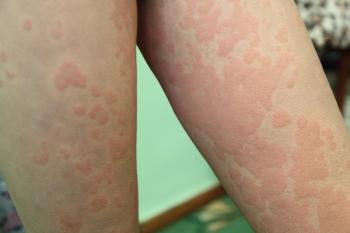
Dietary modification may improve disease activity and quality of life in some patients with chronic idiopathic urticaria.
CSU significantly impacts family quality of life, revealing the need for comprehensive care and support for both patients and their caregivers.
Although the individual physical and psychosocial burden of chronic spontaneous urticaria (CSU) on patients is increasingly well documented, its impact on family members and caregivers remains underexplored. A large, international study sought to address this gap by evaluating family quality of life using the validated Family Dermatology Life Quality Index (FDLQI) and examining how disease severity and control influence family burden across diverse populations.1
The “Greater Patient” concept refers to the immediate close social group and how their quality of life is affected by a person having a chronic skin disease.2 In prior research data, families of patients with vitiligo, pemphigus vulgaris, and atopic dermatitis have shown increased emotional distress and burdensome household costs, particularly with severe disease states.
The trial employed a cross-sectional design and was conducted between January and December 2024 across Urticaria Centers of Reference and Excellence in 12 countries, including Brazil, China, Ecuador, Greece, India, Oman, Poland, Russia, Thailand, Turkey, Peru, and North Macedonia. A total of 2374 participants were enrolled, comprising 1187 patients with CSU and an equal number of accompanying family members or caregivers. Eligible family participants were adults living in the same household as the patient and involved in daily disease management. Treating physicians assessed clinical severity and control using the Urticaria Activity Score over 7 days (UAS7) and the Urticaria Control Test (UCT), while family members completed demographic questionnaires and the 10-item FDLQI.
Overall, CSU was associated with a substantial family burden, with a mean FDLQI score of 9.6, indicating moderate impairment. The lowest family burden was reported in Thailand (3.42; 95% CI, 1.92-4.92) and Greece (5.35; 95% CI, 4.13-6.57), whereas the highest scores were observed in North Macedonia (18.20; 95% CI, 16.97-19.44). These “underscore the importance of cultural and socio-economic differences in disease perception and management,” according to the study authors.
Mean UAS7 scores were lowest in Greece (4.13; 95% CI, 3.24-5.03) and Turkey (7.96; 95% CI, 6.97-8.96), and the highest scores were observed in North Macedonia (17.22; 95% CI, 15.18-19.25) and Ecuador (17.00; 95% CI, 11.76-22.24). Additionally, higher UCT scores were seen in Russia (12.93; 95% CI, 12.24-13.61), Turkey (12.50; 95% CI, 12.09-12.90), and Poland (11.65; 95% CI, 11.01-12.29) and lower scores in Ecuador (7.94; 95% CI, 6.28-9.61), North Macedonia (9.53; 95% CI, 8.78-10.27), and India (9.61; 95% CI, 8.83-10.38).
Family members of patients with poorly controlled or severe disease reported significantly greater impairment across nearly all FDLQI domains. These include the following:
Additionally, mean FDLQI scores in CSU were higher than those reported for psoriasis, alopecia areata, and melanoma, and were comparable to those for hidradenitis suppurativa.
Emotional burden was particularly prominent, with distress scores doubling among families of patients with severe CSU compared with those with minimal disease activity. Social and recreational limitations were also markedly increased, highlighting the disruptive and unpredictable nature of CSU symptoms.
Regression analyses findings revealed that higher UAS7 scores and lower UCT scores independently predicted worse family quality of life. In contrast, older age and longer disease duration were associated with reduced perceived burden, suggesting that adaptation and coping mechanisms may develop over time. Close family relationships also appeared to mitigate the negative impacts.
Importantly, the treatment regimen proved to be a key determinant. Complex and insufficient regimens, particularly combinations involving antihistamines, corticosteroids, and antileukotrienes, were associated with the greatest family burden. Conversely, omalizumab therapy showed no significant association with increased family quality-of-life impairment, supporting its role as an effective and well-tolerated option that may simplify disease management and reduce psychosocial strain.
Overall, these global findings underscore the importance of timely diagnosis, effective treatment escalation, and family-centered care strategies. Incorporating full family education, psychosocial support, and simplified therapeutic regimens into CSU management may improve outcomes not only for patients but also for the broader household, reinforcing the importance of holistic care.
References
1. Abdalla BMZ, Criado RFJ, Kulthanan K, et al. Family quality-of-life burden in chronic spontaneous urticaria: a multicentre study. J Eur Acad Dermatol Venereol. Published online January 5, 2026. doi:10.1111/jdv.70290
2. Basra MK, Finlay AY. The family impact of skin diseases: the Greater Patient concept. Br J Dermatol. 2007;156(5):929-937. doi:10.1111/j.1365-2133.2007.07794.x