

News|Articles|December 10, 2025
Access to Full PT Panels Vital for Patient Care
Listen
0:00 / 0:00
Key Takeaways
- Allergic contact dermatitis is a significant dermatologic burden, with over 82,000 chemical allergens complicating diagnosis.
- Patch testing is the gold standard for diagnosing ACD, crucial for differentiating it from other dermatologic conditions.
Comprehensive patch testing is vital for accurately diagnosing various forms of dermatitis, improving patient care, and addressing public health challenges.
Advertisement
Allergic contact dermatitis (ACD) continues to represent a significant dermatologic burden in the United States, ranking as the fifth most common skin disease encountered in clinical practice. With more than 82,000 chemical compounds currently in use domestically, identifying the specific allergens responsible for ACD remains a complex clinical challenge. The evolving landscape of personal care and occupational exposures further complicates the identification process, rendering patient history alone insufficient for accurate diagnosis. In this context, patch testing (PT) remains the gold standard for diagnosing ACD, allowing clinicians to differentiate it from other dermatologic conditions with overlapping clinical presentations, such as atopic dermatitis, irritant contact dermatitis, and stasis dermatitis.1
A recent call to action from the American Contact Dermatitis Society (ACDS) highlights that allergen avoidance is the cornerstone of effective management, emphasizing the importance of correctly identifying allergens. The authors note, “Allergen avoidance is the mainstay of therapy; therefore, the correct identification of culprit allergens is of critical importance.” This underscores the clinical necessity of comprehensive diagnostic evaluation in order to tailor individualized management strategies.2
"Patch testing is an important diagnostic modality dermatology clinicians need access to in order to optimize care for their patients. I agree fully with the ACDS's efforts to preserve and educate on the value of comprehensive patch testing in patients suffering from allergic contact dermatitis," said Christopher Bunick, MD, PhD, associate professor of dermatology at Yale School of Medicine in New Haven, Connecticut, and Dermatology Times Editor in Chief. "Correct identification of allergens can be life-changing for our patients, and proper and affordable testing panels are critical for achieving that goal."
A major focus of the call to action is the current challenges associated with access to comprehensive PT panels in the United States. Limited availability of standardized and supplemental allergen panels may reduce diagnostic accuracy and hinder patient care. The study emphasizes that “both the selection and number of allergens tested significantly influence the diagnostic accuracy of patch testing, which is essential for identifying relevant allergens and guiding effective patient care.” In clinical practice, comprehensive PT typically includes a standardized screening series that is periodically updated to reflect regional trends in contact allergy. Supplemental or individualized allergens are often added based on a patient’s specific occupational or personal exposures, history, and physical examination findings.
The ACDS presents compelling data regarding the diagnostic superiority of comprehensive PT over more limited testing approaches. For instance, the 35-allergen Thin-Layer Rapid Use Epicutaneous (T.R.U.E.) Test may fail to detect 39.6–47.7% of allergens identified using the 80-allergen North American Contact Dermatitis Group (NACDG) screening series. Additionally, using the NACDG series alone could result in missed allergens in 21.1% of patients. These findings have significant clinical implications, particularly in occupational settings, where a positive test on supplemental allergens was associated with nearly double the likelihood of workplace exposure.
From a public health perspective, comprehensive PT not only facilitates accurate patient-level diagnosis but also enables early identification of emerging allergens and shifting trends in contact sensitivity. The authors cite examples such as the discovery of isobornyl acrylate exposure from medical devices and the rise in methylisothiazolinone allergy, both of which were elucidated through patch testing initiatives. This capacity to monitor evolving allergen exposures highlights the broader societal and occupational relevance of maintaining robust PT resources.
Safety considerations also support the use of comprehensive PT. Because testing is applied topically rather than intradermally, the risk of systemic adverse events is minimal. Materials used for testing are generally those to which patients are already frequently exposed, further enhancing the safety profile of the procedure.
The authors emphasize that limiting access to comprehensive PT could result in multiple downstream consequences, including misdiagnosis, underdiagnosis, incomplete management, decreased quality of life, lost work productivity, unnecessary medication use, and increased healthcare expenditures. They advocate that “ensuring equitable access to a broad number of commercially available allergens is of vital importance when evaluating any patient for whom ACD is being considered and, unequivocally, is a public health priority.”
In conclusion, this study reinforces the essential role of comprehensive patch testing in both clinical and public health domains. Accurate allergen identification enables effective patient management, reduces exposure to unnecessary treatments, and mitigates occupational and societal impacts. Clinicians should remain vigilant regarding the limitations of restricted allergen panels and advocate for broader access to comprehensive PT in order to maintain high standards of care for patients with suspected allergic contact dermatitis.
References
- Tramontana M, Hansel K, Bianchi L, Sensini C, Malatesta N, Stingeni L. Advancing the understanding of allergic contact dermatitis: from pathophysiology to novel therapeutic approaches. Front Med (Lausanne). 2023;10:1184289. Published 2023 May 22. doi:10.3389/fmed.2023.1184289
- Chen JK, Atwater AR, Belsito DV, et al. The importance of comprehensive patch testing: A call to action from the American Contact Dermatitis Society. J Am Acad Dermatol. Published online November 27, 2025. doi:10.1016/j.jaad.2025.11.067
Advertisement
Related to this article
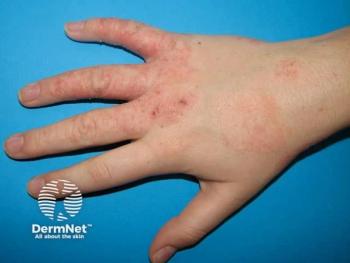
Dermatitis-related adverse events vary widely across atopic dermatitis systemic trials, driven by disease fluctuation and reporting differences, informing patient counseling and flare definitions.

New review explores why eczema and ADHD often overlap in youth, highlighting sleep loss, itch-driven inflammation, plus screening and treatment tips.

Put your dermatology expertise to the test with Dermatology Times’ interactive quiz series.
Sol-Gel Technologies has completed patient follow-up in its pivotal phase 3 trial of SGT-610 (patidegib gel, 2%) for Gorlin syndrome, with top-line results expected in late November 2026.

Two small clinical studies evaluated skincare and dermabrasion for changes in skin quality among individuals taking medical weight loss medications.

Two-year POETYK PsA-2 data showed sustained ACR and minimal disease activity responses with deucravacitinib and no new safety signals.

Faculty from the Cutaneous Oncology Workshop answer practical questions spanning skin cancer prevention, diagnosis, treatment, and follow-up.
Two new Neutrogena facial sunscreens incorporate bemotrizinol, the first new sunscreen active ingredient added to the US OTC monograph in decades.
Advertisement
Advertisement
Trending on Dermatology Times
1
Neutrogena Launches New Sunscreens With Newly Permitted UV Filter Bemotrizinol
2
Longer Topical JAK Inhibitor Treatment Linked to Vitiligo Improvement in Real-World Study
3
Sun Protection in Beauty Routines: Is SPF Makeup Enough?
4
Two-Year POETYK PsA-2 Data Show Durable Deucravacitinib Responses in Psoriatic Arthritis
5