Articles by Whitney J. Palmer

Treating chronic inflammatory skin conditions during pregnancy can be difficult because the therapies dermatologists prescribe can affect the unborn infant. See what insights this physician offers on managing chronic inflammatory skin conditions in pregnant patients.

Dermatology care for women goes beyond skin. Practicing dermatologists reside at the crux of meeting women’s needs and play an important role in addressing issues like aging, self-esteem, hormones and stress management.
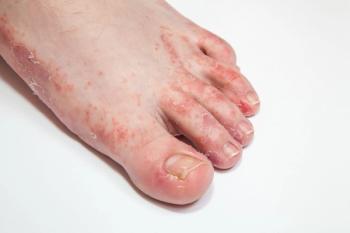
Dermatological conditions that lead to foot pain and discomfort do not necessarily require costly and time-consuming prescription management. Instead, according to a new study, over-the-counter treatments can be a viable option for patients.

For the last several decades, global incidence rates of onychomycosis have risen. This method may be an affordable and effective tool physicians can use to improve diagnosis quickly.

Looking into the future, dermatologists can anticipate new technologies and treatments to enhance services. In this article, we delve into the how these advances will affect daily workflow.

Outpatient dermatology services can be available to any patient. However, according to recent research, that doesn’t mean all patients access or take advantage of this clinical care in the same way.

Robot dermatologists aren’t yet seeing patients for routine care, but artificial intelligence (AI) and other technology tools are growing in popularity throughout the industry. Learn more about how these advances in technology are impacting practices.

Artificial intelligence (AI) tools are steadily growing in popularity throughout medicine, particularly in dermatology. But does AI pose a threat to dermatologists? Find out in this article.

When it comes to opioids, neither patient nor provider is equal. This article explores recent research that highlights the differences in who will receive and who will write a prescription for opioids.

Older skin might heal more slowly, but it heals with less scarring than younger skin, according to new research.

Rather than being fueled by a singular desire to be more physically attractive, patients seeking cosmetic procedures are driven by emotional, physical, social and professional reasons, a JAMA Dermatology study shows.

Adding oral tranexamic acid as adjuvant therapy is effective for treating refractory melasma, according to recently published research.

Identifying the presence of bacterial and fungal species improves antimicrobial therapy, according to a recent review published in the July issue of Advances in Wound Care.
Women in treatment for skin diseases, including psoriasis, experience higher levels of non-psychotic psychiatric disorders, including anxiety and depression, than men.

For women with psoriasis, psoriatic arthritis, and ankylosing spondylitis who take secukinumab during pregnancy or conception, recent research shows adverse pregnancy events don’t happen at a higher rate.

Developing psoriasis during childhood or adolescence can affect self-esteem. Dr. Amy Paller discussed the impact of psoriasis on adolescents, and treatment options, during the annual NPR Residents Meeting.

From obesity to heart disease, patients with psoriasis have a host of comorbidities and most rely on their dermatologist for comprehensive care.

For psoriasis patients, the most common comorbidity they may experience is psoriatic arthritis. Knowing how to identify and treat it can be critical.
Biologics certainly have shown to be an effective treatment in plaque psoriasis, but physicians should not discount more traditional therapies for treating psoriasis.

Understanding measures of psoriasis disease severity is critical for the patient. And, many payers, including the Centers for Medicare and Medicaid Service require an accurate PASI or PGA score on all psoriasis claims.

At the 20th annual National Psoriasis Foundation residents meeting recently held in Chicago, Dr. Abby Van Voorhees, said that phototherapy can improve psoriasis, but it is not in common practice today.

Nearly 80 percent of patients experience limited-to-moderate psoriasis disease, and topical therapies account for the majority, if not all, of their treatment. But the choice of topical treatment depends on the patient.

Superficial radiation therapy (SRT) targets only skin cancer cells and has few side effects, researchers reported at the American Society for Dermatologic Surgery annual meeting.

Increasingly higher doses of incobotulinumtoxinA (Xeomin) offer patients a longer duration of response in the treatment for glabellar frown lines, according to recently-presented clinical trial results.

A single treatment for cellulite, which affects 85 percent of women, can reduce the appearance of fat on patients’ buttocks and thighs for five years, according to results of a multi-year effectiveness study.

A minimally-invasive surgical skin contouring procedure, currently under investigation, could give patients a new option for removing fat and tightening skin, according to recent clinical trial findings.

Researchers presenting at ASDS show that CR-PCSS and the PR-PCSS scales are reliable tools used to evaluate cellulite severity.

Cosmetic injections have increased in men, but men don’t often achieve the same results as women. To provide the same degree of success, dermatologists should take into consideration the more masculine features, according to several studies published recently.

Dermatologists can use online patient reviews as a tool to educate patients about minimally-invasive fat reduction procedures, according to a new study.
Clinicians are more likely to correctly identify the lesions’ underlying cause with careful observation rather than with several lab tests.
