

Commentary|Videos|October 7, 2026
Where Patients Live Shapes Atopic Dermatitis Care Access, NEA Report Finds
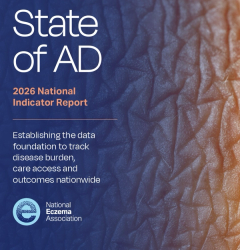
Tenesha Wallace Hood, MA, of the National Eczema Association (NEA), reviews how state-level data from the NEA's State of AD 2026 National Indicator Report can inform access to atopic dermatitis care.
Advertisement
“We know every state has something it can improve upon; we want this data to be a starting point for those conversations and ultimately lead to timely action,” said Tenesha Wallace Hood, MA, director of healthcare provider engagement at the
Wallace Hood discussed the NEA’s new
Watch the


Geography and Access to AD Care
"Where someone lives can affect their access to AD care," Wallace Hood said.
The report found substantial variation in dermatology, allergy, immunology, and practitioner density across states. About 13% of Americans lived in a county without one of those specialists. AD care remains overwhelmingly in person, with telehealth representing 1% of dermatology visits for AD in 2023.
Wallace Hood said the numbers translate to long travel distances, longer waits for appointments, and fewer options for specialty care. "Understanding these differences at the state and local level is so important," she said.
Applying the Findings in the Exam Room and Beyond
"The data alone doesn't change care, but it helps us understand where there may be possibilities to improve it," Wallace Hood said.
In the exam room, the findings reinforce AD as a common chronic condition with impacts beyond the skin. They can prompt conversations about whether a patient's current care is working or whether additional care is needed.
Beyond the exam room, state-level findings give health systems, public health professionals, payers, and policymakers more concrete information to examine workforce, access, and coverage. Wallace Hood said NEA's next step is putting the data to work through education and healthcare professional engagement, which she leads. NEA is also developing more practical resources for providers who see eczema outside of dermatology.
Using State Briefs to Drive Local Action
NEA created state briefs for every state plus Washington, DC. Wallace Hood encouraged clinicians to look at their own state and use local data to consider where opportunities exist in their community. She suggested asking whether patients are getting timely, appropriate care and where education, awareness, or resources could make a difference.
Reference
1. Hansen D, Bazell C, Pelizzari P, McPherson R. The State of Atopic Dermatitis in the United States. National Eczema Association. 2026. Accessed October 5, 2026.
Advertisement
Related to this article
According to data presented at EADV, at week 16 of the phase 2 study, 47.8% to 62.5% of adults receiving tilrekimig achieved EASI 75 across doses, compared with 9.1% to 19.9% with placebo.
A new report from the National Eczema Association (NEA) found systemic corticosteroids were filled more often than dupilumab, and 13% of Americans live in counties without a dermatology or allergy/immunology practitioner.
Up to 91% of patients reached EASI-75 and up to 67% reached IGA 0/1 at week 152, with no new safety signals, according to Galderma's EADV 2026 data.
Presented as a late breaker at EADV 2026, mid-dose zumilokibart achieved EASI-75 in 65.9% of adults with atopic dermatitis vs 23.4% with placebo at week 16.
EADV 2026 data highlight dupilumab’s effects on growth, quality of life, disease control, and itch across multiple dermatologic diseases.

The FDA approved therapies for melanoma, dermatomyositis, superficial basal cell carcinoma, and adolescent alopecia areata, while TYK2 inhibitors and rare disease filings advanced toward 2027 decisions.

A biopsy-based analysis from the JADE MOA trial presented at EADV 2026 found reductions in pathogenic skin-resident memory T cells alongside restoration of epidermal barrier integrity.

The approval of the oral BTKi rests on a phase 3 result of 29.3% complete response from hives vs 14.0% with placebo at week 12.
Advertisement
Advertisement
Trending on Dermatology Times
1
EADV 2026: HS Assessment and Follow-Up for NPs and PAs
2
FDA Approves Remibrutinib for Symptomatic Dermographism
3
Omlyclo, First Interchangeable Xolair Biosimilar, Launches in the US
4
Evaluating the Evidence for Emerging Oral Therapies in Psoriasis
5