Castor oil has become a popular social media remedy for thicker, longer hair, but evidence supporting its ability to stimulate hair growth remains limited.
Benjamin Ungar, MD, shares groundbreaking insights on seborrheic dermatitis and emerging treatments in dermatology at ISDS 2025.
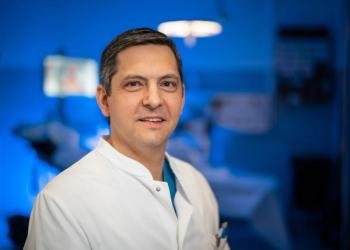
In a recent conversation with Dermatology Times, Benjamin Ungar, MD, assistant professor at the Icahn School of Medicine at Mount Sinai and director of the Rosacea and Seborrheic Dermatitis Clinic, a leading expert in inflammatory skin conditions, shared insights from his recent presentation at the
DT: Could you highlight a few pearls from your recent presentation at ISDS 2025?
Ungar: At ISDS, I presented some data we've been working on regarding the underlying pathomechanisms in seborrheic dermatitis. Historically, this has not been well characterized, but we've made progress in understanding what’s happening on a molecular level.
One aspect I highlighted is that seborrheic dermatitis is an inflammatory skin disease also characterized by barrier dysfunction. We see this on a molecular level in terms of dysregulated gene expression. That combination is something we want to educate people about.
We also see that with successful treatment, there’s normalization not just of the inflammatory process but also of the barrier dysfunction.
DT: What areas in dermatology do you hope to see more research on in the future, particularly interdisciplinary research?
Ungar: We’re fortunate that more attention is being directed toward skin diseases that historically have been relatively ignored. There’s a large unmet need for many of these conditions, and many exciting efforts are underway to address that.
Beyond seborrheic dermatitis, I’m particularly interested in inflammatory hair loss. For example, alopecia areata now has a few approved treatments, which is excellent. Hopefully, future research will lead to treatments with new mechanisms and characteristics for patients with alopecia areata.
Another area still in its early stages is understanding the pathophysiology and developing new treatments for scarring alopecias. These conditions have been behind the curve and have a tremendous impact on patients’ lives, so successful treatment could make a huge difference.
DT: Are there any drugs or treatments in the pipeline for 2026 that you’re keeping an eye on?
Ungar: I hesitate to point to specific drugs or mechanisms because the promise of many treatments ultimately needs to be demonstrated. Some exciting theoretical treatments haven’t panned out, while other mechanisms that seemed modest have had major impacts in clinical practice.
Broadly speaking, there are treatments in late-stage development that aim to modulate regulatory T cell function and adjust overall inflammatory activation. This is exciting because rebalancing the regulatory part while decreasing the overactive part of the immune response could have long-term benefits.
The treatment class closest to potential results and approval targets the OX40-OX40 ligand interaction, which is involved in T cell activation. There are several drugs in this category, and other novel approaches are also being developed.
I think in general, we are in an exciting time in dermatology. The rate of advances will hopefully continue to increase as more attention is directed toward more diseases.
In the next few years, I hope we’ll look back and be amazed at how much progress has been made—not just in understanding underlying disease processes, but more importantly, in the treatments we have to help patients.