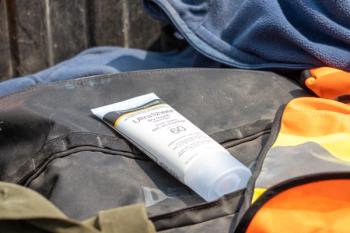
Two new Neutrogena facial sunscreens incorporate bemotrizinol, the first new sunscreen active ingredient added to the US OTC monograph in decades.
Explore the top headlines of the week, including insights on the latest clinical trials, therapeutic updates, and more.
To stay up to date with the latest dermatology news, sign up to receive our
The FDA has approved roflumilast (Zoryve; Arcutis) cream 0.05% for mild to moderate atopic dermatitis (AD) in children aged 2 to 5 years, offering a new once-daily, steroid-free treatment option for pediatric eczema. Approval was based on results from the INTEGUMENT-PED and INTEGUMENT-OLE trials, which showed rapid improvement in eczema severity and itch, with about 40% of children achieving 75% improvement after 4 weeks. Experts noted that roflumilast’s strong efficacy and favorable safety profile address a major unmet need for safe, long-term topical therapies in young children. The cream is designed for sensitive skin and can be used continuously or intermittently as part of ongoing management. Arcutis expects to make Zoryve 0.05% available in the U.S. by late October 2025, supported by copay and patient assistance programs.
As reported at the 2025 European Academy of Dermatology and Venereology (EADV) Congress, new data on VDPHL01, an extended-release oral minoxidil formulation for androgenetic alopecia (AGA), suggest it may deliver faster, more visible, and clinically meaningful hair growth compared with existing therapies. Designed to maintain steady drug levels that stimulate follicles without exceeding cardiac safety thresholds, VDPHL01 achieved “moderate improvement” on average in a blinded photographic analysis—far outperforming both topical and immediate-release oral minoxidil. About 82% of patients achieved at least moderate improvement within 4 months, versus roughly 20% with comparators. Researchers noted that this pharmacokinetic optimization could overcome adherence and efficacy challenges seen with current regimens, though longer-term safety and head-to-head data are still needed to confirm its potential to redefine AGA treatment.
LEO Pharma has completed its acquisition of spesolimab (Spevigo) from Boehringer Ingelheim, following global regulatory approvals. The IL-36 receptor–blocking antibody is the first and only treatment approved for generalized pustular psoriasis (GPP) flares, with FDA approvals for adults (2022) and pediatric patients aged 12 and older (2024). Now approved in more than 40 countries, spesolimab is also being studied for pyoderma gangrenosum and other IL-36–mediated diseases. LEO Pharma CEO Christophe Bourdon said the acquisition strengthens the company’s dermatology portfolio and expands access for patients with limited options.
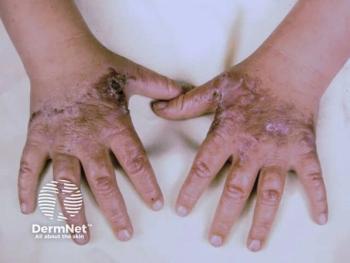
A new nationwide CHEMIN survey has revealed major variability in how French clinicians manage chronic hand eczema (CHE)—a condition affecting nearly 5% of the population and among the country’s most common occupational skin diseases. Despite European treatment guidelines, France lacks a national standard, leading dermatologists, allergists, and occupational physicians to rely on individual experience. The survey, which included 135 specialists, found that topical corticosteroids (TCS) remain the cornerstone of therapy, even after treatment failure—contrary to European recommendations that call for escalation to systemic or alternative options. For severe cases, acitretin, methotrexate, and cyclosporine were the most used systemic treatments, while biologics and phototherapy were less common. Clinicians cited quality of life, disease severity, and flare frequency as major factors guiding treatment. Researchers concluded that French CHE management remains inconsistent, underscoring the need for standardized national guidelines, better patient education, and new therapeutic options to improve long-term outcomes.
In a recent discussion with Dermatology Times, Emma Guttman-Yassky, MD, PhD, chair of the department of dermatology at the Icahn School of Medicine at Mount Sinai, provided insights into the emerging biologic APG777 (Apogee Therapeutics), a therapy being developed for atopic dermatitis (AD). With its potential for extended dosing intervals and favorable safety profile, APG777 could represent a significant advancement in the treatment landscape of chronic inflammatory skin diseases.