LEO Pharma has closed its acquisition of dersimelagon from Tanabe Pharma after the FDA accepted the drug's NDA for filing and granted Priority Review, with a PDUFA date expected by the end of February 2027.
Most physicians continue to prescribe topical corticosteroids despite prior treatment failure.
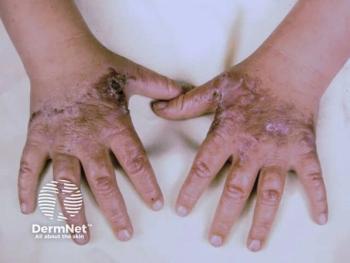
A leading cause of disability and one of the most prevalent occupational skin diseases, chronic hand eczema (CHE) affects nearly 5% of the French population.1 Despite its burden, the lack of standardized national treatment guidelines in France has left clinical to rely on their own clinical experiences.2 To better understand current practices across the country, the CHEMIN survey investigated how clinicians, including dermatologist, allergists, and occupational health physicians, approach therapeutic management of CHE and how closely these results align with European recommendations.3
“This survey underscores the complexity of managing CHE in France, the challenges in adhering to European guidelines, and the variability in therapeutic approaches,” researchers behind the study wrote.
Methods and Materials
Developed by 6 French experts, the CHEMIN survey was distributed nationally to specialists managing CHE. A total of 135 clinicians participated, most of whom were dermatologists, reporting average of 6 patients with CHE per month.
To assess treatment strategies, participants reviewed two standardized clinical cases: one patient with moderate CHE (a young woman with atopic history and persistent eczema despite topical corticosteroid use) and one with severe CHE (a construction worker with allergic contact dermatitis to chromium and long-standing hand lesions). Both cases had documented failure of prior topical corticosteroid therapy.
Treatment Preferences and Therapeutic Strategies
For both moderate and severe cases, topical therapies remained the cornerstone of management. Respondents frequently recommended topical corticosteroids (TCS), emollients, and moisturizers, often with renewed emphasis on therapeutic education such as proper handwashing techniques and avoidance of irritants. However, many clinicians opted to switch to another class of TCS following treatment failure—an approach inconsistent with European guidelines, which advise short-term TCS use and consideration of systemic or alternative therapies thereafter.
In severe disease, systemic options gained greater prominence. Acitretin was the most frequently proposed systemic treatment (74% for moderate CHE, 85% for severe), followed by methotrexate and cyclosporine. Biologic therapies and phototherapy were also considered, though not as widely prescribed. Interestingly, the proportion of respondents considering biologics was similar across both moderate and severe cases, highlighting variability in how novel treatments are integrated into practice.
Factors Influencing Decision-Making
Respondents emphasized multiple factors in selecting therapy. Quality of life (QoL) emerged as a central consideration, particularly in moderate disease where functional limitations and psychosocial concerns were pronounced. For severe CHE, lesion severity and persistence were weighted more heavily, though QoL remained important. Other determinants included frequency of flares, clinical signs, and etiological factors such as confirmed allergen exposure.
Discussion and Clinical Implications
The CHEMIN survey underscores several key challenges in CHE management in France. While European guidelines advocate structured escalation of therapy and limited TCS use, many practitioners continue to rely on repeated topical interventions despite inadequate control. This practice raises concerns regarding long-term safety, tolerability, and efficacy.
The findings also highlight heterogeneity in systemic treatment choices, reflecting both the flexibility of European guidelines and the lack of consensus in second-line approaches. Patient education, although recommended by most, may be underutilized in clinical practice, pointing to a gap in structured support that could improve adherence and outcomes.
Ultimately, the study reinforces the need for new therapeutic options and greater alignment among French clinicians. A patient-centered approach—balancing disease severity, QoL impact, and individual treatment response—remains essential. As novel biologics and systemic agents continue to emerge, future efforts should focus on harmonizing practices and establishing standardized care pathways to reduce variability in outcomes for patients with CHE.
References