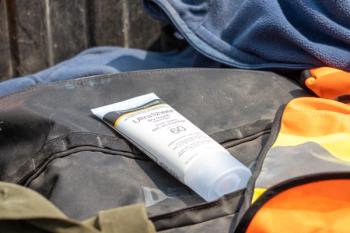
Two new Neutrogena facial sunscreens incorporate bemotrizinol, the first new sunscreen active ingredient added to the US OTC monograph in decades.
Explore the top headlines of the month, including insights on regulatory updates, expert pearls, and more.
To stay up-to-date with the latest dermatology news, sign up to receive our
InflaRx has reported encouraging topline results from its phase 2a study of INF904, an oral small-molecule C5a receptor antagonist, in patients with hidradenitis suppurativa (HS) and chronic spontaneous urticaria. Across both conditions, INF904 demonstrated early signs of efficacy comparable to established biologics, including reductions in inflammatory lesions, draining tunnels, and disease activity scores, alongside meaningful improvements in patient-reported outcomes such as pain and quality of life. The treatment was well tolerated, with no serious adverse events observed. These preliminary findings support further clinical development of INF904 and highlight the potential of complement pathway inhibition as a new oral therapeutic strategy in chronic inflammatory skin diseases.
Alys Pharmaceuticals has dosed the first patient in a phase 1/1b study of ALY-301, a first-in-class, mast cell–selective c-Kit inhibitor being developed for cold urticaria, a model for chronic urticaria. ALY-301 is a bispecific antibody designed to selectively deplete mast cells while sparing other c-Kit–expressing cells, potentially enabling safe, long-term treatment of mast cell–driven diseases. The randomized, placebo-controlled trial will evaluate safety, tolerability, and pharmacology in both healthy volunteers and patients refractory to antihistamines, marking a key milestone in Alys’s mission to deliver precision-targeted therapies for chronic urticaria and related immune-dermatology conditions.
The FDA has issued a safety alert regarding radiofrequency (RF) microneedling devices used in aesthetic dermatology, highlighting reports of serious complications including burns, scarring, subcutaneous fat loss, nerve injury, and disfigurement. While most treatments are tolerated, risks increase with operator inexperience, aggressive treatment parameters, or use in sensitive areas. The agency emphasizes that RF microneedling is a medical procedure, not a cosmetic treatment, and encourages clinicians to carefully select patients, adhere to device-specific guidelines, and report adverse events via MedWatch. Patients are advised to seek treatment from licensed, trained providers and to be aware of potential risks. The FDA is investigating causes of complications and working with manufacturers to improve safety and post-market surveillance.
At the
Castle Biosciences has launched AdvanceAD-Tx, a 487-gene expression profile test designed to guide systemic therapy selection in patients aged 12 and older with moderate to severe atopic dermatitis (AD). By identifying molecular signatures that predict response to JAK inhibitors versus Th2-targeted biologics, the test aims to enable precision, biology-driven treatment decisions, potentially reducing the trial-and-error approach that often delays disease control. Early validation from the IDENTITY study suggests that JAKi responders identified by AdvanceAD-Tx achieve faster and greater clinical improvement, highlighting the promise of molecular profiling as a next-generation tool in dermatology.