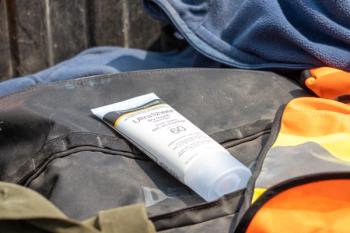
Two new Neutrogena facial sunscreens incorporate bemotrizinol, the first new sunscreen active ingredient added to the US OTC monograph in decades.
Explore the top headlines of the month, including insights on the latest clinical trials, therapeutic updates, and more.
To stay up to date with the latest dermatology news, sign up to receive our
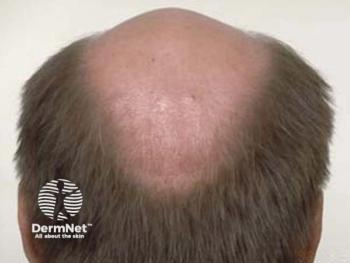
Cosmo Pharmaceuticals reported promising topline results from 2 large phase 3 trials evaluating clascoterone 5% topical solution for male androgenetic alopecia (AGA), potentially representing the first new treatment mechanism for the condition in over 30 years. The trials, SCALP 1 and SCALP 2, enrolled 1,465 men and assessed Target Area Hair Count and patient-reported outcomes, showing statistically significant hair growth improvements versus vehicle, with alignment between objective measures and patient perception. Clascoterone works via local androgen receptor inhibition at the follicle, minimizing systemic exposure and avoiding the hormonal side effects of oral treatments. Safety was favorable, with treatment-emergent adverse events similar to vehicle. If approved, the therapy could expand options for men seeking a mechanistically distinct, topical solution for AGA, with regulatory submissions planned following completion of 12-month safety follow-up in Spring 2026.
In an interview with Dermatology Times, Christina Weng and Daniel Gil discussed PP405, a novel topical therapy for alopecia that aims to regenerate hair by reactivating dormant hair follicle stem cells. Unlike existing treatments that mainly slow hair loss or improve hair thickness, PP405 targets the underlying biology of hair growth by stimulating inactive follicles to re-enter the growth phase. Early phase 2a data showed increased follicular unit activation and terminal hair growth with a favorable safety profile and no systemic absorption. With further trials planned, PP405 could represent a shift toward regenerative, mechanism-based treatment for hair loss in both men and women.
The FDA has approved icotrokinra (Icotyde; Johnson & Johnson), a first-in-class oral IL-23 receptor antagonist, for moderate to severe plaque psoriasis in adults and adolescents ≥12 years old weighing ≥40 kg. Unlike existing injectable IL-23 inhibitors, icotrokinra blocks the receptor rather than the cytokine, providing a proximal, mechanistically precise intervention in oral form. Phase 3 ICONIC trials demonstrated high efficacy, with ~70% achieving clear or almost clear skin (IGA 0/1) and ~55% achieving PASI 90 at week 16, while safety was comparable to placebo. Its oral, once-daily dosing addresses unmet needs for patient convenience and adherence, potentially reshaping psoriasis management and offering a non-injectable alternative for systemic therapy.
The multinational RWEAL study analyzed nearly 2000 adults with moderate to severe chronic hand eczema (CHE) across 6 countries, revealing a predominantly long-standing disease burden with high clinical heterogeneity and frequent multisite involvement. Most physicians relied on subjective clinical judgment rather than standardized severity scoring tools, and etiologies were diverse—most commonly irritant contact dermatitis, followed by atopic and allergic subtypes, with mixed causes seen in a notable minority. Many cases were occupationally related, and comorbid atopic conditions were common, although a substantial proportion had no other dermatologic diagnoses, underscoring CHE as a distinct entity. Overall, the findings highlight significant unmet needs, variability in real-world management, and the importance of more standardized, multidisciplinary approaches to care.
The LATITUDE trials evaluated zasocitinib, an oral therapy for moderate to severe plaque psoriasis, against both placebo and apremilast. About 70% of patients achieved clear or almost clear skin (sPGA 0/1) at week 16, compared with 30% for apremilast and 10% for placebo, with responses maintained through week 24. High levels of clearance were seen, with two-thirds achieving PASI 90 and one-third reaching complete clearance (PASI 100) by week 16, sustained through week 24. Long-term follow-up showed over 90% maintained sPGA 0/1 and durable PASI 75/90 responses through week 60. These results suggest that zasocitinib delivers biologic-level efficacy in an oral form, offering new treatment options for patients preferring non-injectable therapies.