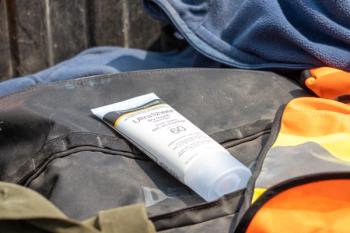
Two new Neutrogena facial sunscreens incorporate bemotrizinol, the first new sunscreen active ingredient added to the US OTC monograph in decades.
In case you missed it, this week we had news about the achievements of female dermatologists for Women’s History Month, Takeda’s initiative to improve clinical disparities in psoriasis research, previews of this week’s AAD Annual Meeting, and more.
To stay up-to-date with the latest dermatology news, sign up to receive our
“It's so exciting to see all these incredible female talents behind me. I want to give back and I want to help them climb on my shoulders and go higher,” Haws said.
Dermatology Times spoke with Edgar Charles, MD, vice president and senior global program lead, Early/Late Development Immunology, Bristol Myers Squibb, for insight into new 5-year data from the POETYK PSO long-term extension (LTE) trial.
APG990 showed a 60-day half-life and favorable safety, supporting potential 3-6 month maintenance dosing for atopic dermatitis.
A new qualitative analysis revealed which type of content on acne is trending on the social media platform and how clinicians should respond.
Phase 3 trial results presented at AAAAI/WAO 2025 highlight dupilumab's efficacy in reducing itch severity and urticaria activity in CSU patients.
Single-use packaging and excess sample distribution contribute to environmental harm, necessitating a shift in industry practices.
Celebrate Women’s History Month 2025 with insights from leading female dermatologists and expert coverage from the AAD Annual Meeting in Orlando.
When compared to corticosteroids alone, the combination therapy reduced disease severity and improved the skin barrier.
Experts discussed pediatric atopic dermatitis, treatment innovations, disease burden, and the latest topical and systemic therapies in a DermView video series.
Research suggests that rebalancing the skin microbiome with pre-, post-, and probiotics may improve AD symptoms.
In a conversation with Kristy Hamilton, MD, FACS, she spoke about the recent aesthetic trend and how clinicians can align with new patient expectations.
Both the Skin of Color Society as well as the Society for Pediatric Dermatology will meet on March 6 to share research, clinical insights, and pearls for attendees to keep in mind as new data comes to the forefront.
A new survey reveals widespread misunderstanding and lack of effective treatments in chronic hand eczema.
Dematology Times' Editor in Chief interviews Adelaide Hebert, MD, who will be honored at the AAD 2025 Legacy Celebration for her impact on pediatric dermatology.
Psoriasis trials are among the least diverse within dermatology, with participants predominantly being white men.
Robinson shared insights into how the company is working to fight clinical research disparities.
The novel formulations will harness Quoin’s Invisicare technology to treat microcystic lymphatic malformations, venous malformations, and angiofibromas.
Experts discussed personalized approaches to atopic dermatitis, from steroid-sparing topicals to biologics, highlighting rapid relief and long-term management strategies.
The novel formulation improved the appearance of dry and chapped lips after 28 days of use.
At AAAAI/WAO 2025, Bernstein explored new findings on rilzabrutinib and dupilumab in CSU, highlighting treatment gaps and future therapies.
Experts discussed laser and light-based therapies for acne, rosacea, hyperpigmentation, and inflammatory skin diseases.
Patrick Burnett, MD, PhD, shares key updates expected in 2025 for therapeutics treating atopic dermatitis, alopecia areata, and more.
Among the many sessions to be held at the American Academy of Dermatology Annual Meeting in Orlando, Florida, several Dermatology Times Editorial Advisory Board members are preparing to share their knowledge and insights.
Serota and other field experts discussed best practices as well as new therapeutics.
The findings of the MVOR-1 and MVOR-2 studies are published in JAMA Dermatology, supporting the rosacea drug’s recent FDA approval.
The analyzed dataset included over 200,000 patients with vitiligo to find trends in diagnosis, treatment, and more.
Read more on how to navigate all the opportunities at this year’s AAD meeting, which starts today in Orlando, Florida.
Adamson highlights key topics to expect at the AAD Annual Meeting, emphasizing the importance of tackling controversial issues and fostering collaboration.
Ahead of the annual meeting, Dermatology Times spoke with Draelos about why she looks forward to the meeting each year.
Along with his session insights on diet and chronic spontaneous urticaria, Friedman shares tips for navigating the largest dermatology conference in the US.