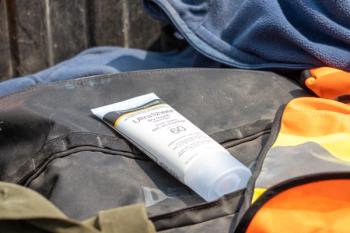
Two new Neutrogena facial sunscreens incorporate bemotrizinol, the first new sunscreen active ingredient added to the US OTC monograph in decades.
In case you missed it, this week we had news about Arcutis’ sNDA for roflumilast in pediatric AD, the current clinical and aesthetic applications of snail mucin, positive results from the CHE delgocitinib trial in China, and more.
To stay up-to-date with the latest dermatology news, sign up to receive our
The promotion of anti-aging products to children, who don't yet experience age-related skin changes, is both ethically questionable and potentially harmful.
Lead author on recent research, Lawrence Eichenfield, MD, said if approved, this treatment could fill a “significant gap.”
Although more research is needed to fill this gap, sunscreen had the greatest success rates of all the prevention methods in this literature review.
Findings suggest that this novel treatment approach can enhance the quality of life for vitiligo patients without increasing the risk of adverse events.
Ustekinumab-kfce is available for the treatment of chronic autoimmune conditions like Crohn’s disease, ulcerative colitis, and plaque psoriasis.
Mindy Haws, MD, spoke to Dermatology Times about the new videos, podcasts, and other resources LIMITLESS offers for women at all stages of their careers.
Researchers reported that propranolol initiation for infantile hemangiomas in pediatric patients is safe, with no significant complications, suggesting reduced need for intensive monitoring.
Snail slime contains bioactive compounds that promote skin healing, hydration, and regeneration.
The case-control Chinese study evaluated circumstances that have previously never been established as potential melasma causes.
Patients receiving SSA treatments showed significant improvements after just 2 sessions, supporting its rapid efficacy.
At the Horizons in Advanced Practice meeting, Lakshi Aldredge, MSN, ANP-BC, DCNP, FAANP, presented a case of a female patient aged 12 years with moderate AD that had been worsening over the past several months.
This collective initiative gives Mindy Haws, MD, and her team the ability to reach more women in a way that gives back and helps them succeed.
In this week's edition of the Journal Digest, we review the latest dermatologic insights into cardiovascular outcomes in psoriasis patients, the rationales of cold plasma jet therapy in skin cancer, and more.
In a recent Dermatology Times Case-Based Roundtable custom event, “Beyond Steroids: Exploring Topical and Nonsteroidal Therapies for Atopic Dermatitis,” Robert Casquejo, PA-C, focused on real-world patient cases of atopic dermatitis (AD) in a conversation with fellow dermatology professionals.
Lead investigator Leon Kircik, MD, emphasized the need for collaboration between clinicians, technologists, and policymakers to maximize VR/AR’s potential.
A PDUFA target action date has been set for October 13, 2025
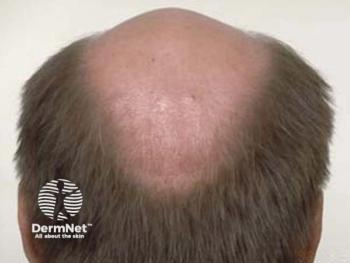
A two-set Mendelian randomization analysis revealed a genetic correlation between depression and androgenetic alopecia.
Professor Diamant Thaçi, MD, PhD, discusses findings from the ARCADIA and OLYMPIA clinical trial programs, highlighting nemolizumab’s rapid efficacy in treating atopic dermatitis and prurigo nodularis.
Well Revolution’s partnership with City Chemist highlights how telehealth can sustain small businesses and improve patient care.
Christophe Piketty, MD, PHD, provides a deeper look at the promise of nemolizumab in addressing unmet needs faced by patients with atopic dermatitis and prurigo nodularis.
Haws offers advice to female clinicians about leadership, collaboration, and the future of the aesthetics industry.
Christophe Piketty, MD, PHD, discusses the promising efficacy, novel mechanisms, and patient benefits of nemolizumab in targeting IL-31 for atopic dermatitis and psoriasis.
Dermatology Times is recapping our top expert interviews from the month of February.
Nonsteroidal AD therapies are gaining attention due to their rapid effectiveness and ability to offer an alternative to long-term steroid use.
DELTA China follows the success of European and Canadian trials, reinforcing delgocitinib’s potential as a global treatment for CHE.
After just 2 weeks of twice-daily use, a pediatric patient saw visually improved skin with no adverse events.
Independent pharmacies are closing at high rates, leaving many communities without essential health care access.
Dermatology Times is looking back on the top stories in dermatology from the month of February.
Belgian patients receiving biologics had faster response rates compared to phototherapy, systemic, and topical treatments.
Objective tools like IGA and EASI provide structured severity assessment but often lack patient-reported insights such as itch severity.
Today, Dermatology Times recognizes Rare Disease Day in an effort to amplify the voices of the over 300 million individuals affected by rare diseases.
Learn more about the in-depth topics covered in the February 2025 print issue of Dermatology Times.
At a recent Dermatology Times Case-Based Roundtable event, James Q. Del Rosso, DO, discussed the limitations of topical corticosteroids and the benefits of nonsteroidals.
Review our content from the month of February that recognizes patients and clinicians with skin of color.
Share your thoughts by answering today’s poll and read about these popular aesthetic techniques for lips.
Explore the top headlines of the month including the expanding role of NPs and PAs, a guide to 2025 conferences, and expert insights from Paul Friedman, MD.