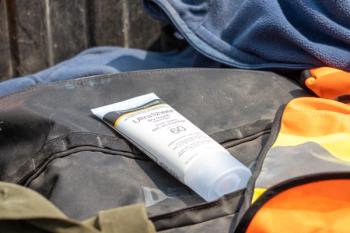
Two new Neutrogena facial sunscreens incorporate bemotrizinol, the first new sunscreen active ingredient added to the US OTC monograph in decades.
In case you missed it, this week we had news about Alphyn Biologics' first patient dosed with zabalafin hydrogel, abrocitinib for Netherton Syndrome, the ICONIC-LEAD phase 3 study, and more.
To stay up-to-date with the latest dermatology news, sign up to receive our
The method was safe and effective with high patient satisfaction rates 4 weeks post-injection.
Explore key takeaways from AAD 2025, rosacea insights, psoriasis updates, and expert interviews in the latest issue of Dermatology Times.
Tofacitinib showed promise for easing itch and skin symptoms in prurigo nodularis, though effects may lessen over time.
Long-pulsed KTP laser showed promise as a safe, effective alternative to PDL for treating port-wine birthmarks over 3 years.
The guide prepares students to critically engage with AI tools and understand their real-world implications.
Researchers conducted a comprehensive review of ACD, detailing the condition’s epidemiology, pathophysiology, clinical manifestations, diagnostic approaches, and therapeutic options.
Patients reported the face, neck, and inner arms as the most affected body regions before treatment.
Dermatology Times' Editor in Chief Christopher Bunick, MD, PhD, discusses patient safety in the wake of AAD 2025, focusing on BPO recalls, corticosteroid risks, and JAK inhibitor innovations.
Alphyn Biologics has dosed the first patient in a global phase 2b trial of zabalafin hydrogel for mild to moderate atopic dermatitis.
After fine-tuning, the VGG16 convolutional neural network outperformed other deep learning models in 2 of 3 key classification tasks.
A new case report demonstrated the JAK inhibitor’s efficacy at improving disease severity up to 6 months.
Compared to untreated patients, dupilumab-treated women showed no increased risk for spontaneous abortion, gestational diabetes, or hypertensive disorders.
The product was safe and effective after 4 weeks of topical use, specifically on patients with darker skin types.
The Kesty Redness Scale offers a validated, easy-to-use tool to reliably assess facial redness in clinical dermatology.
This review of the latest dermatologic studies includes insights into disparities in pediatric atopic dermatitis, nurse-led models for skin cancer detection, and more.
Recent literature shows that children from racial minority groups with lower-income families have higher disease prevalence but reduced access to care.
Raj Chovatiya, MD, PhD, MSCI, explores case-based approaches to managing atopic dermatitis, focusing on treatment strategies, challenges, and clinical insights for improving patient outcomes.
Although both methods were well tolerated, enzymatic debridement worked faster in randomized controlled trials.
Raj Chovatiya, MD, PhD, MSCI, discusses his approach to diagnosing and treating chronic hand eczema.
Physicians can customize treatment depth and intensity with Avava’s system, improving results for various skin concerns.
The study revealed high disease burden, poor quality of life, and need for more effective, targeted treatments.
Bill Damsky, MD, PhD, pioneers molecular diagnostics to close the gap between research and clinical care in inflammatory skin disease.
A new subgroup analysis revealed higher rates of clear or almost clear skin at week 16 vs placebo with a favorable safety profile.
For Rosacea Awareness Month, Zoe Diana Draelos, MD, spoke to Dermatology Times about skinbetter’s Mystro Active Balance Serum and its NRS Seal of Acceptance.
Henry Lim, MD, discusses the ILDS’ renewed WHO relations status and the global crisis of corticosteroid misuse in skin-bleaching products.
Microneedles successfully penetrated simulated skin barriers, suggesting their effectiveness in reaching sebaceous glands.
Google search trends and TikTok view counts were used to analyze the public popularity of cosmeceutical ingredients like retinol, hyaluronic acid, and niacinamide.
Menopausal acne is rising yet underexplored; treatment must address hormonal shifts, skin sensitivity, and patient emotional well-being.
The company also announced in a press release that the product received the Seal of Acceptance by the NEA.
Subcutaneous methotrexate may offer improved efficacy and patient adherence in psoriasis treatment, though it comes at a higher cost.
While approved for vitiligo and atopic dermatitis, ruxolitinib cream may help treat other inflammatory skin diseases.
The presentation, led by Amy Paller, MS, MD, highlighted the upcoming phase 3 SELVA study for microcystic lymphatic malformations.
Satisfaction levels remained high at 12 weeks post-treatment among those who received acupuncture.