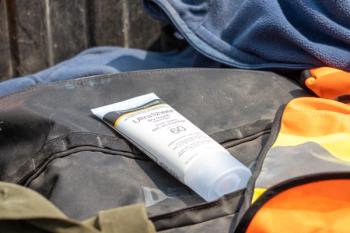
Two new Neutrogena facial sunscreens incorporate bemotrizinol, the first new sunscreen active ingredient added to the US OTC monograph in decades.
In case you missed it, this week we had news about HyBryte's treatment success in CTCL patients, the impact of the COVID-19 pandemic on BCC surgeries, the FDA approval of dupilumab for H1 antihistamine-refractory CSU, and more.
To stay up-to-date with the latest dermatology news, sign up to receive our
Experts explore how rosacea research is evolving, with new treatments, gaps in care, and a push for more inclusive, targeted approaches.
Untreated or undertreated AD can lead to poor sleep, infections, and stunted development.
The novel formulation was compared to a petrolatum-based diaper and was found to be just as effective for irritation and redness.
Interim FDA-funded study results show HyBryte delivers rapid, sustained response and strong safety in early-stage CTCL patients.
Skin laxity improved by 34% with a moderate rate of improvement in female participants.
A recent study reveals that women with psoriasis are more likely to discontinue biologic treatments, including IL-17 and IL-23 inhibitors, due to adverse events and treatment dissatisfaction.
Facial hyperpigmentation may signal systemic disease. Dermatologists must assess beyond melasma to ensure timely, accurate diagnosis and care.
In a large study, nearly half of SIND patients also had other BFRBs like skin picking or hair pulling.
Evommune has initiated a global phase 2b trial of EVO756, a first-in-class MRGPRX2 antagonist, for moderate to severe CSU.
The funds will target programs for chronic pruritus, atopic dermatitis, and other inflammatory skin conditions.
Corticosteroids, calcineurin inhibitors, and fractional CO2 laser were also effective in achieving high levels of repigmentation.
Phototherapy, commonly used for vitiligo, might help reduce cardiovascular risk through anti-inflammatory effects.
Improvements in hydration, erythema, itching, and burning were observed after 12 weeks of treatment for papulopustular rosacea.
This review of the latest dermatologic studies includes insights into dermatologic associations in patients with Crohn's disease, the prevalence of tinea pedis in pediatric populations, and more.
Tapinarof offers sustained relief for atopic dermatitis, enabling treatment-free periods and long-term disease control—even in young children.
High response rates and no systemic toxicity in multiple nonmelanoma skin tumors were observed in this vulnerable patient population.
Colleagues, mentors, and patients gathered to discuss Kwatra’s immense achievements throughout his career and the milestones that led to his endowed position.
Genetic proxies for PCSK9 inhibition were consistently associated with reduced vitiligo risk across 2 biobanks.
The pilot study showed notable decreases in mean melanin index after 3 sessions of PRP injections.
Raj Chovatiya, MD, PhD, MSCI, reviews the benefits of Revolutionizing Atopic Dermatitis as a disease-specific conference.
From our April issue: Unlock exclusive AAD 2025 insights from top dermatology experts—what you missed and what’s next.
Additionally, BCC surgery candidates have been older with more comorbidities since the pandemic began.
Eichenfield discusses high skin clearance and safety in teens with psoriasis, per new ICONIC-LEAD phase 3 data
Patients undergoing plastic surgery have the highest prevalence of BDD at 24%.
Haut.AI’s new tool promotes inclusive and realistic conversations on the power of skincare products, according to the CEO.
Having multiple therapeutic options would allow clinicians to tailor treatment and offer hope to patients who don't respond initially.
Pelthos and Channel Therapeutics will merge to form a new publicly traded entity focused on commercializing the first at-home treatment for molluscum.
QRPs are key to dermatologists' retirement plans—learn the benefits, drawbacks, and how to choose the best strategy for your financial goals.
Spearheaded by John Zampella, MD, FAAD, and Mitchell Hanson, the project highlights how art can foster community and empathy in dermatology.
Dupilumab becomes the first targeted therapy approved for chronic spontaneous urticaria in more than a decade.
New prospective data from the DECIDE study reinforce the role of the 31-GEP test in clinical decision-making.
Solid organ transplant recipients saw a 79.6% decrease in lesions 12 weeks after the treatment sessions.
Trials often exclude high-risk patients, limiting the real-world relevance of their safety findings.
As a patient with rosacea herself, Anastasia Georgievskaya highlights the innovation of Generative Skin in patient education.