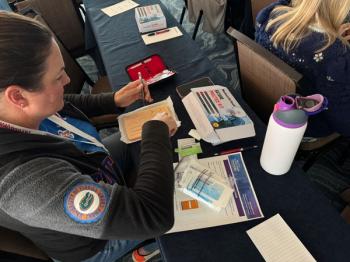
Faculty from the Cutaneous Oncology Workshop answer practical questions spanning skin cancer prevention, diagnosis, treatment, and follow-up.
Patient education and partner involvement significantly enhance melanoma detection, especially in underserved and skin-of-color populations, improving survival outcomes.
A recent case report published in SKIN: The Journal of Cutaneous Medicine highlights the lifesaving potential of patient education and partner involvement in melanoma detection, particularly among underserved and skin-of-color populations.1 The study authors, Jamie Restivo, MPAS, PA-C; Constance Hayes, DNP, APRN, FNP-C, DCNP; Suzanne Brown, MHS, PA-C; Julie Dodge, MHS, PA-C; Curtis Chen, PA-C; and Lauren DeBusk, MD, describe an 83-year-old Hispanic man with an invasive scalp melanoma identified by his spouse after she received skin cancer education during her own dermatology visit. Despite a lower overall incidence of melanoma in patients of color, delayed diagnoses contribute to worse outcomes, driven by cultural misconceptions, limited photoprotection, occupational ultraviolet (UV) exposure, language barriers, and reduced access to care.2
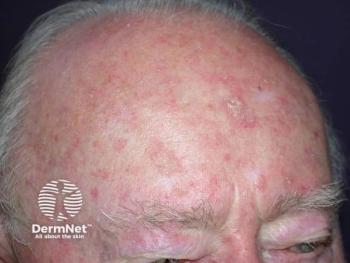
The patient presented with a rapidly enlarging, asymptomatic scalp lesion. Saucerization biopsy confirmed malignant melanoma, stage pT2b, with a Breslow thickness of at least 1.6 mm, ulceration, and a high mitotic rate (>8 mitoses/mm²). There was no microsatellitosis, lymphovascular invasion, or tumor regression, and clinical examination showed no lymphadenopathy. His history was notable for extensive lifetime UV exposure as a farmer in the Dominican Republic, prior sunburns, and no routine sunscreen use. He had no personal or family history of skin cancer.
Definitive management included wide local excision of the 3 × 2 cm tumor with 2-cm margins, followed by reconstruction by a head and neck surgeon. Sentinel lymph node biopsy was negative, and cross-sectional imaging showed no metastasis. The patient subsequently received adjuvant pembrolizumab and entered ongoing surveillance with dermatology every 3 months and medical oncology at an academic center. Notably, even after diagnosis, he expressed ambivalence about sunscreen use, underscoring persistent educational gaps.
A central theme of the report is the influence of partners on cancer detection and treatment adherence. Supporting evidence from
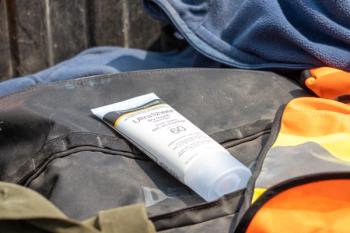
The report also underscores occupational risk and structural barriers. Outdoor workers in agriculture, construction, landscaping, and forestry experience high cumulative UV exposure, often during peak sun hours. Economic limitations, lack of shade, limited access to protective clothing and broad-spectrum sunscreen, and workplace norms may impede photoprotection. Cultural beliefs that darker skin confers immunity to skin cancer further reduce preventive behaviors. These factors contribute to disparities in melanoma stage at diagnosis and outcomes in skin of color populations.
“Cultural misconceptions about immunity to the sun, low sunscreen use, potential language barriers, and challenges accessing healthcare only scratch the surface of why patients with skin of color are at risk,” Restivo and the authors told Dermatology Times. “Addressing these factors is essential to improving patient outcomes.”
For dermatology clinicians, the case reinforces several practice implications. First, skin cancer education should be incorporated into routine visits, even when patients present for unrelated concerns. Brief, structured counseling on the ABCDE criteria, warning signs of changing lesions, and the importance of total-body skin exams can have substantial downstream impact. Providing tangible tools such as brochures and take-home handouts with practical UV protection strategies can also enhance retention, especially when tailored to occupational realities. Notably, clinicians should encourage patients to enlist partners or family members in performing regular skin checks, particularly for hard-to-see areas like the scalp and back. Framing skin exams as a shared health habit may improve early detection.
“Empowering our patients with the knowledge and tools to intervene early can meaningfully impact outcomes. Encouraging couples to perform regular self-exams and schedule skin checks with their healthcare providers promotes earlier detection of skin cancer, making skin health a shared and proactive habit,” Restivo concluded.
References
1. Restivo J, Hayes C, Brown S, Dodge J, Chen C, DeBusk L. Get Educated and Get Undressed, You Might Just Save Your Partners Life: A Case Report. J of Skin. 2026;10(1):2952-2955. doi:10.25251/9jtca365
2. Sharon CE, Sinnamon AJ, Ming ME, Chu EY, Fraker DL, Karakousis GC. Association of Marital Status With T Stage at Presentation and Management of Early-Stage Melanoma. JAMA Dermatol. 2018;154(5):574. doi:10.1001/jamadermatol.2018.0233