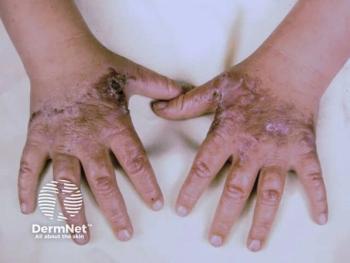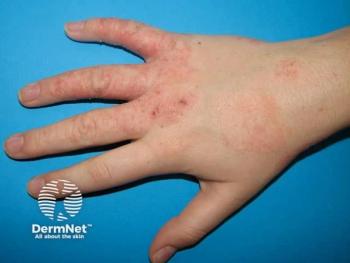
Dermatitis-related adverse events vary widely across atopic dermatitis systemic trials, driven by disease fluctuation and reporting differences, informing patient counseling and flare definitions.
Arcutis reveals promising phase 2 results for roflumilast cream in infants with AD, highlighting safety and potential efficacy.
Atopic dermatitis (AD) frequently begins early in life, often within the first year, and presents clinicians with a familiar challenge: balancing efficacy with safety in a population with fragile skin, high systemic exposure risk, and limited approved treatment options.1 While topical corticosteroids remain a mainstay, concerns about long-term use, particularly on the face, intertriginous areas, and diaper region, continue to drive interest in effective non-steroidal alternatives. Recent phase 2 data from the INTEGUMENT-INFANT study evaluating roflumilast cream 0.05% add to a growing body of evidence supporting topical phosphodiesterase-4 (PDE4) inhibition as a potential option for very young patients.2
“AD is the most common type of eczema and often starts in infancy. For our youngest patients, it’s critical to have therapies that are both safe and effective and that can be used on all body areas, including the face and diaper region,” said Mercedes E Gonzalez, MD, pediatric dermatologist and co-founder of Dermatology360 and INTEGUMENT-INFANT investigator, in a news release. “These data underscore the potential of investigational roflumilast cream 0.05% to provide meaningful improvements in the signs and symptoms of AD, while reinforcing its well-established and consistent safety profile.”
INTEGUMENT-INFANT was a phase 2, open-label, multicenter study assessing safety, tolerability, and exploratory efficacy of once-daily roflumilast cream 0.05% over 4 weeks in infants aged 3 months to less than 24 months with mild to moderate AD. A total of 101 participants were enrolled. The primary focus was safety, an appropriate emphasis given the age group and the realities of infant skin barrier function and body surface area–to–weight ratios. The study builds on prior pharmacokinetic work (the MUSE trial) and follows earlier efficacy and safety data in older pediatric patients aged 2 to 5 years.
Overall, roflumilast cream was well tolerated in this infant cohort. Adverse events were reported at a low frequency and were mild to moderate in severity. The most commonly reported events, each occurring in at least 3% of participants, included diarrhea, nasopharyngitis, upper respiratory tract infection, and vomiting. These events are not unexpected in an infant population and are difficult to directly attribute to topical therapy in an open-label design. Importantly, only 1 participant discontinued treatment due to an adverse event, and no serious adverse events were reported.
From a clinical perspective, the absence of application-site reactions as a prominent safety signal is notable. Local tolerability is often a limiting factor in infant AD management, particularly when treating sensitive areas. While longer-term data will be needed, the short-term safety profile observed here appears consistent with prior roflumilast studies in older children and adults.
Although not powered as a definitive efficacy trial, INTEGUMENT-INFANT reported meaningful improvements in disease severity. By week 4, 58% of participants achieved EASI-75, indicating at least a 75% improvement from baseline in eczema severity and extent. Improvements were also observed in overall disease severity and body surface area involvement.
For clinicians accustomed to modest expectations in infant AD trials, particularly with non-steroidal agents, these results stand out. That said, the open-label design and short duration warrant caution in interpretation. Without a comparator arm, placebo effects, regression to the mean, and caregiver adherence patterns may influence outcomes. Still, the magnitude of response suggests biological activity consistent with PDE4 inhibition’s known anti-inflammatory effects.
Infant AD is not simply a smaller version of the disease seen in older children or adults. Distribution patterns, symptom burden, and family impact differ substantially. Sleep disruption, secondary infections, and caregiver stress are common, and treatment decisions are often shaped as much by safety concerns as by disease severity. Non-steroidal options that can be used across all body areas are particularly appealing in this age group.
Currently available topical PDE4 inhibitors and calcineurin inhibitors have expanded options beyond corticosteroids, but data in infants, especially those under 2 years, remain limited. The INTEGUMENT-INFANT results contribute valuable age-specific information and suggest that roflumilast cream may fit into this evolving treatment landscape, pending further study and regulatory review.
While these phase 2 findings are encouraging, several questions remain relevant for everyday practice. Longer-term safety data, comparative trials, and real-world adherence patterns will be important to fully define the role of roflumilast cream in infant AD. Additionally, understanding how it performs across different severities, skin types, and patterns of involvement will help clinicians individualize care.
For now, INTEGUMENT-INFANT reinforces the broader trend toward targeted, non-steroidal topical therapies in pediatric dermatology. For clinicians managing infants with AD and limited options, these data offer cautious optimism—and a reminder that innovation in this space continues to move forward, even for the youngest patients.
References
1. Chai H, Siu WS, Ma H, Li Y. Understanding atopic dermatitis: Pathophysiology and management strategies. Biomolecules. 2025;15(11):1500. doi:10.3390/biom15111500
2. Arcutis announces positive topline results for INTEGUMENT-INFANT phase 2 trial of ZORYVE® (roflumilast) cream 0.05% in infants with mild to moderate atopic dermatitis. News release. Arctis Biotherapeutics. Published February 2, 2026. Accessed February 2, 2026.