Petrolatum is a purely occlusive agent that markedly reduces TEWL, outperforming mineral oil, lanolin, and dimethicone, but it neither hydrates via humectancy nor replenishes intercellular lipids.
Clinical and translational data support improved stratum corneum hydration and barrier recovery; under occlusion, petrolatum can induce antimicrobial peptides and epidermal repair–associated gene expression.
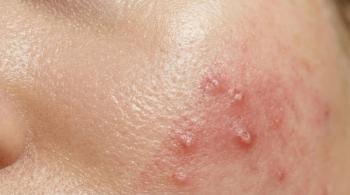
Acne flares risk stems from trapping sebum, bacteria, irritants, or comedogenic products under occlusion; mitigation includes cleansing, limiting to dry patches, and avoiding active lesions.
Patient selection is pivotal: xerotic, sensitized, post-procedure, and atopic dermatitis skin derive greatest benefit, while petrolatum should not replace ceramide-based regimens or prescription anti-inflammatory therapy.
Cost-value is often poor with premium “slugging balms,” as inexpensive white petrolatum typically provides equivalent occlusive performance, with added ingredients variably increasing irritation or sensitization risk.
SHOW MORE
Can "slugging" with petroleum jelly improve skin, or is it just a myth? Read more about the latest social media trend and learn how to counsel your patients in the clinic.
Advertisement
From viral skin care hacks to trendy treatment devices, social media is shaping the questions patients bring into the exam room every day. In Dermatology Times’ new weekly series, Social Media Mythbusters, we break down trending claims clinicians are hearing in practice—exploring the proposed mechanism, what the evidence shows (or doesn’t), and whether each trend holds up under scrutiny.
In this edition, we’re examining overnight slugging and its impact on skin hydration and clarity.
Have a social media trend you’d like us to investigate next? Send us the social media myths your patients are asking about, and we may feature them in an upcoming edition. Connect with us on our social media or email us at [email protected].
The Trend
"Slugging,” one of the most well-known social media skin care trends in recent years, involves applying a generous layer of petrolatum-based product as the final step of a nighttime routine, leaving it on overnight. The name comes from the shiny, trail-like appearance it gives the face, and while the practice is not new in dermatology, its viral popularity has introduced it to an entirely new demographic of patients.
Content creators typically frame slugging as the universal secret to "glass skin — a high-hydration, dewy, translucent complexion —while others position it as a serious barrier repair tool on par with prescription emollients. Brands have even capitalized by marketing premium "slugging balms" at steep prices, despite the active ingredient being functionally equivalent to the $3 drugstore jar of white petrolatum sitting in most bathroom cabinets. Your patients are doing this. Some are benefiting. Some are breaking out. The question is: who is right?
Petrolatum is a semi-solid mixture of hydrocarbons derived from petroleum refining. It functions exclusively as an occlusive agent, forming a physical, semi-permeable film on the surface of the stratum corneum that dramatically reduces transepidermal water loss (TEWL). Unlike humectants (which attract water) or emollients (which fill intercellular lipid gaps), petrolatum does not contribute to the skin's natural lipid matrix or add moisture to the skin. It locks in whatever hydration is already present.
What makes petrolatum unique is the magnitude of its occlusive effect: the agent is the most effective occlusive moisturizer known, capable of reducing TEWL by up to 98 to 99%—far exceeding other commonly used occlusives like mineral oil, lanolin, or dimethicone, which reduce TEWL by only 20 to 30%.1 The molecular weight of petrolatum is too large to penetrate follicular openings or the stratum corneum; it works entirely at the surface level.
📊 POLL: Which patient population do you think benefits most from overnight slugging?
The Evidence
The TEWL-reduction data for petrolatum is among the most consistently replicated findings, and it forms the legitimate evidentiary core behind the slugging trend. Petrolatum applied to healthy skin reduces TEWL by approximately 46% in the first 40 minutes of application—substantially higher than comparable low- and high-lipid cream formulations (both approximately 16%) over the same period.2 This review affirms the evidence base for petrolatum in stratum corneum hydration and surface texture parameter for wound care, post-procedural skin, and as a vehicle for medicated ointments, and squarely addresses the social media context: slugging is identified as a trend with a legitimate scientific foundation, provided it is applied appropriately.3
Social media overclaims petrolatum as an active treatment. It does NOT:
Repair the lipid matrix of the stratum corneum
Provide humectancy (without an underlying humectant in the prior routine step)
Treat acne, reduce sebum production, or address inflammatory skin disease
Penetrate deeply enough to affect collagen synthesis or dermal structures
Substitute for prescription topicals or systemic therapy in moderate to severe disease
In a landmark 2016 study from the Icahn School of Medicine at Mount Sinai, investigators applied petrolatum under occlusion for 48 hours in both healthy subjects and patients with atopic dermatitis, then analyzed skin biopsies.4 The results were striking: petrolatum significantly upregulated antimicrobial peptides (AMPs), including human beta-defensins and cathelicidin, and induced genes associated with epidermal barrier recovery. This is also the population for whom overnight occlusion could make the most mechanistic sense. Compromised barriers lose water disproportionately during sleep (when ambient humidity is lower and active sebum production is reduced), making overnight petrolatum application a targeted intervention rather than just a cosmetic indulgence.
The question clinicians will hear most often: "Will slugging give me acne?" White petrolatum consistently scores 0–1 on the comedogenic scale, meaning the molecule itself (due to its size) does not penetrate pores or provoke comedone formation. What petrolatum can do, however, is create a warm, moist, occluded microenvironment on the skin surface. If a patient applies petrolatum over unwashed skin, acne lesions, comedogenic skin care products, or residual active ingredients, the occlusion may trap bacteria and sebum against already-compromised follicles—leading to breakouts and irritation that are not caused by the petrolatum itself but by the conditions it seals in. Milia is also a separate concern, particularly around the periorbital region. Other alternatives, such as petrolatum-adjacent products with lanolin or plant-based oils, have also been discussed online. However, these may not deliver that same immediate skin occlusion performance. There have also been some rates of contact sensitization or comedogenicity, depending on the product.
Slugging is one of the few social media skin care trends that a dermatologist can endorse with genuine evidence behind it—provided the patient is the right candidate. For dry, sensitized, post-procedure, or barrier-compromised skin, overnight petrolatum application has mechanistic plausibility, measurable barrier benefits, and emerging evidence of active innate immune stimulation.
The caveats are patient-selection, not evidence-quality issues. Acne-prone patients should slug with caution and technique, not avoidance. Patients substituting expensive "slugging balms" for white petrolatum are paying a substantial premium for an identical active ingredient. And patients treating slugging as a replacement for barrier-targeted therapy like ceramides and prescription topicals need to establish appropriate expectations.
The Script
If a patient comes asking if they should start slugging, here are some important points to hit:
Perfect the routine: Ensure that they’re cleansing thoroughly and that all the products they use underneath the petroleum jelly are appropriate to be “sealed in” with that last step.
Adjust for acne-prone skin: Emphasize that technique matters, so suggest applying a small amount on very dry patches (versus the full face) and avoid active breakouts.
Shop smartly: The fancy “slugging balms” may have a nicer texture or smell, but a $3 jar of Vaseline will provide the same results.
Recommend for post-procedural use: Petroleum will keep the wound environment moist and promote proper healing; continue using until the skin is fully re-epithelialized.
[Social Media Mythbusters is intended for dermatology clinicians. Evidence summaries reflect available literature at the time of publication and do not constitute clinical guidelines.]
References
1. Pagani K, Lukac D, Martinez R, Jablon K, McGee JS. Slugging: TikTokTM as a source of a viral "harmless" beauty trend. Clin Dermatol. 2022;40(6):810-812. doi:10.1016/j.clindermatol.2022.08.005
2. Rubio-Santoyo A, Sanabria-de la Torre R, Montero-Vílchez T, et al. Effects of extra virgin olive oil and petrolatum on skin barrier function and microtopography. J Clin Med. 2025;14(13):4675. doi:10.3390/jcm14134675
3. Kamrani P, Hedrick J, Marks JG, Zaenglein AL. Petroleum jelly: a comprehensive review of its history, uses, and safety. J Am Acad Dermatol. 2024;90(4):807–813. doi:10.1016/j.jaad.2023.06.010
4. Czarnowicki T, Malajian D, Khattri S, et al. Petrolatum: Barrier repair and antimicrobial responses underlying this "inert" moisturizer. J Allergy Clin Immunol. 2016;137(4):1091-1102.e7. doi:10.1016/j.jaci.2015.08.013
Can at-home dermarollers give the same results as in-office microneedling or is that just a myth? Read more about the latest social media trend and learn how to counsel your patients in the clinic.
The FDA approval, based on 36-week data from the phase 3 BRAVE-AA-PEDS trial, extends baricitinib access to patients as young as 12 years old with severe alopecia areata.
Three experimental hair loss mechanisms are moving through late-stage trials for the first time in decades, and the data are worth knowing before patients ask.
Alexandra Charrow, MD, discussed biologic selection, deroofing, and emerging procedural approaches to hidradenitis suppurativa at Maui Derm NP+PA Fall 2026.