Face taping promises smoother skin and fewer wrinkles without injectables, but evidence suggests any visible benefits are largely temporary.
Findings support ongoing pharmacovigilance monitoring of GLP-1 receptor agonists for hair loss, particularly as semaglutide and tirzepatide use continues to expand.
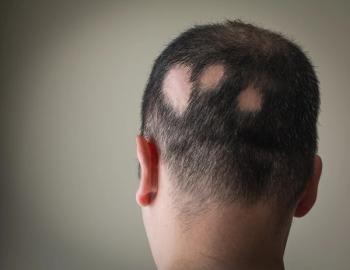
Semaglutide and tirzepatide are the only GLP-1 receptor agonists to generate statistically significant pharmacovigilance signals for alopecia-related adverse events in a new disproportionality analysis of FDA Adverse Event Reporting System (FAERS) data spanning 2016 to 2025. Published in the
Researchers analyzed 1,941 reports across 1,929 cases involving alopecia-related adverse events and seven GLP-1 receptor agonists: albiglutide, dulaglutide, exenatide, liraglutide, lixisenatide, semaglutide, and tirzepatide. Signal detection was based on the reporting odds ratio (ROR) and corresponding 95% confidence interval per the van Puijenbroek et al. (2002) method; a signal was defined as a lower-bound 95% CI above 1.2
Across the full observation period, signals were identified for semaglutide in 2022 (ROR=1.43; 95% CI: 1.15–1.77) and 2024 (ROR=1.55; 95% CI: 1.35–1.77), and for tirzepatide in 2024 (ROR=1.56; 95% CI: 1.36–1.79) and 2025 (ROR=2.08; 95% CI: 1.86–2.32). The 2025 tirzepatide signal was the highest-magnitude finding in the dataset. No signals were detected for dulaglutide, liraglutide, lixisenatide, albiglutide, or exenatide at any time point.
Semaglutide did not reach significance in 2025 (ROR=1.11; 95% CI: 0.96–1.28). The authors note this may reflect tirzepatide’s growing market share shifting the comparator pool, rather than a genuine attenuation of signal. Exenatide generated zero alopecia-related reports across the entire observation window, consistent with its discontinuation from the US market by late 2024.
The authors acknowledge a potential stimulated reporting effect following the FDA’s July 2023 advisory identifying alopecia as a potential adverse event of GLP-1 receptor agonists. Report volumes for both semaglutide and tirzepatide rose substantially after 2022, and the contribution of increased media and clinician awareness to that trend cannot be excluded.
Dechallenge and rechallenge data were available for a subset of reports and are reported here for the first time in the context of GLP-1 RA–associated alopecia. Proportions were calculated only among reports with non-missing data, per the authors’ methodology.
Among semaglutide reports with available dechallenge information, 25% documented positive dechallenge—defined as improvement or resolution of hair loss following drug discontinuation—and 19% documented negative dechallenge, meaning hair loss persisted after discontinuation. Positive rechallenge, indicating recurrence of hair loss upon drug reintroduction, was documented in 18% of semaglutide reports with available rechallenge data.
For tirzepatide, positive dechallenge was documented in 8.7% of reports with available data and positive rechallenge in 33%. The authors note that while dechallenge and rechallenge patterns can indirectly support causal inference in pharmacovigilance contexts, they do not establish causation and should be interpreted in light of the limitations inherent to spontaneous reporting data.
Across all GLP-1 RA alopecia reports, more than 75% of patients were women. Mean age was 58.26 (±13.88) years for semaglutide users and 56.76 (±14.42) years for tirzepatide users. Mean weight was 70.06 (±23.28) kg and 62.35 (±18.28) kg, respectively. Consumers were the most frequent reporters for all agents, exceeding 70% for all drugs except liraglutide (60%).
Diabetes mellitus and weight control were among the top 10 reported indications across all agents. The authors also identified “product used for unknown indication” among the top 10, which they note may be suggestive of off-label use.
The authors propose that the extended half-life of synthetic GLP-1 receptor agonists—approximately 165 hours, compared to under 2 minutes for endogenous GLP-1—may contribute to downstream metabolic changes not seen with native hormone activity, potentially including effects on hair cycling. They also note that rapid weight loss associated with GLP-1 RA use is a plausible independent contributor to hair loss, though the FAERS data cannot distinguish drug-specific effects from weight-loss–mediated mechanisms.
Inherent FAERS limitations apply throughout. As a spontaneous reporting database, FAERS is subject to underreporting, reporting bias, and stimulated reporting. The absence of reliable denominator data prevents calculation of incidence rates; RORs should be interpreted as measures of disproportionality rather than absolute or relative risk. Important clinical variables—including underlying dermatologic or autoimmune conditions, nutritional status, hormonal disorders, and concomitant medications—are incompletely captured and cannot be adjusted for. Temporal associations in FAERS do not establish causality.
The authors conclude that findings from this decade-long analysis, including the novel dechallenge and rechallenge data, support continued pharmacovigilance monitoring of semaglutide and tirzepatide for alopecia-related adverse events.
References