Case Questions
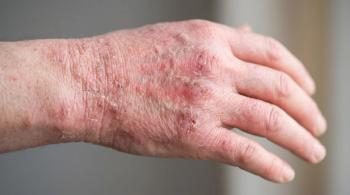
- What aspects of this patient case might influence a choice of therapy?
- How should the underlying pathophysiology of atopic diseases inform management of multiple comorbidities?
- How do comorbidities influence long-term strategies for symptom control?
DiRuggiero paused to discuss the case and its implications. He asked the group to consider the variables, including multiple comorbidities in assessing patients and developing appropriate long-term strategies.
Exploring Pathophysiology and Treatment Options
To better answer the questions around treatment strategy, DiRuggiero reviewed the pathophysiology of atopic disease and the role of biologics. The type 2 inflammation pathway involves cytokines IL-4, IL-5, IL-13, and IL-31, he explained. Consequences of dysregulation and disease associated with this pathway include allergies, anaphylaxis, type 2 asthma, AD, chronic obstructive pulmonary disease (COPD)with type 2 inflammation, and chronic rhinosinusitis with nasal polyps (CRSwNP).1
Although IL-4 and IL-13 have overlapping functions, they are not redundant, he explained. “IL-4 drives T-cell differentiation in the early steps of AD, while IL-13 affects peripheral tissue cells and is involved in later steps of immune response,” he told attendees. “Dual blockade (IL-4/IL-13) targets multiple steps in AD cascade to provide rapid and sustained therapeutic response.” Thus, targeting IL-4 allows for early intervention in the AD pathogenesis.2
DiRuggiero noted several agents target IL-13: dupilumab (Dupixent; Sanofi and Regeneron), tralokinumab (Adbry; LEO Pharma), and lebrikizumab (Ebglyss; Lilly). Both tralokinumab and lebrikizumab are indicated for treating AD in patients 12 years and older. Dupilumab also targets IL-4, he added, and thus has been proven safe and effective for additional conditions (eg, asthma in patients 6 years or older, CRSwNP in patients 12 years or older; eosinophilic esophagitis in patients aged 1 year or older; prurigo nodularis in patients 18 years and older; and COPD in patients 18 years and older).
In exploring how dupilumab works, DiRuggiero also presented 2-year interim real-world data from the PROSE registry on its effectiveness in treating AD. This study included patients with moderate to severe AD for 12 years or longer (N= 764), 50% of which were naive to systemic AD treatment(s) (ie, no prior biologics). Data showed rapid and sustained improvement across several measures, including BSA affected by AD, Eczema Area and Severity Index (EASI) scores, and the Dermatology Life Quality Index. The agent was considered relatively safe, with conjunctivitis (2.4%) and AD (1.7%) as the most common adverse events(AEs) and only 2.1% serious AEs, he reported.3,4
Choosing and Monitoring Treatment
In looking at the PROSE registry data, DiRuggiero asked attendees to consider several important points: How do you decide between systemic treatment like dupilumab vs topical treatments, and under which circumstances would you choose a combination? And, when you do choose dupilumab, what strategies can be used to monitor and manage potential AEs?
After a brief discussion, DiRuggieroreturned to the case he had presented earlier. The patient and clinician considered her history and medical comorbidities and decided to initiate treatment with dupilumab. Her treatment protocol included a 600-mg subcutaneous loading dose of dupilumab followed by 300 mg once every 2 weeks. She also continued the daily emollient use and was prescribed triamcinolone 0.1% cream.
At 16 weeks, there was a 70% reduction in her EASI score, he told attendees. She reported reduced pruritus, which also helped improve her sleep. She did not experience asthma exacerbation; in fact, she reported less use of short-acting β2-agonists with physical activity. Her quality of life and mental health improved, and she reported better work performance and social interactions. The patient experienced mild conjunctivitis due to the treatment; it was managed with artificial tears and a consultation with an ophthalmologist.
According to DiRuggiero, the case demonstrated when dupilumab is a good choice for patients with comorbid asthma and AD. A good medical history and probing questions can often lead clinicians to a clear treatment path.
References
1. Haddad EB, Cyr SL, Arima K, McDonald RA, Levit NA, Nestle FO. Current and emerging strategies to inhibit type 2 inflammation in atopic dermatitis. Dermatol Ther (Heidelb). 2022;12(7):1501-1533. doi:10.1007/s13555-022-00737-7
2. Chiricozzi A, Maurelli M, Peris K, Girolomoni G. Targeting IL-4 for the treatment of atopic dermatitis. Immunotargets Ther. 2020;9:151-156. doi:10.2147/ITT.S260370
3. Simpson EL, Lockshin B, Lee LW, Chen Z, Daoud M, Korotzer A. Real-world effectiveness of dupilumab in adult and adolescent patients with atopic dermatitis: 2-year interim data from the PROSE Registry. Dermatol Ther (Heidelb). 2024;14(1):261-270. doi:10.1007/s13555-023-01061-4
4. Bagel J, Nguyen TQ, Lima H, et al. Baseline demographics and severity and burden of atopic dermatitis in adult patients initiating dupilumab treatment in a real-world registry (PROSE). Dermatol Ther (Heidelb). 2022;12(6):1417-1430. doi:10.1007/s13555-022-00742-w