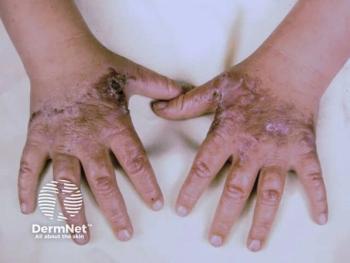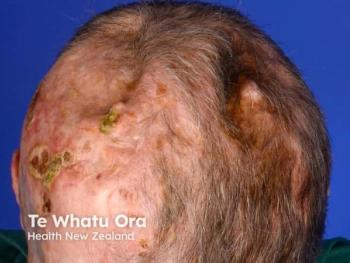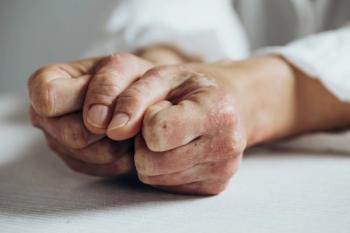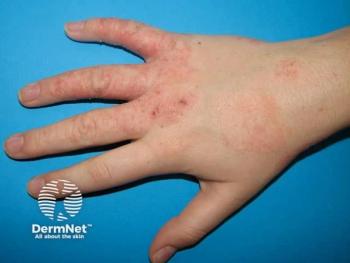
Dermatitis-related adverse events vary widely across atopic dermatitis systemic trials, driven by disease fluctuation and reporting differences, informing patient counseling and flare definitions.
Mobile app SkinTracker enhances atopic dermatitis care through remote assessments, proving effective and convenient for patients while saving costs.
Researchers found that using mobile-app-based surveys and photography to remotely track and assess atopic dermatitis (AD) was successful.1 The accuracy of disease assessments was comparable to in-person evaluation, making AD care more convenient and accessible.
A study in the Netherlands found that remote clinic visits can save AD patients up to $640 per year.2 Telemedicine has been proven to increase efficiency and eliminate distance and time needed to travel, saving money for both patients and providers.
Even with the recent growth of telehealth, few tools currently exist for the virtual assessment of AD disease activity. These apps can not only track symptoms but can also be used for remote clinical research. The app featured in this study, SkinTracker, was developed at the University of California, San Francisco.
The single-center, observational study occurred from June 2024 through December 2024. For 8 weeks, 28 patients (18 with AD and 10 healthy controls) used the app on their devices daily. They were also given an Apple Watch to collect sleep and exercise biometric data. Those with AD were formally diagnosed with the condition for at least 6 months. All participants in both groups were aged 13 years and older. Half of the patients in each cohort were female and the majority of participants in both groups were non-White.
Participants submitted standardized skin photographs and completed bi-weekly tasks on the mobile app. These tasks consisted of Numerical Rating Scale (NRS) Itch scoring, Patient-oriented Eczema Measure (POEM) scoring, a medication usage questionnaire, a voice diary, and an adverse events questionnaire. The mean baseline POEM score was 15.28 and the mean baseline NRS Itch score was 3.61.
Researchers graded the remote photos based on the Eczema Area Severity Index (EASI) and Investigator Global Assessment (IGA) scores and then compared them to the scores given during in-person research assessments at baseline and week 8. Virtual check-ins occurred at weeks 2, 4, and 6. The authors also analyzed patient compliance, satisfaction, and feedback on the mobile app.
The mean EASI scores in patients with AD were 7.63 at week 0 and 8.85 at week 8. The mean IGA scores in patients with AD were 2.78 at week 0 and 2.56 at week 8. The most common disease sites were the arms and legs (94.4%). Stress was the most common provoking factor, affecting 88.9% of patients.
There was excellent agreement between the app-based scores and the in-person scores. At both weeks 0 and 8, intraclass correlation across the app and in-person ranged from 0.90 to 0.96, indicating strong agreement. Similar results were seen in the IGA evaluation. At week 0, intraclass correlation ranged from 0.91 to 0.94. This agreement continued into week 8, with a range of 0.91 to 0.92. Furthermore, the correlation between app versus in-person was 0.77 for excoriation, 0.70 for erythema, 0.69 for edema/papulation, and 0.63 for lichenification.
All patients had high compliance rates and were satisfied with the app. Participants completed 97.6% of the 126 photography tasks, along with 95.6% of POEM surveys and 92.9% of NRS Itch surveys. Nearly all patients agreed that taking pictures with the mobile app was more convenient than coming in person for research studies.
The small sample size of this trial could be considered a limitation, as it greatly limits generalizability. Additionally, the average age of both cohorts reflected a younger study population that may be more comfortable with the daily use of mobile devices. In future studies, a larger and more diverse sample size should be utilized to further assess the feasibility of this virtual strategy.
The “digital divide” should also be considered when developing mobile monitoring systems for patients. Individuals with limited access to smartphones and Internet connection may need to be excluded from these research opportunities unless devices and/or compensation for Internet access are provided.
“Without strategies aimed at inclusion of all patients regardless of their access to digital technologies, study populations may be biased with participants of higher socioeconomic backgrounds and particular geographic regions with reliable internet connectivity,” the authors noted.
Despite this, SkinTracker proved to be reliable with excellent agreement with in-person assessment and high satisfaction rates among users. The authors hope that this app and other similar programs may enable remote clinical research in AD and other diseases.
References
1. Marquez-Grap G, Leung A, Orcales F, et al. Monitoring atopic dermatitis using mobile-app based photography and surveys. J Dermatolog Treat. 2025;36(1):2555983. doi:10.1080/09546634.2025.2555983
2. van Os-Medendorp H, Koffijberg H, Eland-de Kok PC, et al. E-health in caring for patients with atopic dermatitis: a randomized controlled cost-effectiveness study of internet-guided monitoring and online self-management training. Br J Dermatol. 2012;166(5):1060-1068. doi:10.1111/j.1365-2133.2012.10829.x