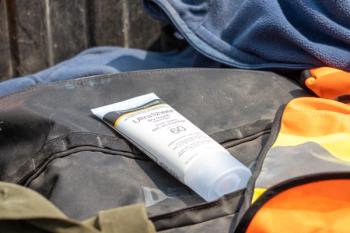
Two new Neutrogena facial sunscreens incorporate bemotrizinol, the first new sunscreen active ingredient added to the US OTC monograph in decades.
Discover effective treatment strategies for keloids and hypertrophic scars in skin of color, emphasizing personalized approaches and combination therapies.
Keloids and hypertrophic scars remain among the most persistent challenges in dermatologic and surgical practice, particularly for patients with skin of colour (SOC), where recurrence rates are high and pigment alteration is a pressing concern.1 A newly published systematic review by Lee et al provides one of the most focused examinations to date of how various treatments perform specifically in SOC populations.2 Their findings add valuable clarity to a field where conclusions are often drawn from small, heterogeneous studies or from cohorts lacking representative diversity.
The authors emphasize the long-recognized disparity early in the paper, noting that “keloids disproportionately affect Black, Asian, Hispanic and Middle Eastern populations." They attribute these differences to variations in collagen synthesis and melanocyte activity, highlighting why SOC-focused treatment data are clinically essential rather than optional.
The review screened 778 articles and included 37 studies encompassing 2004 patients. Importantly, the authors’ address the inconsistent ethnic terminology in the literature; the review consolidated patient groups into 4 broad categories, Black, Asian, Hispanic and Caucasian, to allow meaningful comparisons. Scar etiologies were familiar to most clinicians: ear piercing, trauma, acne, burns and postsurgical scarring.
Surgical monotherapies accounted for nearly a third of all treatments. Excision alone achieved a 68% complete resolution rate but carried a 32% recurrence risk, with both Black and Asian cohorts demonstrating this dual pattern of improvement and relapse. Intralesional cryotherapy showed partial success but was also “associated with significant hypopigmentation in Fitzpatrick III–VI,” reinforcing ongoing concerns about pigment alteration in darker skin.
Radiation-based treatments were the dominant non-surgical monotherapies. Brachytherapy performed strongly with a 73% complete resolution rate in Fitzpatrick III–VI patients but was accompanied by more than 120 documented adverse events—primarily pigmentary changes, dermatitis, and infection. Intralesional corticosteroids continued to play a central role, with up to 50% complete resolution in Black patients, though hypopigmentation and dermal atrophy remain problematic.
Bleomycin’s performance is noteworthy: it produced 100% partial resolution in Asian patients, but 71% developed hyperpigmentation, an adverse effect that may limit enthusiasm for its use in SOC unless pigment changes are clinically acceptable or reversible.
Combination therapy emerged as the clear standout. When surgical excision was paired with radiation, the complete resolution rate rose dramatically to 88%, with particularly high success in Asian and Black cohorts. Additional pairings, including excision with corticosteroids, verapamil, or cryotherapy, systematically outperformed monotherapies, with complete response rates ranging from 55% to 66%.
One of the most compelling findings involved tension offloading devices, which achieved a 92% complete response in an Asian cohort. While still supported by limited data, this modality may deserve closer attention in anatomic regions prone to high mechanical forces.
Perhaps the most practical clinical message from this review is the need to tailor treatments to preserve pigment while maximizing response. The authors underscore that “personalized strategies hinge on balancing efficacy with pigment preservation”—a nuance well understood by clinicians serving diverse populations.
While the review delivers valuable insights, its limitations echo familiar challenges: heterogeneous reporting, inconsistent definitions of “improvement,” and a reliance on retrospective and uncontrolled studies. The authors conclude with a call for “high-quality, controlled studies focusing on SOC populations,” a direction that would allow more confident, patient-specific recommendations.
This review makes clear that no single strategy is universally optimal for keloids in SOC. Instead, clinicians should consider combination therapies, especially excision plus radiation, while weighing the pigment risks that many therapies pose. Until larger, controlled SOC-centered trials emerge, these findings help guide evidence-based, culturally sensitive decision-making in a population historically underserved in scarring research.
References