From expanding patient access to providing specialized care and educating the next generation of clinicians, advanced practice providers (APPs) have become an integral part of health care across the United States. National APP Week, recognized September 21 through 25, 2026, offers an opportunity to celebrate those contributions and highlight the evolving role of APPs across specialties, including dermatology.1
This year's theme, “The Pulse of Progress: APPs Powering Tomorrow,” recognizes APPs not only for the care they provide each day but also for their contributions to innovation, interdisciplinary collaboration, education, research, and leadership.1
For the NP and PA community in dermatology, those contributions can be seen throughout the continuum of care, from evaluating and treating common and chronic skin diseases to supporting patients with complex conditions and participating in collaborative care teams.
A Growing Presence in Dermatology
The role of APPs in dermatology has expanded considerably over the past several decades.
Research examining the dermatology PA workforce found that 4580 certified PAs reported practicing in dermatology in 2021, nearly twice the 2323 reported in 2013. The authors noted that the increasing number of PAs choosing dermatology may help address workforce needs within the specialty.2
Earlier workforce modeling similarly suggested that investment in the training of NPs and PAs, alongside physicians, could be one strategy for improving access to dermatologic care in areas with lower dermatologist density.3
That growth reflects a broader shift in how dermatologic care is delivered. APPs may evaluate patients, contribute to diagnosis and treatment, perform procedures, provide patient education, and help manage patients with both acute and chronic dermatologic diseases.
Expanding Access and Supporting Patients
Access remains an important consideration in dermatology, particularly as demand for specialty care continues to evolve. The integration of NPs and PAs into dermatology practices has provided another avenue for practices to meet patient needs while building collaborative models of care.
But the impact of APPs extends beyond appointment availability.
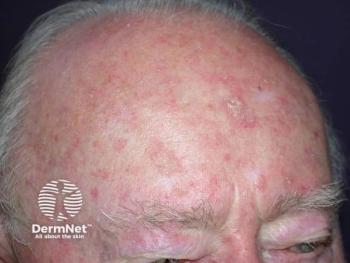
Dermatologic diseases such as atopic dermatitis, psoriasis, hidradenitis suppurativa, acne, and skin cancer can require ongoing management, patient education, treatment monitoring, and conversations about quality of life. APPs are often involved throughout that journey, helping patients understand their disease and navigate increasingly complex treatment options.
As therapeutic choices continue to expand, the ability to communicate evidence in a way that is relevant to an individual patient remains an important part of clinical practice.
Get Involved With Dermatology Times
For APPs across all stages of their dermatology careers, opportunities to connect, learn, and share experiences can be an important part of professional growth. Dermatology Times invites nurse practitioners and physician assistants to share their perspectives through NP/PA Connect. APPs can contribute clinical insights, career experiences, advocacy efforts, lessons learned, and perspectives on emerging treatments while connecting with colleagues across the dermatology community.
Interested in getting involved? Contact editor Shannon Heaning at [email protected] to contribute.
More Than Clinical Care
National APP Week also recognizes the roles APPs hold outside the examination room. Across health care, APPs contribute as educators, researchers, mentors, advocates, and leaders within interdisciplinary teams.1
Those roles are increasingly visible within dermatology as well.
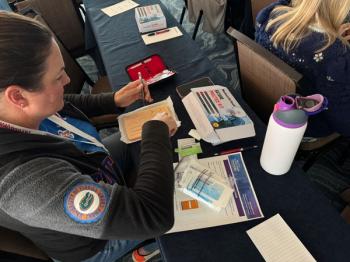
NPs and PAs are contributing to clinical research, presenting at professional meetings, educating colleagues, developing patient resources, mentoring other clinicians, and creating initiatives designed to improve care within their communities.
For APPs, professional growth can therefore extend far beyond developing clinical expertise. Leadership, collaboration, advocacy, and education all provide opportunities to influence how dermatologic care continues to evolve.
Celebrating the NP and PA Community
National APP Week is ultimately an opportunity to recognize the people behind those contributions.
For NPPA Connect, that means celebrating the NPs and PAs who care for patients, ask difficult clinical questions, share their expertise with colleagues, and continue looking for better ways to deliver dermatologic care.
Throughout the year, NPPA Connect has the privilege of speaking with APPs about the clinical challenges they encounter, the projects they are building, the lessons they have learned, and the ideas they believe can move dermatology forward.
National APP Week provides another opportunity to amplify those voices.
As the role of APPs continues to evolve, so too will their influence on dermatology. This week, NPPA Connect celebrates the NPs and PAs who are already helping shape that future—and the community of clinicians powering progress every day.
References
- National APP Week. National APP Week 2026. Accessed September 15, 2026. https://nationalappweek.com/
- Hooker RS, Cawley JF, Everett CM. Characteristics of physician associates/assistants in dermatology. Arch Dermatol Res. 2023;315(7):1887-1894. doi:10.1007/s00403-023-02593-7 https://www.researchgate.net/publication/369189483_Characteristics_of_physician_associatesassistants_in_dermatology
- Glazer AM, Farberg AS, Winkelmann RR, Rigel DS. Analysis of trends in geographic distribution and density of US dermatologists. JAMA Dermatol. 2017;153(4):322-325. https://jamanetwork.com/journals/jamadermatology/fullarticle/2599761?__cf_chl_tk=sKI7f8D8RgS2rtTX6Y1x.p1vjOjNQkBH4GgdWHHkk2g-1789485542-1.0.1.1-XRqYiiafxoG3ZLkSQsWxl3BqnE7.9ichEgIwA8PluL0