Faculty from the Cutaneous Oncology Workshop answer practical questions spanning skin cancer prevention, diagnosis, treatment, and follow-up.
Day 2 explored infectious disease, challenging diagnoses, GLP-1s in psoriasis, and evolving approaches to inflammatory skin disease.
Day 2 of
Throughout the day, faculty combined clinical updates with interactive cases designed to challenge attendees' diagnostic and therapeutic decision-making.
The morning began with “Infectious Disease Update 2026,” led by Ted Rosen, MD, and Vikash Oza, MD, and moderated by Matthew Davis, PA-C, MSPAS. Faculty reviewed diagnostic and therapeutic approaches across a broad range of viral, bacterial, fungal, parasitic, and arthropod diseases.
The program then turned to nail disease, with Phoebe Rich, MD, discussing diagnostic and therapeutic approaches across a range of nail disorders.
Together, the sessions highlighted the breadth of conditions that can present in dermatology practice and the importance of maintaining a broad differential when evaluating less straightforward presentations.
Diagnostic problem-solving remained a central theme during a 2-part interactive Grand Rounds in Dermatology featuring Rosen, Lawrence Wine Lee, MD, PhD, and George Martin, MD.
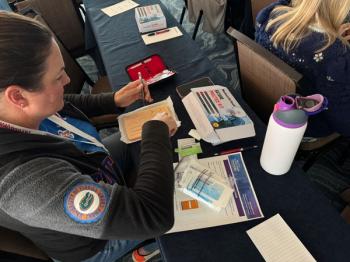
Faculty presented cases that challenged their own clinical skills, asking attendees to weigh in on therapeutic decisions through the meeting app before discussing their rationale. Cases required extensive differential diagnoses and, in some instances, diagnostic workups and consideration of a broad range of therapeutic options.
The morning concluded with “Outside the Box: Treating the Uncommon Dermatosis,” which addressed diseases that may be difficult both to diagnose and manage. Faculty emphasized practical approaches to conditions for which controlled therapeutic trials or approved therapies may be limited or absent.
One of the afternoon's most timely topics came during “GLP 1's: Where, When, Why and How,” an interactive session led by Willa Hsueh, MD.
The session explored the potential role of GLP-1 receptor agonists, including semaglutide and liraglutide, as adjunctive therapies in psoriasis. According to the program, discussion centered on their potential effects beyond glucose control and weight loss, including obesity-related inflammation and proinflammatory pathways relevant to psoriasis.
The interactive format also allowed attendees to weigh in through an audience-response system, bringing clinical decision-making into a rapidly evolving area at the intersection of dermatology and metabolic health.
The afternoon continued with an Inflammation and Immunology Workshop covering connective tissue disorders,
Moderated by Melissa Bruno, PA-C, the session featured Alisa Charrow, MD; Jerry Hawkes, MD; and Alisa Femia, MD. Faculty reviewed new drugs, emerging data, and evolving approaches to treatment before presenting challenging cases, including scenarios involving HS and obesity.
Attendees selected therapeutic approaches through the meeting's survey app, followed by faculty discussion of the reasoning behind different treatment decisions.
Across Day 2, Maui Derm NP+PA Fall continued to emphasize the application of evidence rather than clinical updates alone.
From differentiating infectious and uncommon dermatoses to considering emerging metabolic approaches in psoriasis and navigating treatment decisions across inflammatory diseases, the day's sessions highlighted the increasingly broad knowledge base required of dermatology NPs and PAs.
Programming continues September 18 with dedicated updates in pediatric dermatology, atopic dermatitis and itch, acne and rosacea, and psoriasis and psoriatic arthritis.
References