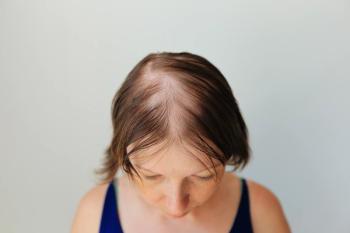
From emerging therapies to earlier intervention and psychosocial support, Dermatology Times looks back at key alopecia areata developments in 2026.
This review of the latest dermatologic studies includes discussions on the relationship between atopic dermatitis and prurigo nodularis, the use of upadacitinib for treating PN, and more.
Allergy, Asthma & Immunology Research:
The Journal of Dermatology:
Murota et alestablished the first web-based survey (UMIN000047643) of Japanese dermatologists to observe the clinical management of PN. Between April and June of 2022, 117 dermatologists from hospitals and clinics were surveyed. Each had seen at least one patient with PN in the last three months. Survey questions assessed several attributes including practice setting, treatment details, and perception of patient disease burden. Overall, clinicians consider the number of pruritic nodules and the degree of itching to be the most important aspects when determining if a patient has PN. The most used diagnostic measures were clinical findings and patient interviews while topical corticosteroids and antihistamines were the most used treatment agents. Although most surveyors were very or somewhat satisfied with the outcomes of mild disease treatment, almost 65% of dermatologists were not satisfied with the treatment of severe PN. The study authors noted some limitations, as the survey does not represent all dermatologists in Japan treating PN. However, they expressed that more effective medications and diagnostic tools are needed in Japan to better manage severe PN symptoms.2
International Journal of Dermatology:
Li et al completed a systemic review that observes the relationship between atopic dermatitis (AD) and prurigo nodularis. Previously, the connection between the two conditions had not been fully determined. However, this meta-analysis emphasizes the close association between AD and PN. The researchers searched databases such as PubMed, EMBASE, Scopus, and the Cochrane Library, for studies published up to February 2024. It was found that there is an increased risk of developing AD in patients already suffering from PN (pooled unadjusted odds ratio [OR], 16.85; 95% confidence interval [CI], 6.13–46.31; I2 = 100%). Similarly, PN was prevalent in patients who already had AD(2.00%; 95% CI, 1.62–2.37%). This research furthers the suggestion that PN may be a distinct clinical phenotype of AD. The study authors believe that further studies are needed to confirm these findings and determine how they can impact clinical strategies for treatment of both diseases.3
Journal of Dermatological Treatment:
What new studies have you published? Share with us by emailing
References
1. Lee J, Kim Y, Shin K, et al. Treatment with upadacitinib in refractory prurigo nodularis: A prospective cohort study. Allergy Asthma Immunol Res. 2024;16(5):546-554. doi:10.4168/aair.2024.16.5.546
2. Murota H, Matsumoto M, Arima K, Yoshida T, Fujita H. Current clinical practice of prurigo nodularis in Japan: A cross-sectional web-survey among dermatologists. J Dermatol. Published online September 3, 2024. doi:10.1111/1346-8138.17400
3. Li W, Pi Y, Xu J. Association between atopic dermatitis and prurigo nodularis: a systematic review and meta-analysis. Int J Dermatol. Published online September 29, 2024. doi:10.1111/ijd.17493
4. Bahloul D, Hudson R, Balogh O, et al. Estimating the healthcare burden of prurigo nodularis in England: a CPRD database study. J Dermatolog Treat. 2024;35(1):2367615. doi:10.1080/09546634.2024.2367615