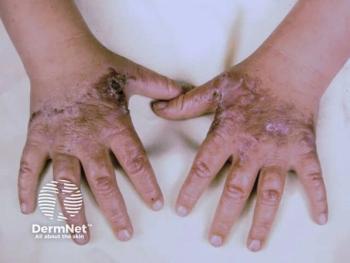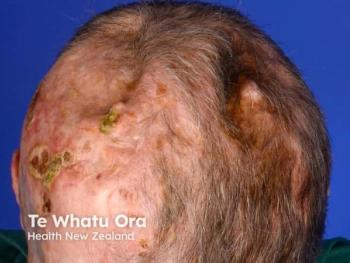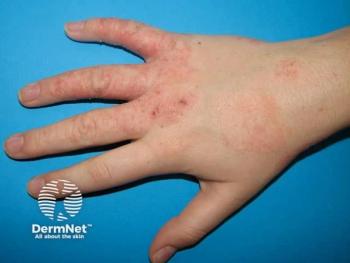
Dermatitis-related adverse events vary widely across atopic dermatitis systemic trials, driven by disease fluctuation and reporting differences, informing patient counseling and flare definitions.
Clinicians agreed that itch — not lesion count or BSA alone — is the most clinically meaningful driver of treatment escalation in patients with atopic dermatitis.
The topical treatment landscape for atopic dermatitis (AD) has never been broader. And yet, as a group of dermatologists gathered recently for a Dermatology Times Case-Based Roundtable event in Denver, Colorado, the conversation made clear that having more tools does not automatically simplify clinical decision-making. Practical barriers, patient behavior, and regional variations in insurance coverage continue to shape when and how those tools are used. Moderator Eric Domingues, MD, a dermatologist in private practice in Massachusetts and a faculty member at the University of Massachusetts, structured the session around a single realistic case while drawing on the assembled group’s experience across academic medical centers, community practices, and mixed-payer environments.
The index case—a 38-year-old man with a 28-year history of AD, 10% body surface area (BSA) involvement across the neck, upper trunk, and legs, and itch severe enough to disrupt sleep and work performance—was deliberately unremarkable. His condition had been manageable on topical corticosteroids (TCs) until a relocation 8 months prior triggered a prolonged flare that his usual regimen could no longer control.
Clinicians were first asked how they define severity in practice. Responses ranged across Eczema Area and Severity Index (EASI) scores, BSA, validated itch assessments, and the Investigator Global Assessment (IGA). Domingues affirmed the importance of using these instruments with intention. "We have to define it somehow," he said, "because insurance wants to know: Is this mild to moderate? Is it moderate to severe?" The point was not merely academic—a severity designation determines what a patient can access and how quickly.
Attendees consistently noted that itch, rather than lesion counts, often drives treatment urgency. Quality-of-life impact—including effects on sleep, occupational performance, and family functioning—was framed as a primary treatment target rather than a secondary one. One clinician described the household ripple effects of pediatric AD: parents losing sleep, teachers calling about a child whose periorbital AD had been mistaken for conjunctivitis. "Mom and Dad are not sleeping," she noted. "Cranky parents [means] more Starbucks than usual the next day." Even a sibling sharing a room, she observed, is not insulated from the disruption.
Discussion of topical calcineurin inhibitors (TCIs) surfaced near-universal frustration. Tacrolimus (Protopic; LEO Pharma) and pimecrolimus (Elidel; Bausch Health US, LLC) were recognized as meaningful advances in their time. "If you could get Protopic covered, it was like, this is amazing," Domingues recalled of his residency. However, stinging remains a documented barrier to adherence. Attendees offered a familiar set of mitigation strategies: Apply moisturizer first to pretreat the skin barrier, dilute TCIs into an emollient, and refrigerate the product before use. Consensus, though, was that efficacy on nonfacial sites was modest at best. "I find they don't do anything," one attendee said flatly, "except for [on the] face and thin skin."
The arrival of crisaborole (Eucrisa; Pfizer Inc) was noted as similarly promising in theory but complicated in practice. Attendees mentioned the burning and stinging that limited tolerability, particularly in young children.
The patient education discussion generated some of the session's most candid moments. Attendees described a recurring pattern: Patients presenting as apparent treatment failures were, on closer inquiry, actively worsening their skin through product choices reinforced by social media. "The biggest challenge I face is Instagram and all this Tubby Todd and Honest Company garbage," one clinician said. Patients, she added, "are reluctant to tell you what they found on TikTok." Another described a case from the prior day: a body wash containing stinging nettle was used on an 8-year-old. "It stings [so] it's working," she said, capturing the patient logic that clinicians regularly encounter. The loofah came up separately. "Nothing defeats the loofah," one attendee observed, to broad agreement. The implication was clinical: Targeted inquiry about bathing habits and product use is not a soft conversation. It is a therapeutic variable.
For patients who have not responded to or cannot tolerate TCs or TCIs but are not yet candidates for systemic therapy, ruxolitinib cream (Opzelura; Incyte) has emerged as a meaningful option—and, depending on geography and payer, may be accessible earlier in the sequence than clinicians expect. "I can go straight to ruxolitinib instead of the TCIs," one Colorado-based attendee noted, describing Medicaid coverage in her state. The observation prompted discussion about regional variability: In some markets, prior authorization pathways allow for TCI-step bypass; in others, specialty pharmacy partnerships have helped streamline access.
Approved by the FDA in 2022 for mild to moderate AD in nonimmunocompromised patients 12 years and older, ruxolitinib cream's clinical profile is anchored in the phase 3 TRuE-AD1 and TRuE-AD2 trials (
Across cases and discussion threads, the roundtable reinforced a consistent set of clinical priorities for managing AD at the topical tier: Use validated severity instruments to anchor treatment decisions and support payer conversations; treat itch and quality-of-life impairment as first-order goals, not afterthoughts; and invest in structured patient education as a core component of every visit, not as a preamble to the prescription. As the topical formulary continues to evolve, selecting the right agent at the right moment in a patient's trajectory depends as much on what a clinician asks as what they prescribe.
Reference