


Opinion|Videos|August 18, 2026
Inside the Risankizumab and PsA Risk Study: Claims Data on Targeted Immunomodulator Therapies
Author(s)Bruce Strober, MD, PhD
This episode, "Inside the Risankizumab and PsA Risk Study: Claims Data on Targeted Immunomodulator Therapies," examines the study design and the numbers behind it.
Advertisement
Episodes in this series
This episode, "Inside the Risankizumab and PsA Risk Study: Claims Data on Targeted Immunomodulator Therapies," examines the study design and the numbers behind it.
Dr. Strober details the real-world study at the center of the presentation. It examined psoriatic arthritis developing in patients with psoriasis without prior joint disease who started a targeted immunomodulatory drug, or TIM. The analysis compared patients started on risankizumab against those on other TIMs. It drew on the Merative MarketScan claims database, spanning roughly 300 million commercially, Medicare, and Medicaid-insured lives. Psoriatic arthritis was captured by diagnostic codes, which he flags as a known limitation of claims data.
He explains the eligibility rules: psoriasis defined by two visits at least 31 days apart, adult patients naive to modern therapeutics, and continuous enrollment before and after an index treatment. To isolate true first-onset disease, the study excluded anyone with prior inflammatory arthritis, a rheumatology visit, or a suggestive treatment such as methotrexate. Dr. Strober acknowledges this cannot perfectly remove existing psoriatic arthritis, but calls it a rigorous attempt.
Patients were followed after starting an index biologic, risankizumab, ustekinumab ixekizumab, guselkumab, secukinumab, or bimekizumab, or oral apremilast, with sensitivity analyses at 3, 6, and 12 months. Across roughly 20,000 patients, baseline demographics were balanced: average age about 44, half women, with comparable comorbidities across groups.
The crude incidence of psoriatic arthritis, in events per 100 patient-years, was lowest with risankizumab, including versus the other IL-23 inhibitor guselkumab, and clearly below the IL-17 inhibitors, apremilast, and ustekinumab. Adjusted hazard ratios used risankizumab as the reference, and every other TIM showed a statistically significant higher risk. Dr. Strober explains that the 3-, 6-, and 12-month sensitivity analyses test whether effects hold as patients drop out. The results stayed consistent across all intervals.
The next episode in this series, "Reading the Risankizumab Claims Data: Protopathic Bias and Study Limitations," turns a critical eye on how far these claims-based results can be trusted.
Advertisement
Related to this article
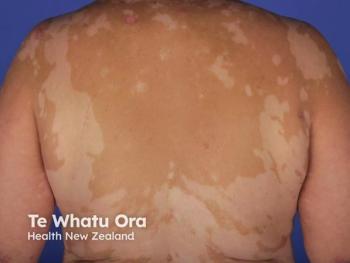
The FDA clearance allows Edesa to expand an ongoing placebo-controlled study of the CXCL10 antibody EB06 to US sites, with topline data expected in the fourth quarter of 2027.

The novel oral helicase-primase inhibitor demonstrated significantly higher rates of complete lesion healing compared with investigator’s choice treatment in the phase 3 PRIOH-1 trial.
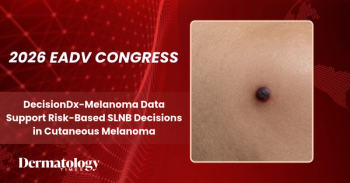
Prospective data suggest DecisionDx-Melanoma may help refine SLNB decisions and identify recurrence risk beyond conventional staging.

Falk G. Bechara, MD, discusses long-term tunnel control, structural damage, and the evolving role of biologics and surgery in HS care.

Galderma has agreed to acquire ZO Skin Health for $1.5 billion, adding the physician-dispensed skincare brand to a portfolio that already includes Cetaphil and Alastin.

New dermatology research explores hidden steroids in OTC products, infant eczema, melanoma prevention, cutaneous lymphoma, and pediatric AD.

SYX-5219 improved disease severity and itch in a Phase 1b trial of adults with moderate to severe atopic dermatitis.

In a survey of 301 employed adults, overall work impairment attributable to CHE was 31.8%, and quality of life worsened in step with self-reported disease severity.
Advertisement
Advertisement
Trending on Dermatology Times
1
FDA Approves Pritelivir for Refractory Mucocutaneous HSV in Immunocompromised Adults
2
GLP-1 Agonists Address Metabolic Risk in Psoriatic Disease
3
EB06 Phase 2 Vitiligo Study Receives FDA IND Clearance
4
EADV 2026 Atopic Dermatitis Highlights: Tilrekimig, RAC2 Inhibition, and Level Up Data
5