

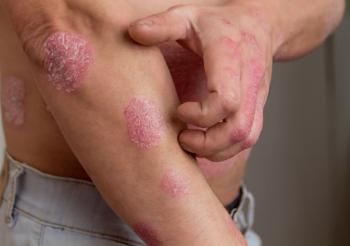
News|Articles|November 29, 2024
Dermatology Times November 2024 Recap
Author(s)Emma Andrus, Associate Editor
Listen
0:00 / 0:00
Key Takeaways
- Journey Medical's DFD-29 and Bimekizumab receive FDA approval for rosacea and moderate to severe HS, respectively.
- PDUFA dates for Tapinarof 1% cream and Abeona's pz-cel are set for 2025, with Dupilumab's decision due in April 2025.
Dermatology Times is looking back on the top stories in dermatology from the month of November.
Advertisement
Clearances, Approvals, Updates, and Recommendations
The minocycline hydrochloride extended release capsules (40 mg) represent a new standard of care for patients with rosacea.
The target action review date has been pushed to March 12, 2025.
Abeona's pz-cel has been granted a April 29, 2025, PDUFA date.
Delgocitinib is indicated for adults with CHE who either do not respond to or cannot use topical corticosteroids.
The target action date for the FDA decision is April 18, 2025.
The drug is the first FDA-approved treatment for moderate to severe HS that selectively inhibits both IL-17A and IL-17F.
Big Studies and Big Data
Christopher Bunick, MD, PhD, highlights rademikibart's next-generation efficacy, showing stronger IL-4Rα binding affinity in atopic dermatitis and asthma.
VYNE Therapies announces that aNSV patients saw disease improvement without serious adverse effects.
A poster presented at the 2024 SDPA Fall Conference demonstrated that clascoterone cream remains stable when paired with commonly prescribed acne topicals, supporting its role in multimodal therapy.
Market and Pharma News, Drug Watch
RAD will join MJH's multichannel model, enhancing its educational impact in atopic dermatitis, alopecia areata, vitiligo, and eczema.
The ILDS has named 6 young dermatologists from around the world as recipients of the 2025 Young Dermatologists International Achievement Awards for their contributions to dermatology.
ENS-002 targets S. aureus in atopic dermatitis.
The study is set to begin enrollment later this year.
According to the company, comparative tests revealed PN-881 surpasses or matches the efficacy of current injectable IL-17 therapies.
Strides for Skin Health Equity
Bree Vanleeuwen, PA-C, and Jim Sutton, PA-C, discussed the Skin Cancer Awareness project—a unique initiative to train cosmetologists and hairdressers to recognize suspicious skin lesions and refer clients for dermatologic evaluation.
The study demonstrated significant reductions in inflammatory and non-inflammatory lesions for Hispanic patients using CAB gel.
The study calls for improved diversity in clinical training materials to help future clinicians better recognize conditions on darker skin.
Don’t miss a moment of Dermatology Times by signing up for our
Advertisement
Related Content
Advertisement



Advertisement
Advertisement
Trending on Dermatology Times
1
How Emerging Androgenetic Alopecia Therapies Target DHT at the Scalp Level
2
Tildrakizumab Partially Reverses Epigenetic Aging in Psoriasis, Pilot Study Shows
3
Field-Directed Therapy Favored for Actinic Keratosis Management
4
From Biopsy to Biomarkers: Experts Navigate Skin Cancer Diagnosis and Staging
5