

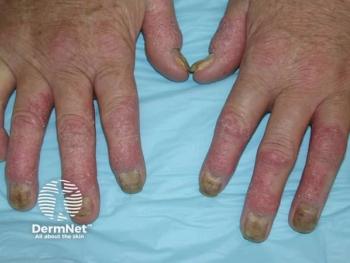
Data presented at EULAR 2025 showcased Tremfya's efficacy as the only IL-23 inhibitor to demonstrate inhibition of this nature in psoriatic arthritis.
Data presented at EULAR 2025 showcased Tremfya's efficacy as the only IL-23 inhibitor to demonstrate inhibition of this nature in psoriatic arthritis.

Discover the future of regenerative skincare with Skin Moderne’s groundbreaking Exosomes Regenerative Complex, a plant-derived innovation led by Dr. Frank Roesken, MD, PhD.
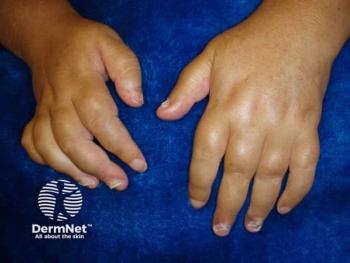
At the 2025 EULAR meeting, UCB presented new 3-year data on bimekizumab for PsA.

At the Fall Clinical PA/NP 2025 Conference, attendees caught up on the ins and outs of CHE.

This review of the latest dermatologic studies includes insights into skin improvement with injectable hyaluronic acid, burden of chronic spontaneous urticaria, and more.

Catch up on dermatology news, highlights, and insights from the past 24 hours.

At RAD 2025, Christopher Bunick, MD, PhD, presented data on amlitelimab and rocatinlimab, highlighting their potential to suppress cytokine signaling and more.
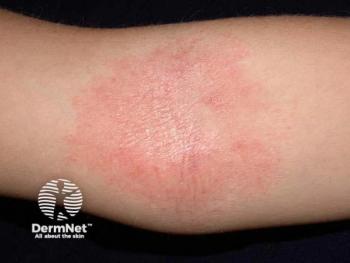
Galderma unveils promising long-term data on nemolizumab for atopic dermatitis, showcasing significant skin improvement and quality of life enhancements.
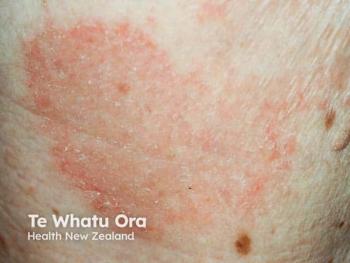
Discover innovative insights from the JADE REAL study on flexible dosing of abrocitinib for managing moderate to severe atopic dermatitis.

Researchers found CU was associated with increased odds of developing anxiety, depression, PTSD, and substance use disorder, among other conditions.

Recent research presented at the 2025 RAD Meeting explored the use of ruxolitinib cream in combination with systemic therapy.
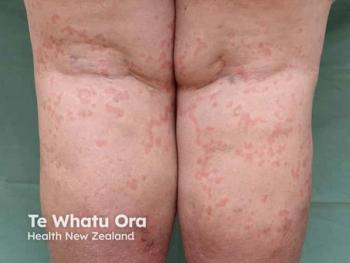
Treatment with rupatadine led to improvements in CSU and chronic inducible urticaria.

Discover the revolutionary Hydrafacial HydraFillic with Pep9 Booster, enhancing skin hydration and reducing fine lines with advanced peptide technology.

Catch up on dermatology news, highlights, and insights from the past 24 hours.

Almirall is pioneering a holistic approach in dermatology, emphasizing psychological well-being through the WHO-5 index in clinical trials.

The monoclonal anti-KIT antibody exhibited promise in adults with moderate to severe antihistamine-refractory CSU.

Explore the top headlines of the week including insights on the latest clinical trials, therapeutic updates, and more.

Test your knowledge of key words and terms associated with dermatology news from the previous week.

In case you missed it, this week we had news about denifanstat's promising phase 3 results for acne, emerging therapies in lichen planus, initial insights from RAD 2025, and more.

This week, we feature top articles from our sister publications on regulatory updates, clinical trial insights, and more.

Raj Chovatiya, MD, PhD, MSCI, discussed his approach to personalizing treatment dosing plans with adult patients based on skin clearance and therapeutic type at RAD 2025.

At RAD 2025, Brad Glick, DO, MPH, reviewed the clinical signs of topical steroid withdrawal, the need for detailed patient histories to distinguish it from severe AD flares, and the role of targeted non-steroidal and systemic therapies.

At RAD 2025, Vimal H. Prajapati, MD, shared phase 4 data from the CAN UpTIMISE study that shows switching to upadacitinib after inadequate response with dupilumab achieved rapid and significant improvements in skin clearance, itch, and QOL.

At the 2025 Revolutionizing Atopic Dermatitis Conference, JiaDe “Jeff” Yu, MD, MS, discussed the multifactorial nature of chronic hand eczema, highlighting its distinction from atopic dermatitis.
At the 2025 Revolutionizing Atopic Dermatitis Conference, Gil Yosipovitch, MD, explored the pathophysiology of chronic itch through the lens of type 2 cytokine inhibition, neuromodulatory therapies, and more.

Catch up on coverage from the final day of the 2025 Revolutionizing Atopic Dermatitis Conference held in Nashville, Tennessee.

At RAD 2025, Christopher Bunick, MD, PhD, presented 6-month data from the CorEvitas AD Registry, highlighting clinically meaningful skin clearance, itch reduction, and more in bio-naïve and bio-experienced adults treated with upadacitinib.

At RAD 2025, Eli Lilly revealed promising results for lebrikizumab in treating atopic dermatitis in patients with skin of color.

At RAD 2025, pediatric dermatologist Lisa Swanson, MD, and allergist Anne Marie Singh, MD, led a dual session aimed at demystifying the connection between food allergy and atopic dermatitis.

At the 2025 Revolutionizing Atopic Dermatitis Conference, Leon Kircik, MD, highlighted the safety of JAK inhibitors, clarified misconceptions around boxed warnings, and discussed the clinical relevance of recent label updates for abrocitinib.