

Researchers behind the latest benzene studies found no increased cancer risk with use of products containing benzoyl peroxide.
Researchers behind the latest benzene studies found no increased cancer risk with use of products containing benzoyl peroxide.

The increasing prevalence of this chronic condition in children necessitates understanding its broader impacts and management strategies.

This week’s collection of the latest dermatologic studies includes drug-induced epidermal necrolysis in pediatric patients, predicting relapse in chronic spontaneous urticaria, fatigue in patients with psoriasis and psoriatic arthritis, and the role of eosinophils in hidradenitis suppurativa.

Ben Lockshin, MD, FAAD, shared his insights on the latest advancements in oral options for psoriasis therapies.

Adhering to a Mediterranean diet and incorporating omega-3 supplements led to noticeable improvements in acne severity, reducing both inflammatory and non-inflammatory lesions in patients.

David Rosmarin, MD, shared his insights on the study in a Q&A with Dermatology Times.

Mona Shahriari, MD, hosted a Case-Based Roundtable discussion to review 2 challenging cases of atopic dermatitis in patients with skin of color.
Jenny Murase, MD, and Elizabeth Kiracofe, MD, highlighted key clinical considerations to optimize atopic dermatitis care for patients during pregnancy, prepregnancy, postpartum, and breastfeeding.

Rick Guidotti, fashion photographer turned patient advocate, discusses reframing beauty through his nonprofit Positive Exposure.

Catch up on coverage from the 2024 Society for Pediatric Dermatology Annual Meeting in Toronto, Ontario, Canada.

The AICHI study found a significant prevalence of severe primary axillary hyperhidrosis in children in Japan, according to a poster presented at the SPD's annual meeting.

Metz and Tollefson share insights on efficient practice management, work-life balance, and exciting developments in pediatric dermatology.
Smidt and Hunt offer insights on navigating pediatric dermatology decision-making, emphasizing learning from clinical scenarios and fostering a culture of feedback and improvement.

Oleogel-10 exhibited potential to alleviate the physical, emotional, and economic strain of dressing changes, according to a poster presented at the SPD's annual meeting.

Catch up on coverage from the third and final day of the 2024 Society for Pediatric Dermatology Annual Meeting in Toronto, Ontario, Canada.

Tapinarof cream 1% has proven to be an effective and safe treatment for atopic dermatitis in diverse populations, according to a poster presented at the SPD's annual meeting.

TMB-001 0.05% demonstrates promising efficacy and safety in treating moderate to severe congenital ichthyosis, according to a poster presented at the SPD's annual meeting.
In this episode, Vikash Oza, MD, and James Treat, MD, discuss their SPD 2024 session (debate) revolving around the topic: Does food trigger eczema?
Browning discusses his participation in an SPD 2024 panel discussion, the future of pediatric dermatology, and more.
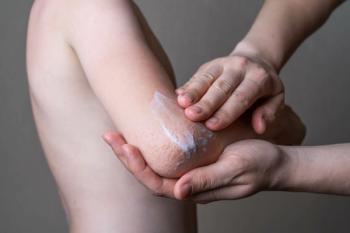
Nnena Agim, MD, presented a comprehensive update on non-steroidal topical therapies, highlighting off-label uses and recent FDA approvals in a session at the SPD's annual meeting.
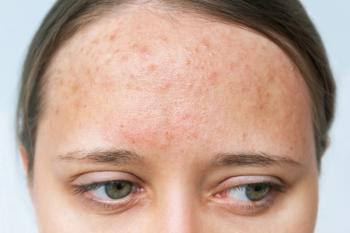
Andrea Zaenglein, MD, discussed the role of patient counseling and addressing "hormone phobia" in young patients treated with hormonal therapies for acne in her SPD 2024 session.
Swanson discusses her SPD 2024 non-CME talk, expanding topical options for young patients, and more.
Catch up on coverage from the second day of the 2024 Society for Pediatric Dermatology Annual Meeting in Toronto, Ontario, Canada.
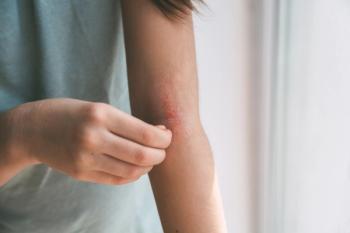
A significant proportion of pediatric patients with AD achieved and maintained clinical remission with dupilumab, according to a poster presented at the SPD's annual meeting.
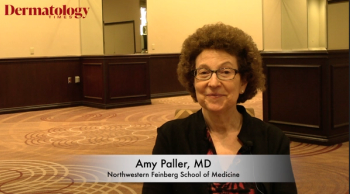
Paller discusses her SPD 2024 lecture, "Updates from ISSVA, ESPD, and SID: What You Missed that Could Change Your Practice."
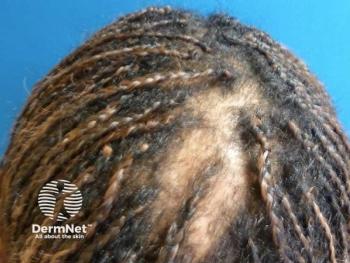
Marissa Joseph, MD, discussed inflammatory hair disorders in young children, such as CCCA, in a presentation at the SPD's annual meeting.
Caulfield discusses his SPD 2024 lecture, "The Misinformation Crisis: How Did We Get Here and What Can We Do?"
Lio discusses his SPD 2024 non-CME talk, new and exciting innovations in pediatric atopic dermatitis, and more.
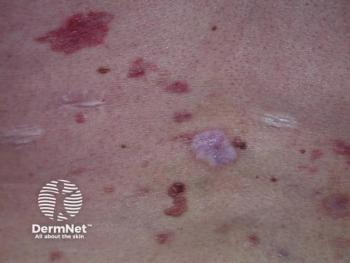
Lisa Weibel, MD, delved into skin signs of systemic diseases in the first of 2 Hurwitz lectures to be presented at the SPD's annual meeting.
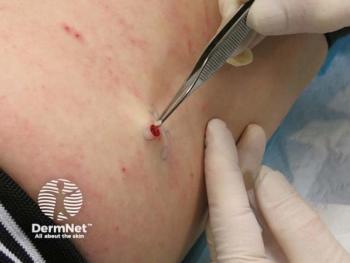
Use of WoundSeal yielded no observed complications such as infection or bleeding, according to a poster presented at the SPD's annual meeting.