



Atopic Dermatitis
Latest News

Advertisement
Latest Videos


Shorts

0:39
When Should You Actually Use Patch Testing?
4 months ago
by
Patricia Delgado, DNP, AGPCNP, DCNP, PMHNP(+1 more)

0:30
Simplifying Infantile AD Care with Roflumilast Cream 0.05%
5 months ago
by
Patrick Burnett, MD, PhD

0:32
Understanding the Future of Dermatologic Drugs
5 months ago
by
Christopher G. Bunick, MD, PhD

0:44
Why New Options Like Nemolizumab are Needed in Pediatric AD
5 months ago
by
Lawrence Eichenfield, MD

0:38
The Next Frontier: Bi- and Tri-Specifics for AD
5 months ago
by
Christopher G. Bunick, MD, PhD

1:30
Why Food Testing Often Fails for Atopic Dermatitis
5 months ago
by
Renata Block, DMSc, MMS, PA-C(+1 more)

0:45
10-Minute Itch Relief for Infants With Atopic Dermatitis
5 months ago
by
Christopher G. Bunick, MD, PhD(+1 more)

0:41
Is It Atopic Dermatitis or Allergic Contact Dermatitis?
5 months ago
by
Jeff Yu, MD, MS

0:51
Understanding Boxed Warnings With JAK Inhibitors
6 months ago
by
Diego Ruiz Dasilva, MD, FAAD

1:10
How to Utilize the “Skin Inventory” Approach
6 months ago
by
Aleta Simmons, MD, FAAD


Advertisement
More News

AbbVie’s $10.9B deal adds Apogee’s long-acting IL-13 and TSLP antibodies to its portfolio, aiming for less frequent dosing in atopic dermatitis and asthma.
Mona Shahriari, MD, FAAD, shares expert insights on tailoring atopic dermatitis care, from IL‑13 biologics to promising OX40 drugs that may modify disease long term.
At RAD 2026, David Rosmarin, MD, discussed the unmet need in chronic hand eczema, emerging pipeline agents, and his approach to evaluating clinical trial data.
Explore evolving pediatric atopic dermatitis care: personalized, stepwise therapy, early-infant treatment gaps, growth monitoring, and expanding nonsteroidal options promising better outcomes.

Drawing parallels to diabetes and hypertension, Adam Friedman, MD, invokes the dangerous side effect of doing nothing in reframing treatment strategies.
Adam Friedman, MD, maps the AD comorbidity spectrum, from T2-driven diseases to sleep-related indirect consequences, and discusses clinical implications.
Before Revolutionizing Atopic Dermatitis 2026 begins, take a look back at the data, debates, and patient stories that defined last year’s Nashville meeting.
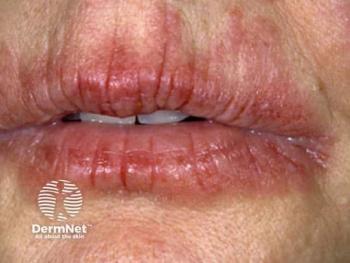
Nearly 68% of AD patients and 78% of psoriasis patients on topical-only regimens expressed a desire for systemic therapy, reflecting widespread skepticism about topicals as a long-term strategy.
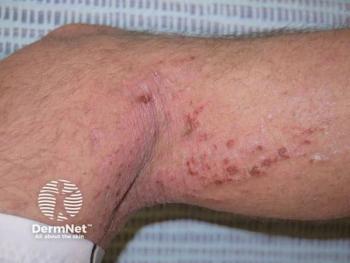
Data from the BroADen trial suggest that targeting STAT6 through protein degradation may offer a novel oral approach to controlling type 2 inflammation in atopic dermatitis.

Jared Gollob, MD, chief medical officer at Kymera Therapeutics, discusses early efficacy signals, the phase 2b study design, and the potential clinical role of KT-621, an oral STAT6 degrader, for moderate to severe atopic dermatitis.

Jared Gollob, MD, chief medical officer at Kymera Therapeutics, reviews phase 1b data for KT-621, an oral STAT6 degrader being evaluated for atopic dermatitis.

FDA clears lebrikizumab (EBGLYSS) every-8-week maintenance dosing for moderate to severe atopic dermatitis, reducing maintenance injections to as few as 6 per year.
Lakshi M. Aldredge, MSN, ANP-BC, DCNP, discusses late-breaking data preseneted at SDNP on novel immune-mediated therapies for atopic dermatitis, alopecia areata, and hidradenitis suppurativa.

Jared Gollob, MD, discusses phase 1b biomarker findings for KT-621, a STAT6 degrader in atopic dermatitis, presented at SID 2026.
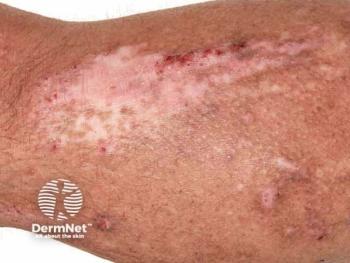
Unlike approved AD biologics and JAK inhibitors targeting specific cytokine pathways, GX-03 is designed to modulate inflammatory signaling locally within the skin microenvironment.

Albert Chiou, MD, MBA, reviews updates presented at SID 2026 on phase 1 data showing soquelitinib activity in prior systemic therapy failures, with a well-balanced adverse event profile vs placebo.
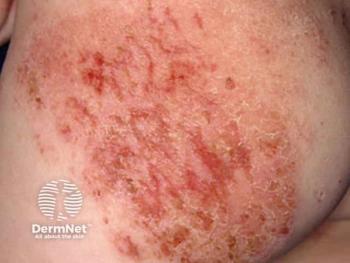
Apogee plans to initiate 3 phase 3 trials of zumilokibart in moderate to severe atopic dermatitis—ADventure 1, ADventure 2, and ADventure TCS—in the second half of 2026.
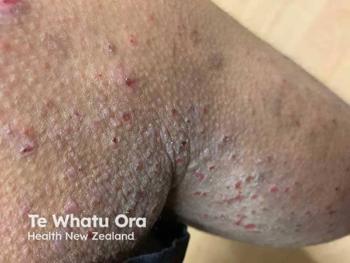
Among more than 1700 patients enrolled in the long-term extension study, the majority transitioned from a moderate to severe AD phenotype at baseline to a mild phenotype within 12 weeks, with that shift maintained through 2 years.
Phase 3 data presented at AAD 2026 showed that amlitelimab significantly improved skin clearance and disease severity in patients aged 12 years and older with moderate to severe atopic dermatitis.

Matthew Zirwas, MD, rethinks AD as environmentally acquired barrier dysfunction, sharing psychodermatology itch strategies and highlighting patient-centered communication.

Albert Chiou, MD, MBA, discusses results from the phase 1 trial of soquelitinib for moderate to severe AD presented at SID 2026.
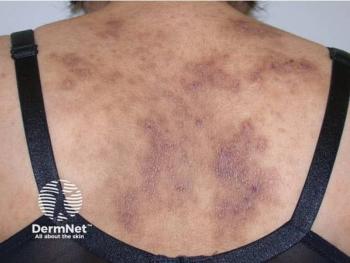
The patented filaggrin-targeting regimen claims up to 99% atopic dermatitis relief without steroids, boosting hydration and calming itch in adults.
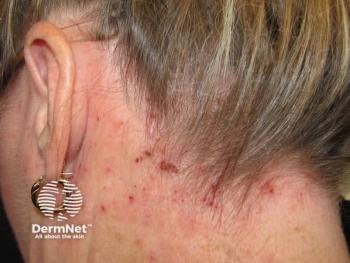
Treatment discontinuations due to laboratory abnormalities were uncommon, occurring in 0.7% of patients at week 52 and remaining below 2% through week 140.

Biologics and oral JAK inhibitors are now strongly recommended for moderate to severe pediatric atopic dermatitis, signaling a shift toward earlier systemic treatment escalation.
Emma Guttman-Yassky, MD, PhD, discusses findings from an abrocitinib on-off JADE REGIMEN analysis and what they may mean for disease modification in atopic dermatitis.
Advertisement
Advertisement
Trending on Dermatology Times
1
FDA Approves Baricitinib for Adolescents With Severe Alopecia Areata
2
Dr. Charrow Highlights Earlier Biologic Use and Deroofing in Hidradenitis Suppurativa
3
From Mechanism to Management: Navigating Male Pattern Hair Loss and New Topical Therapies
4
Tremfya Meets Primary, Major Secondary Endpoints in Phase 4 STAR Study of Axial PsA
5