Kaitlyn Bader, Senior Editor
Articles by Kaitlyn Bader, Senior Editor

In case you missed it, this week we had news about the AHEAD atopic dermatitis treatment recommendations, positive long-term results for roflumilast cream 0.05% in pediatric patients, line-field optical coherence tomography for dermal fillers, and more.

Throughout the month of August, Dermatology Times covered psoriasis news related to Alumis Inc’s phase 3 trial of ESK-001 for plaque psoriasis, AbbVie’s Science of Skin event, and more.

Learn more about the in-depth topics covered in the August 2024 print issue of Dermatology Times.
Learn more about the in-depth topics covered in the August 2024 supplement of Dermatology Times.

The AHEAD recommendations focus on achieving disease control in atopic dermatitis by allowing patients to identify key symptoms and clinicians to select matching outcomes to guide therapy, aiming for a higher standard of care.

In case you missed it, this week we had news about Pelage's novel PP405 in phase 2a for androgenetic alopecia, the availability of apremilast in the US for pediatric psoriasis, higher patient adherence with pre-filled risankizumab pens, and more.

Acne vulgaris has been reported as an adverse effect of GLP-1 receptor agonists by some patients.
This week’s collection of the latest dermatologic studies includes the prevalence of vulvar dermatoses among ethnically diverse patients, the adaptation of the Mackie melanoma risk stratification tool into a tablet-based patient questionnaire, siblings diagnosed with hereditary sensory and autonomic neuropathy, and more.
In case you missed it, this week we had news about the FDA approval of nemolizumab for prurigo nodularis, insights from AbbVie's Science of Skin event, new phase 3 data of izokibep for hidradenitis suppurativa, and more.

Renata Block, MMS, PA-C, interviews fellow colleagues to discuss conference highlights, Psoriasis Awareness Month, community advocacy, and more.

Omer Ibrahim, MD, discusses the nuances of aesthetic procedures for patients with skin of color and the importance of tailored treatments, safety, and improved clinician education.

The overall reduction of tumor size in all lesions treated in part 2 was approximately 86%.

John Browning, MD, FAAD, FAAP, MBA, discusses the new online platform that allows young patients to share their skin journey with others.

Galderma’s nemolizumab is the first approved monoclonal antibody specifically inhibiting the signaling of IL-31.
This week’s collection of the latest dermatologic studies includes the impact of isotretinoin treatment on femoral cartilage thickness, cystic fibrosis dermatitis arthritis syndrome, the role of intratumoral therapies for cutaneous melanoma, and fractional pigment toning for treating benign epidermal pigmented lesions.

Kristine Kucera, MPAS, PA-C, DHS, discusses her patient's challenging atopic dermatitis that was eventually cleared with upadacitinib.
In case you missed it, this week we had news about the FDA approval of denileukin diftitox for relapsed or refractory cutaneous T-cell lymphoma, the initiated phase 3 trial of ESK-001 for plaque psoriasis, secukinumab for HS clusters, and more.
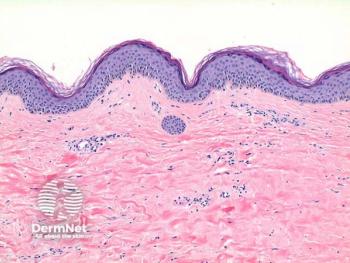
Topical corticosteroids are the gold standard treatment for VLS, yet women with skin of color are not represented in studies.
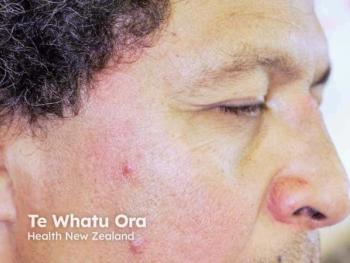
Recent research evaluated 6 patients with rosacea treated with JAK1 inhibitors upadacitinib and abrocitinib.
This week’s collection of the latest dermatologic studies includes oral dutasteride for frontal fibrosing alopecia, effects of air pollutants for patients with acne, bimekizumab in patients with PsA without methotrexate, and itepekimab for adults with moderate to severe AD.
In case you missed it, this week we had news about roflumilast cream 0.15%'s commercial availability for atopic dermatitis, Turn Therapeutics' new IGA and cytokine inhibition success with Hexagen, highlights from the 5CC World Congress, and more.

Naiem Issa, MD, PhD, shared highlights from his sessions on the 1726 nm laser for acne, atopic dermatitis disease modification, advances in hidradenitis suppurativa, and microneedling techniques for vitiligo.
Learn more about the in-depth topics covered in the July 2024 print issue of Dermatology Times.

Data from a retrospective analysis demonstrated that patients with moderate to severe alopecia areata are at a higher risk of developing atopic dermatitis compared to those with mild alopecia areata.
Learn more about the in-depth topics covered in the July 2024 supplement of Dermatology Times.

From ER visits for dystrophic epidermolysis bullosa to rates of axillary hyperhidrosis, catch up on top pediatric insights from July.
In case you missed it, this week we had news about the FDA approval of deuruxolitinib for severe alopecia in adults, new nonmelanoma guidelines from the Dermatology Association of Radiation Therapy, Arcutis' submitted sNDA for roflumilast foam for scalp and body psoriasis, and more.

Iltefat Hamzavi, MD, discusses the REGINA 007 phase 2 trial evaluating MK-6194 for the treatment of non-segmental vitiligo.

In a milestone year for Dermatology Times, our Editorial Advisory Board reflects on how the publication has impacted their practice.
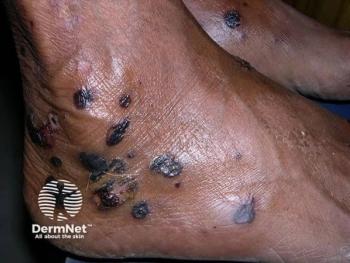
A systematic review of 31 studies found that patients with EBA responded well to rituximab with few adverse effects.